Showing posts with label Related Medical Issues RIGHT NOW!. Show all posts

Sunday, June 26, 2022

RELATED MEDICAL ISSUES RIGHT NOW! #8: Racial Disparities in Alzheimer’s and Breast Cancer Treatments

From the first moment my wife discovered she had breast cancer, there was a deafening silence from the men I know. Even ones whose wives, mothers or girlfriends had breast cancer seemed to have received a gag order from some Central Cancer Command and did little more than mumble about the experience. Not one to shut up for any known reason, I started this blog…

From the first moment I discovered my dad had been diagnosed with Alzheimer’s, it seemed like I was alone in this ugly place. Even ones who had loved ones suffering in this way; even though people TALKED about the disease, it felt for me like they did little more than mumble about the experience. Not one to shut up for any known reason, I added a section to this blog…

The immediate crises that were Breast Cancer and Alzheimer’s have passed. There are, however ancillary issues like testing and treatments that may not be directly related to BC or A but intersect with them. Harvested from different websites, journals and podcasts, I’ll translate them into understandable English and share them with you. Today: Racial Disparities in Alzheimer’s and Breast Cancer Treatments (See also: https://breastcancerreaper.blogspot.com/2022/01/related-medical-issues-right-now-4.html)

There are countless resources, news reports, and investigative pieces that clearly and concisely delineate the problem – if you are any race but white and have anything but comprehensive health insurance, your treatment for a breast cancer diagnosis or one of Alzheimer’s Disease will be far, far, far away LESS effective and virtually unaffordable.

I placed sources sources below, all of them CURRENT (2022). So, let’s just not argue. The facts speak for themselves. If you disagree, don’t bother trying to justify or argue, just leave peaceably. If you leave a stupid comment, I won’t bother reading it, delete it, and you won’t bug me AT ALL.

I have nothing to say to fools.

So, what’s being done to address this monstrous inequity?

Some things ARE being done!

Breast Cancer: “Sisters Network Inc. is committed to increasing local and national attention to the devastating impact that breast cancer has in the African American community.” They host events, an important one? STOP THE SILENCE Walk, https://www.stopthesilencewalk.org/. Held annually in Houston, Texas; this event is a major fund raiser for Sisters Network Inc. As well, “In 1999, Sisters’ broke new ground by hosting the nation’s first national Breast Cancer Conference to specifically address the impact of breast cancer among African American women. Now in its 12th year, the conference, which attracts more than 600 participants, including nationally recognized medical experts, has been held in metropolitan cities such as Houston, Atlanta, Detroit, Richmond Virginia and Chicago.” They also have a specific outreach program: “Sisters’ national branding campaign, "STOP THE SILENCE®," speaks directly to the nations, African American communities, long-standing history of not discussing cancer and other life-threatening health concerns.”

Evidence shows that the precipitous drop of breast cancer screenings hit ALL women, but was especially devastating among lower socioeconomic groups: “The COVID-19 pandemic has disrupted…cancer screening…in the United States and Europe have shown that cancer screening dropped dramatically during the pandemic…a modeling study estimated that delayed and missed screenings would likely increase breast cancer deaths…by 7.9% to 9.6%...This adverse impact…may differ among sociodemographic groups, given the disproportionate impact the pandemic has had on underserved racial and ethnic groups and other vulnerable population groups.”

Alzheimer detection and treatment among lower socioeconomic groups was low to begin with, “Alzheimer’s…the most frequent cause of dementia, is a progressive degenerative brain disorder affecting approximately 5.5 million people in the US, 24 million people worldwide…The average post-diagnosis AD survival rate is typically 5 to 8 years. However, this tends to vary among patients due to other factors such as age, gender, ethnicity, socioeconomic status, and additional health complications…”

The study concludes, “…socio-economic disparities exist worldwide between countries, influencing the validity of results in cross-cultural research. These disparities are reflected in the variability of educational levels and the quality of education. A universal socio-economic and educational assessment approach would improve reliability in comparing AD risk and progression in diverse groups, between and within countries.” A UNIVERSAL APPROACH??? How would that even be possible? It boggles the mind – and most of all, who would possibly pay for it? Insurance companies? Most likely not because there would be no profit in it – though that might NOT be true…

Lastly, the study below also points out that there are multiple issues even defining who and what they are looking for. How can you equitably screen a white, wealthy, Harvard graduate and a black, poor Haitian for Alzheimer’s symptoms – separated by 2400 kilometers? It boggles my mind to even consider DEVELOPING a tool, let alone using it…

There is so much here, I may write a science fiction story about it. It seems like that might be the only place this could be solved.

Resources:
https://www.sistersnetworkinc.org/index.html, https://jamanetwork.com/journals/jamanetworkopen/fullarticle/2780067, https://link.springer.com/article/10.1007/s13311-022-01193-z
Image: https://cdn.mos.cms.futurecdn.net/zsbWK9QgLFjUJwawbWaYnW-970-80.jpg.webp


Sunday, March 13, 2022

RELATED MEDICAL ISSUES RIGHT NOW! #7: Removing The Implants…FINALLY!!!

From the first moment my
wife discovered she had breast cancer, there was a deafening silence from the men I know. Even ones whose wives, mothers or girlfriends had breast cancer seemed to have received a gag order from some Central Cancer Command and did little more than mumble about the experience. Not one to shut up for any known reason, I started this blog…

From the first moment I discovered my dad had been diagnosed with Alzheimer’s, it seemed like I was alone in this ugly place. Even ones who had loved ones suffering in this way; even though people TALKED about the disease, it felt for me like they did little more than mumble about the experience. Not one to shut up for any known reason, I added a section to this blog…

The immediate crisis that was Breast Cancer and Alzheimer’s have passed. There are, however ancillary issues like testing and treatments that may not be directly related to BC or A but intersect with them. Harvested from different websites, journals and podcasts, I’ll translate them into understandable English and share them with you. Today: Removing the reconstructive breast implants.


From shortly after she healed from the surgery that had placed implants in her chest to mimic the real breasts that had been removed during a radical mastectomy and chemotherapy to right now...my wife was in pain.

Not from the surgery, though that was rough, but from the implants themselves. Healthline suggests that there are reasons for the discomfort: “Although breast implants don’t expire, they have a limited life span. The American Society of Plastic Surgeons states implants should be removed or exchanged every 10 to 15 years…breast implants may need to be removed or replaced is because scar tissue can harden around the implants…[and] cause pain and discomfort…” My wife had the initial mastectomy on April 3, 2011; the breast replacements/gel implants were placed on October 13, 2013. A bit short of the “10-year warranty”, she’s thrilled that the process is once again moving forward (COVID-19 delayed her by two years).

It all seems pretty straightforward, but there appear to be other issues to consider, such as the “tissue capsule”: “Removal of the implant and tissue capsule. This part of the procedure depends on your implant issues or surgery goals. Over time, scar tissue naturally develops around an implant, creating a tissue capsule. Some surgeons will only remove the implant and leave the tissue capsule. Others will remove the capsule — a more time consuming procedure — or a portion of the capsule.”

What exactly IS a “tissue capsule”? “…fibrous scar tissue forms around [the implant], creating a sort of ‘bag’ that holds the implant. The body forms a protective capsule like this around any object it recognizes as foreign. The tissue capsule is usually soft or slightly firm, not noticeable, and helps to keep the implant in place.” This is removed along with the intentionally deflated plastic bag that held the gel that gave the implants the rounded, "more-or-less" breast-shape.

So, once they implants are removed? Healing (obviously), and then, just like we’ve done all along these past eleven years – my wife will deal and I will be there beside her, supporting her in whatever way I can.

Oh…and once again blogging the Guys Gotta Talk About Breast Cancer.

Resources: https://www.cancer.org/cancer/breast-cancer/reconstruction-surgery/breast-reconstruction-options/breast-reconstruction-using-implants.html, https://www.healthline.com/health/breast-implant-removal#when-needed
Image: https://pubs.rsna.org/cms/10.1148/rg.2017170025/asset/images/medium/rg.2017170025.fig1.gif

Sunday, February 6, 2022

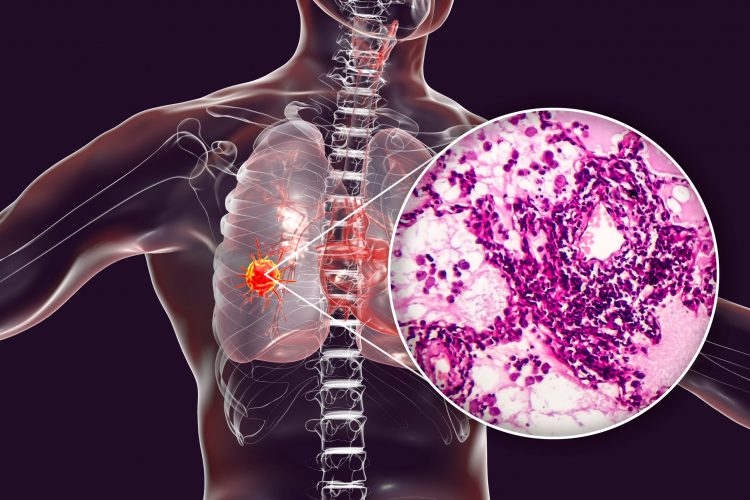
RELATED MEDICAL ISSUES RIGHT NOW! #6: Lepidic Growth Adenocarcinoma – A Cancer I’ve Never Heard Of…

From the first moment my wife discovered she had breast cancer, there was a deafening silence from the men I know. Even ones whose wives, mothers or girlfriends had breast cancer seemed to have received a gag order from some Central Cancer Command and did little more than mumble about the experience. Not one to shut up for any known reason, I started this blog…

From the first moment I discovered my dad had been diagnosed with Alzheimer’s, it seemed like I was alone in this ugly place. Even ones who had loved ones suffering in this way; even though people TALKED about the disease, it felt for me like they did little more than mumble about the experience. Not one to shut up for any known reason, I added a section to this blog…

The immediate crisis that was Breast Cancer and Alzheimer’s have passed. There are, however ancillary issues like testing and treatments that may not be directly related to BC or A but intersect with them. Harvested from different websites, journals and podcasts, I’ll translate them into understandable English and share them with you. Today: A cancer I’ve never heard of…


“Lepidic growth adenocarcinoma is defined as tumor cells proliferating along the surface of intact alveolar walls without stromal or vascular invasion pathologically (1). The traditional viewpoint has been that of Noguchi, who demonstrated that localized bronchioloalveolar carcinoma (LBAC) showed replacement growth of alveolar-lining epithelial cells with a relatively thin stroma, that LBAC with foci of structural collapse of alveoli were in situ peripheral adenocarcinoma, and that lung cancer patients with these LABCs achieved 100% survival after lobectomy.”

OK – so first of all, I know it’s a form of lung cancer.

I’ve looked at breast cancer that has metastasized to the lungs here: https://breastcancerreaper.blogspot.com/2018/12/encore-100-metastatic-breast-cancer.html. NOT the same thing, but it’s going to give me a foundation on which to build.

“Nearly 40% of lung cancers are adenocarcinomas, which usually originate in peripheral lung tissue. Most cases of adenocarcinoma are associated with smoking; however, among people who have smoked fewer than 100 cigarettes in their lifetimes ("never-smokers"), adenocarcinoma is the most common form of lung cancer. A subtype of adenocarcinoma, the bronchioloalveolar carcinoma, is more common in female never-smokers, and may have a better long-term survival. This cancer usually is seen peripherally in the lungs, as opposed to small cell lung cancer and squamous cell lung cancer, which both tend to be more centrally located.”

“Adenocarcinomas In-Situ lesions are classified as small tumors <3 cm with abnormal type II pneumocyte cell growth that is limited to the alveolar spaces i.e. without invasion into the stroma, pleura, or vasculature. This type of growth is termed ‘lepidic’ and is characteristic of adenocarcinoma of the lung in its earliest stages.”


OK – so here’s what I now understand. The word itself – adenocarcinoma, is derived from adeno-, meaning ‘pertaining to a gland’, and carcinoma, which describes a cancer that has developed in the epithelial cells.” This cancer grows INSIDE the tiny sacs in the lungs called the “alveoli”. Like all cancers, this is about cells growing out of control rather in their normal, programmed way. Instead of doing their job of replacing worn cells in the alveoli, they begin to grow out of control, creating areas of this wild cell growth called lesions.

The word “lepidic” means creating scales or a scaly covering. “The number of alveoli and alveolar sacs are what give your lungs a spongy consistency. Now remember that the alveoli are TINY! Each alveolus is about 0.2 millimeters in diameter (about 0.008 inches). [Comparison: the period at the end of a sentence is 1 and a half mm across; an alveoli is less than half of that across. There are about 600 million alveoli in your lungs and if you stretched them out, they would cover an entire tennis court.]

Each alveolus is cup-shaped with very thin walls. When you take a breath, each alveoli with expand into a little balloon, and when you exhale, they deflate – sort of like a deflated basketball (when it forms a sort of bowl). The “scales” look make it hard for the “balloon” to inflate.

So, to freely interpret: these cancer cells, instead of being flexible balloon-like sacs in your lungs are thicker and don’t’ stretch – which means the alveoli can’t expand. If they don’t expand, they can take in CO2; and they can’t get rid of it, so you feel short-of-breath…which is one of the symptoms of any kind of lung cancer.

The GOOD thing here is that, they believe they caught it early and that (as of the email) it’s only in one lung. Based on that and a generic reading on the internet: “Relative survival rates for non-small-cell lung cancer (NSCLC): Almost 90% of lung cancers are this type. The National Cancer Institute’s database breaks down the cancers by how far the tumors have spread. These relative survival rates are the average percentages of people who are alive 5 years after diagnosis. Localized (cancer is confined to one lung): 60%.” I’m sure I’ll hear more details as time goes on; and I’ll be able to pray over the cancer more specifically.

Until then, I’ll be praying based on my research.

Resources: https://www.ncbi.nlm.nih.gov/pmc/articles/PMC5059295/#:~:text=Lepidic%20growth%20adenocarcinoma%20is%20defined,that%20of%20Noguchi%20et%20al., https://en.wikipedia.org/wiki/Adenocarcinoma, https://www.drugtargetreview.com/news/64834/proteomic-map-of-human-lung-adenocarcinoma-revealed/, https://kidshealth.org/en/kids/lungs.html#:~:text=At%20the%20end%20of%20each,cover%20an%20entire%20tennis%20court.
Image: https://encrypted-tbn0.gstatic.com/images?q=tbn:ANd9GcQWFDJVgpz0G9kdb-eRXgRxMiv-Qz-Moaiw9w&usqp=CAU

Sunday, January 23, 2022

RELATED MEDICAL ISSUES RIGHT NOW! #5: RACIAL DISPARITIES IN ALZHEIMER’S AND BREAST CANCER SCREENING AND TREATMEN

From the first moment my wife discovered she had breast cancer, there was a deafening silence from the men I know. Even ones whose wives, mothers or girlfriends had breast cancer seemed to have received a gag order from some Central Cancer Command and did little more than mumble about the experience. Not one to shut up for any known reason, I started this blog…From the first moment I discovered my dad had been diagnosed with Alzheimer’s, it seemed like I was alone in this ugly place. Even ones who had loved ones suffering in this way; even though people TALKED about the disease, it felt for me like they did little more than mumble about the experience. Not one to shut up for any known reason, I added a section to this blog…

The immediate crisis that was Breast Cancer and Alzheimer’s have passed. There are, however ancillary issues like testing and treatments that may not be directly related to BC or A but intersect with them. Harvested from different websites, journals and podcasts, I’ll translate them into understandable English and share them with you. Today: Racial and Socioeconomic Effects on Breast Cancer and Alzheimer’s diagnosis and treatment.


If we just take a moment to look at the world today, and the racial and socioeconomic disparities (= MAJOR differences) in how black, Latino, and Asian people are both tested for COVID-19; treated for COVID-19; and how they have been neglected in outreach by cities, states, and the Federal government – and it’s easy to imagine that the same major difference would exist in the screening and treatment for breast cancer and Alzheimer’s.

The research would easily bear out that assertion – IOW, it’s totally true. Black, Latino, and Asians have neither received the same screening opportunities nor the same treatment for breast cancer and Alzheimer’s when compared to whites.

Below you’ll find links to some of the research – and my translating comments – regarding this frustratingly common issue.

“Among the 55 678 breast cancer screenings in April to December 2019: 45,572 patients were White (about 82 percent); 54,620 patients lived in cities (98 percent), and 22 761 had their own insurance (41 percent).

“From 2019 to the same period in 2020, only half of the people who had the year before were screened! From 2019 to 2020 for women there were 64 percent fewer Hispanic who came in for BC screening. 61 percent less American Indian/Alaska Native women came in for BC screening. 55 percent fewer Asian women came in, and 54 percent less Black women were screened. The number of white women only dropped by 49 percent. Women living outside of the big cities came even LESS than city women. Finally, women who self-paid for treatment and who were insured by Medicaid experienced the largest reduction in screening.” In brief, poor women and indigenous women of color got screened for breast cancer, during COVID-19, less than their white counterparts. Those worst off? Women without insurance who lived in the country.

It MUST be different for Alzheimer’s, right? All cultures respect their elders and want to take care of them!

“Findings from two national surveys appearing in the Alzheimer’s Association report reveal that…more than 36 percent of Black Americans, 18 percent of Hispanic Americans, and 19 percent of Asian Americans (19%) believe that discrimination would be a barrier to receiving Alzheimer’s care.”

Worse still, “In addition, half or more of non-White caregivers say they have experienced discrimination when navigating health care settings for their care recipient.” This I can attest to witnessing myself. BOTH of my parents and the white care staff at the facility my parents stayed in as they deteriorated from complications of congestive heart failure (Mom) followed by age-related dementia; and Dad, who was diagnosed with Alzheimer’s six years before he died…behaved in the way cited by the study. (Linked below)

As a rule, “…health and socioeconomic disparities and systemic racism contribute to increased Alzheimer’s and dementia risk in communities of color. According to the report, older Blacks and Hispanics are disproportionately more likely to have Alzheimer’s and other dementias. In addition, both groups are more likely to have missed diagnoses than older Whites.”

Perhaps the saddest statistic I came across while reading these is this: “More than one-third of Native Americans and nearly 3 in 10 Hispanics do not believe they will live long enough to develop Alzheimer’s or another dementia."

Wow…outside of the white community, we have a long, long way to go in learning how to deal with Breast Cancer and Alzheimer’s issues…

Resources: https://www.sistersnetworkinc.org/index.html , https://www.alz.org/media/Documents/alzheimers-facts-and-figures-special-report.pdf, [A website specifically targeted to Black women and breast cancer]: https://www.sistersnetworkinc.org/index.html,
https://jamanetwork.com/journals/jamanetworkopen/fullarticle/2780067, https://www.alz.org/news/2021/new-alzheimers-association-report-examines-racial
Image: https://cdn.mos.cms.futurecdn.net/zsbWK9QgLFjUJwawbWaYnW-970-80.jpg.webp

Sunday, November 21, 2021

RELATED MEDICAL ISSUES RIGHT NOW! #4: Breast Cancer and the Global Pandemic…

From the first moment my wife discovered she had breast cancer, there was a deafening silence from the men I know. Even ones whose wives, mothers or girlfriends had breast cancer seemed to have received a gag order from some Central Cancer Command and did little more than mumble about the experience. Not one to shut up for any known reason, I started this blog…

From the first moment I discovered my dad had been diagnosed with Alzheimer’s, it seemed like I was alone in this ugly place. Even ones who had loved ones suffering in this way; even though people TALKED about the disease, it felt for me like they did little more than mumble about the experience. Not one to shut up for any known reason, I added a section to this blog…

The immediate crisis that was Breast Cancer and Alzheimer’s have passed. There are, however ancillary issues like testing and treatments that may not be directly related to BC or A but intersect with them. Harvested from different websites, journals and podcasts, I’ll translate them into understandable English and share them with you. Today: “Impact of the COVID-19 Pandemic on Breast Cancer Mortality in the US”


We all know that the pandemic, through the twin incidence of overflowing hospitals and lockdowns, had an impact on the diagnosis and treatment of breast cancer.

But how MUCH of an impact? According to the article, “[We expect that there will be] 2487 excess breast cancer deaths…([an] increase over breast cancer deaths expected) by 2030 in the absence of the pandemic’s disruptions.”

Twenty-five hundred people doesn’t…seem…like a lot over a ten year period. Statistically, it’s a bit more than a half-percent increase (“0.52% (model range = 0.36%-0.56%”).

In the study, “Each model estimated the effect of COVID-19 disruptions on breast cancer deaths among all women aged 30 to 84 years between 2020 and 2030 in the United States.” The scenarios they looked at range from NO COVID19 all the way to “Hybrid delayed and skipped screening and delayed diagnosis and reduced chemotherapy treatment” – which is to say a person skipped BC screening because they just didn’t think it was safe to go out AND when they were screened, they delayed getting diagnosed AND once they were, they had a shorter than average chemotherapy treatment.

This seems like a bunch of unlikely events all piled on top of each other, but I can (and I imagine you can as well) imagine EXACTLY this scenario happening to someone we know or love.

Another study found that “Patients were more likely to be diagnosed with late-stage breast cancer [during relaxed mandates that opened various businesses and services]. Patients with lower income and medical comorbidities were disproportionately affected. These data raise significant concerns regarding the impact of [COVID19] on cancer diagnoses and long-term outcomes, especially in vulnerable patient populations.”

Also, mammography screening has seen a negative impact, “Our radiology department is going to be slammed just catching up with routine mammography screening. Patients who have been waiting for cancer surgery for 2-4 months are not going to want to wait any longer than needed if they have to go and be localized prior to surgery.”

From screening to diagnosis to surgery to chemotherapy, COVID19 has changed how quickly breast cancer can be treated. It has changed how patients can come to the hospital and it has changed because now, an already stressful situation is made doubly so by COVID concerns – both in patients and doctors.

Looking at the number of people expected to die from breast cancer – who would NOT have died if there had been no pandemic – over a ten year period is about 2500. Current numbers for 2021: The American Cancer Society's estimates for breast cancer in the United States for 2021 are: about 281,550 new cases of invasive breast cancer will be diagnosed; 49,290 new cases of ductal carcinoma in situ (DCIS); and ultimately, about 43,600 women will die from breast cancer in 2021.

Without any kind of change then, some 436,000 women are expected to die from breast cancer between 2020-2030. An additional 2500 women will die as well.

But, living in Minnesota right now, we find ourselves with increasing numbers of infections. In fact, the “now” report from data tracked by Johns Hopkins reports that, “COVID-19 cases up in 29 states, down in 18, flat in 3”. I wonder if the estimate of the increase in deaths due to breast cancer was perhaps too optimistic. Did they notice that the Spanish Flu Epidemic which lasted from February 1918 through April of 1920 continued to affect the planet for over two YEARS? The population at that time wasn’t even two billion; there was virtually NO international travel, and people pretty much died where they lived; except for the soldiers who were the main vector for the flu. With a current population well over SEVEN billion we might well expect the pandemic to last THREE AND A HALF TIMES AS LONG AS the first modern pandemic – or something like EIGHT YEARS…

Dark? Grim? Yep. I sure hope someone smarter than me has got plans in place, because 3.5 x 2500 = 8750…

Resources: https://academic.oup.com/jnci/article/113/11/1484/6319940, https://ascopubs.org/doi/abs/10.1200/JCO.2021.39.15_suppl.528, https://www.beckershospitalreview.com/public-health/17-states-with-rising-covid-19-cases.html
Image: https://encrypted-tbn0.gstatic.com/images?q=tbn:ANd9GcQWFDJVgpz0G9kdb-eRXgRxMiv-Qz-Moaiw9w&usqp=CAU

Sunday, September 26, 2021

RELATED MEDICAL ISSUES RIGHT NOW! #3: The Advance of Lymphedema “Massage”!

From the first moment my wife discovered she had breast cancer, there was a deafening silence from the men I know. Even ones whose wives, mothers or girlfriends had breast cancer seemed to have received a gag order from some Central Cancer Command and did little more than mumble about the experience. Not one to shut up for any known reason, I started this blog…

From the first moment I discovered my dad had been diagnosed with Alzheimer’s, it seemed like I was alone in this ugly place. Even ones who had loved ones suffering in this way; even though people TALKED about the disease, it felt for me like they did little more than mumble about the experience. Not one to shut up for any known reason, I added a section to this blog…

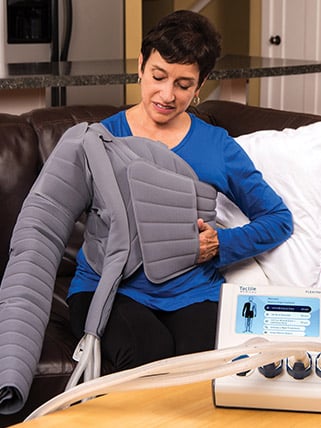
The immediate crisis that was Breast Cancer and Alzheimer’s have passed. There are, however ancillary issues like testing and treatments that may not be directly related to BC or A but intersect with them. Harvested from different websites, journals and podcasts, I’ll translate them into understandable English and share them with you. Today: https://thelymphielife.com/2021/04/16/compression-pump-review-pumped-about-the-lympha-press-optimal-plus/

My wife has been using one of these for several months now.

While it hasn’t made the compression sleeve, manual massage (rarely now), and the night-time pressure sleeve; it HAS helped and it IS easy to use.

Comparatively.

What is a Compression Pump garment? “…medical devices that stimulate the movement of fluid in the body…three main parts: the console, which supplies pressurized air to the garment; hoses, which transfer the air from the console to each of the garment’s chambers; and the garment itself, which has inflatable air chambers. (The number of chambers in the garment can vary depending on the model of the device, as can the range of pressure offered.) These chambers inflate and deflate in sequence, applying directional massage to move stagnant or trapped fluid upwards toward alternative lymphatic channels.” While the whole shebang takes up half of a side table and is awkward for my wife to put on, it does seem to work…

That same awkwardness also is a deterrent! In the summer, wrapping herself in a bulky “jacket” can be very hot (though with only 3 months of summer (!), it’s not a huge issue in Minnesota.

Perhaps the biggest challenge of all, is that this is a never-ending process. Lymphedema will NEVER be healed. It’s a lifelong condition that, until new technologies are developed that include “Star Trek”-like “medical magic”, it’s not going away.

If you don’t know, breast cancer cells escape the original infection site and can spread throughout the body. Typically, the first place they hit when they’re escaping, are the lymph nodes. When the cancerous breast tissue is removed, they typically biopsy the nodes: “Stage II A is based on one of the following: Either there is no tumor in the breast or there is a breast tumor up to 20 millimeters (about the size of a grape), plus cancer has spread to the lymph nodes under the arm.”

Movement and muscle pressure press the lymph nodes, moving the lymph through the body. The lymph vessels essentially run parallel to the blood vessels, but there’s no “lymph heart” to push it. The lymph vessels have no muscles of their own and depend on pressure from the surrounding muscles to circulate the lymph. When the nodes are removed, the collecting sacs are drained and the lymph is moved around the body.

Remove the nodes and the volume of lymph that can be moved – typically out of the arm in cases of breast cancer – drops drastically and lymph that normally circulates starts to pool, swelling the limb. SOMETHING has to move it and that becomes the responsibility of Human hands…or Human technology.

Wrapping the body and arm in an air-sac-filled lymphedema garment, then pressurized in succession pushes the lymph around and reduces edema…

At any rate, it’s high-tech and as effective as a device replacing removed lymph nodes can be; and until the day comes when they can do lymph node transplants or create artificial lymph nodes, or hand someone a pill that stimulates the growth of brand new lymph nodes https://breastcancerreaper.blogspot.com/2011/07/doctor-gave-me-pill-and-i-grew-new.html…this is the best substitute we have.

Sunday, May 30, 2021

RELATED MEDICAL ISSUES RIGHT NOW! #2: Osteoporosis And YOU! (What???)

From the first moment my wife discovered she had breast cancer, there was a deafening silence from the men I know. Even ones whose wives, mothers or girlfriends had breast cancer seemed to have received a gag order from some Central Cancer Command and did little more than mumble about the experience. Not one to shut up for any known reason, I started this blog…
From the first moment I discovered my dad had been diagnosed with Alzheimer’s, it seemed like I was alone in this ugly place. Even ones who had loved ones suffering in this way; even though people TALKED about the disease, it felt for me like they did little more than mumble about the experience. Not one to shut up for any known reason, I added a section to this blog…

The immediate crisis that was Breast Cancer and Alzheimer’s have passed. There are, however ancillary issues like testing and treatments that may not be directly related to BC or A but intersect with them. Harvested from different websites, journals and podcasts, I’ll translate them into understandable English and share them with you. Today: Osteoporosis!


My wife recently had a DEXA Scan (DEXA is an acronym for a truly incomprehensible medical procedure: Dual Energy X-ray Absorptiometry.), though the author of the article, who is a retired med tech, notes, “a mouthful of a term that actually tells a lot about this procedure”…I would argue that it doesn’t mean ANYTHING to a normal person!

So let’s break it down. First of all, it’s a special kind of x-ray. OK, that’s pretty easy. X-rays are something we all understand (I marvel that it’s no longer necessary to “develop the film”. It all pops up on a computer screen now, pretty much instantly!)

“As the scanning arm is moved slowly over your body, a narrow beam of low-dose X-rays will be passed through the part of your body being examined. This will usually be your hip and lower spine to check for weak bones (also called osteoporosis)”.

The doctor looks at the how thick (which is (mostly) what “density” is) and she makes a determination based on what’s normal and what’s not.

There are two scores they give you, the T-score and the Z-score. I'll stick with the more understandable T-score!

The T-score compares your bone density to the BEST bone density for your gender. [For the mathematically inclined: “It is reported as the number of standard deviations below the average, which is based on the bone density of a healthy 30-year-old adult.”] If it’s more than -1 your bone density is normal. Between -1 to -2.5 shows something called “osteopenia” means it’s less dense than it SHOULD be, but not disaster yet. You are at some risk of developing osteoporosis. But if it’s less than -2.5 (-2.7, -3.0, -3.2, etc.) that generally means osteoporosis.

What’s osteoporosis? Simple: It’s the weakening of bones in the body. It is caused by lack of calcium deposited in the bones. That means that when you DO smack a bone and you have osteoporosis, the bone’s more likely to break – rather than just getting a bone bruise.

What can you do if you have osteopenia (pre-osteoporosis) or actual osteoporosis? Well, listen to your doctor for one! But what about BEFORE the emergency?

Include plenty of calcium in your diet.
Good sources of calcium include dairy products, almonds, broccoli, kale, canned salmon with bones, sardines and soy products, such as tofu. If you find it difficult to get enough calcium from your diet, ask your doctor about supplements.

Pay attention to vitamin D.
Your body needs vitamin D to absorb calcium. Good sources of vitamin D are salmon, trout, whitefish and tuna. Also, mushrooms, eggs and fortified foods, such as milk and cereals, are good sources of vitamin D. Plain old being out in the sun also contributes to the body's production of vitamin D.

Include physical activity in your daily routine.
(Isn’t it WEIRD how doing exercise can help you feel better and live longer?) Weight-bearing exercises, such as walking, jogging, and climbing stairs, can help you build strong bones and slow bone loss.

Avoid substance abuse.
Don't smoke. Woman should avoid drinking more than one alcoholic beverage a day. Men? No more than two alcoholic drinks a day.

There’s stuff you can do before an emergency. And if you’ve hit the panic button? The same things are helpful, PLUS doing what the doc says!

Resources: https://www.verywellhealth.com/what-is-a-dexa-scan-190167, https://www.mayoclinic.org/healthy-lifestyle/adult-health/in-depth/bone-health/art-20045060
Image: https://encrypted-tbn0.gstatic.com/images?q=tbn:ANd9GcQWFDJVgpz0G9kdb-eRXgRxMiv-Qz-Moaiw9w&usqp=CAU

Sunday, March 7, 2021

RELATED MEDICAL ISSUES RIGHT NOW! #1: Cause Célèbre

 From the first moment my wife discovered she had breast cancer, there was a deafening silence from the men I know. Even ones whose wives, mothers or girlfriends had breast cancer seemed to have received a gag order from some Central Cancer Command and did little more than mumble about the experience. Not one to shut up for any known reason, I started this blog… 
From the first moment I discovered my dad had been diagnosed with Alzheimer’s, it seemed like I was alone in this ugly place. Even ones who had loved ones suffering in this way; even though people TALKED about the disease, it felt for me like they did little more than mumble about the experience. Not one to shut up for any known reason, I added a section to this blog…

The immediate crisis that was Breast Cancer and Alzheimer’s have passed. There are, however ancillary issues like testing and treatments that may not be directly related to BC or A but intersect with them. Harvested from different websites, journals and podcasts, I’ll translate them into understandable English and share them with you. Today: Cause Célèbre


https://variety.com/wp-content/uploads/2017/07/black-panther.jpg
https://nypost.com/wp-content/uploads/sites/2/2020/01/time-machine-inventor-01.jpg?quality=80&strip=all&w=618&h=410&crop=1

The "sudden" death of Chadwick Boseman, who played the blockbuster character of Black Panther in Marvel Universe movie of the same name as well as appearing in many of the rest of the Universe’ movies, sent shock waves through Hollywood and the rest of Marvel fandom. No one knew because Mr. Boseman had shared the knowledge of his cancer with the people who matter to him most – and that didn’t include the rest of the world.

When Michael J. Fox, beloved actor of American televisions shows Family Ties and Spin City, is perhaps best known for his recurring role as Marty McFly of “…the 13th-highest-grossing trilogy of all time…” was diagnosed with a neurodegenerative disorder, people were stunned.

Fox started displaying symptoms of early-onset Parkinson's disease “in 1991 while shooting the movie Doc Hollywood, and was diagnosed shortly thereafter…” Outside of his family, no one knew of the diagnosis, until, after a long period of denial, in “…1998, he went public about his Parkinson's disease, and has become a strong advocate of Parkinson's disease research. His foundation, The Michael J. Fox Foundation, was created to help advance every promising research path to curing Parkinson's disease…Michael J. Fox Foundation…became an advocate for people living with Parkinson's disease.” As well, Fox wielded his fame to “the US Senate Appropriations Subcommittee in 1999…”

“In 2016, Boseman was diagnosed with colon cancer. Boseman kept his condition private, continuing to act until his death from complications related to the illness in August 2020…[He] achieved international fame for playing superhero Black Panther in the Marvel Cinematic Universe (MCU) from 2016 to 2019”…becoming “the first black actor to headline an MCU film, he was also named in the 2018 Time 100.” Boseman “…extensively supported cancer charities publicly and privately...”

Colon cancer and breast cancer are both cancers...

Parkinson’s and Alzheimer’s are both neurodegenerative diseases…

My wife had BC, Dad was diagnosed with Alzheimer’s at 84.

Not the same, but my wife and Dad were not celebrities. Fox and Boseman were.

I have no beef with their struggles or their dedication to the cause of finding cures for colon cancer and Parkinson’s. I question the rest of their “fans”…They flocked to the cause because a pair of superstars they loved had the diseases and suddenly, their fans HAD to do SOMETHING to make a difference. “…absolutely devastating…” and “…an icon for the ages…” were only a couple of the comments describing Boseman.

How many normal people died because their plight was just that…”normal”? Their fates were unmarked except by a small circle of family and friends, and devoid of invitations to address Senate subcommittees…

I lament not the MEN, but the rest of us. I wonder sometimes about “us” as a country. As a people. We ignore what we don’t want to see until suddenly, our icons are stricken and something we had no interest in knowing anything about becomes a consuming passion and accolades, invitations, and imperative research, and the interest is not based on real needs, it’s based on the effect of a pervasive disease that has (for some reason we think is inexplicable) on people we have idolized because of characters they've played on towering movie screens…

At any rate, because of this, I offer the existential question: