A NEWLY DIAGNOSED T2 DIABETIC, breast cancer husband's observations mixed up with an Alzheimer's son's musings
Sunday, October 6, 2024
GUY’S GOTTA TALK ABOUT…TYPE 2 DIABETES #25: Know What LEAD Stands For? [Neither Did I: Life Expectancy Estimator for Older Adults with Diabetes]
Did you know that there are medical standards of care that doctors can refer to when they’re working with seniors with Type 2 diabetes?
Neither did I.
Also, while the document was JUST revised in December of 2023, there’s an entire section that applies to seniors. One of the early sections had an interesting statement, and I’ll go through the part that applies to me and wife a bit later.
I was startled to find this: “The recommendations and text of Section 5 were adjusted to place focus on guiding the behavior of health care professionals rather than people with diabetes, thus aligning with the purpose of the Standards of Care as guidance for health care professionals.” (13. Older Adults: Standards of Care in Diabetes—2024)
One of the reasons for greater involvement and expected reliance on a person’s health care professional is something I’m SURE all of you are familiar with (if not with the fancy-pants name), “polypharmacy”. Never heard of it ‘til I read this document: “noun: polypharmacy; the simultaneous use of multiple drugs to treat a single ailment or condition; the simultaneous use of multiple drugs by a single patient, for one or more conditions.” I see it as “make sure you put the right pills in the right box so you can take them at the right time!”
I can see that – even though when I was trying to help my mother self-manage the numerous pills she had to take, the freakin’ condition didn’t have a NAME!) Of COURSE I need the advice of my doctor (who isn’t actually a DOCTOR per se, but a Physicians Assistant) to know when to take what I need to take and HOW to take it! Now the American Diabetes Association has made an official recommendation.
Another thing I’ll be talking to my PA about is this: “Notably, the Life Expectancy Estimator for Older Adults with Diabetes (LEAD) tool was developed and validated among older adults with diabetes, and a high-risk score was strongly associated with having a life expectancy of less-than five years.”
The heck is THIS????
Here’s what I found out: “A tool based on data from the electronic health record (EHR) may help clinicians estimate life expectancy in older adults with diabetes, a recent study found. The tool uses gender, body mass index, serum creatinine level, dementia, metastatic cancer, peripheral vascular disease, albuminuria, home oxygen use, wheelchair use, current smoking, and the interaction between age and heart failure to generate a risk score.”
They noted, “The authors noted that their tool…was not validated in patients younger than age 65 years and was less accurate over longer periods (among other limitations.) They also cautioned that the tool's results should be considered in a broader context along with other factors that influence individualized care, such as patient preferences.”
So…why would I get this test if it offers such limited amount of information? (The “conspiracy theorist in me would say, “So insurance companies can deny MORE seniors health care coverage…”) But, I’m CERTAIN that’s not what it would be used for! It’s a tool to…what?
I suppose looking at ALL of those things, would give a doctor or other caregiver different things to both watch for and begin to work on. For example: body mass index – if I knew my BMI was too high, I could certainly start to work to lose weight. Nothing STUPID, but certainly change the fact that I eat a package of OREO Cookie DoubleStufs before bed once a week! I could stop smoking (if I did, but I didn’t, so let’s just go back to eating Oreos); I could get screened for Alzheimer’s (which I do twice a year); I could make sure I exercise regularly to keep my heart strong (I ride about 12-15 miles a week during the summer; and stationary bike 2-5 hours a week in the winter in addition to walking a couple of miles every other day.)
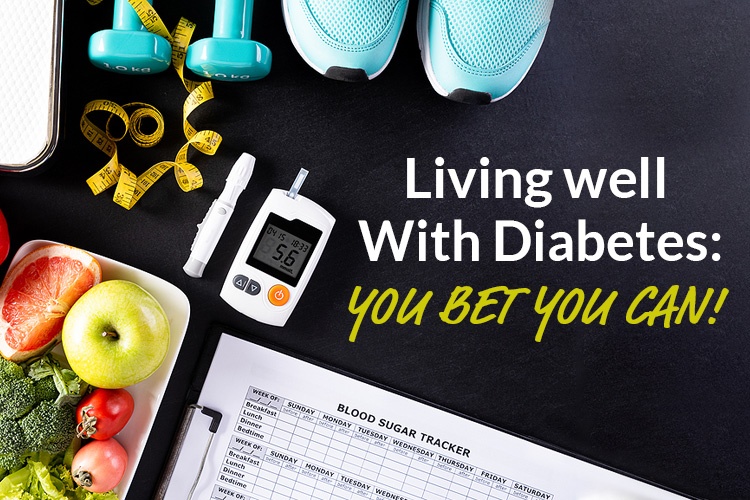
I could have my PA give me the LEAD: Life Expectancy Estimator for Older Adults with Diabetes (LEAD)…which I will when I go in for my shots in a week or so…I’ll report then!
Source: https://diabetesjournals.org/care/article/47/Supplement_1/S244/153944/13-Older-Adults-Standards-of-Care-in-Diabetes-2024; https://diabetesjournals.org/care/article/47/Supplement_1/S5/153943/Summary-of-Revisions-Standards-of-Care-in-Diabetes; 13. Older Adults: Standards of Care in Diabetes—2024 | Diabetes Care | American Diabetes Association (diabetesjournals.org) Image: https://www.hcd.com/wp-content/uploads/2021/01/living-well-with-diabetes.jpg
Sunday, July 10, 2022
Guy's Gotta Talk...For the Last Time
I started this blog eleven years ago, a few weeks after my wife was diagnosed with breast cancer.
I started it because I couldn't find any other man willing to talk about their experience. So, being me, I started a blog, talking into the wide universe and hoping someone would talk back.
No one ever did, really. I didn't have any kind of celebrity status, no book to sell, and no hospital endorsement...
I got an occasional reply or observation or comment. And that was good enough for me, because something even more important happened: I learned about breast cancer and Alzheimer's -- and I hope others did as well. But after more than a decade, nearly six hundred posts, and over 100,000 views, I'm hanging it up. I'll leave the blog here for a while; eventually close it -- or let it die a natural death.
Why? Well, the first month I wrote, I got (if the Status chart is accurate!) about 60 views. Last month, I got...a hair over a hundred and fifty last month.
Dad's diagnosis of Alzheimer's several years before he started to show obvious signs of AD launched me into a new line of research, and I found those people willing to talk about AD about as chatty as the ones who had thoughts about breast cancer.
But as the months and years have passed, so has FaceBook and EBlogger. Shorter, more interactive sites -- TikTok, Instagram, YouTube (my grandson expects NOT to have to go to college as he will be a popular YouTuber... 8-/ ) have taken over and can give fast, less-thoughtful answers than my blog. The service I provided -- like Translating The Doctors; AD and BC Research RIGHT NOW!; Encouragement; and recently, ancillary issues related to both AD and BC -- don't appear to be needed anymore as time has become more and more of the essence, and people don't really WANT to talk about BC or Alzheimer's.
So -- explore the site, and for a while the features that are RIGHT NOW! should remain fairly pertinent. But, as time passes, they'll grow out of date, and eventually, EBlogger itself will wither, die, and vanish.
I've thought of printing everything off, but that wouldn't be helpful to anyone -- except maybe Posterity. My grandkids might be interested in reading the posts, but that seems unlikely -- I rarely look at pictures of my parents any more and can't imagine the science will hold up well in another eleven years...2033?
WHOA! In the meantime, I hope my brief time here was helpful to you --whether as a comfort, a resource, or just simply to read and know that treatments and the horror of Breast Cancer and Alzheimer's have come a long way...
Thanks for reading -- some of you through the YEARS...farewell.
Image: https://thumbs.dreamstime.com/b/farewell-written-sand-fading-flood-78677870.jpg
Sunday, May 29, 2022
GUY’S GOTTA TALK ABOUT BREAST CANCER #51…After Explant and Slow Going
While the surgery is “long past”, and the two post-operation meetings went well; and the two drains were removed, recovery continues apace…if that pace was from the Ice Age.
We NEVER expected “instant recovery”. That’s what my mom expected when she had her hip replaced when she was 68…and it was so! She worked hard, did all the exercises, and was soon back to dancing across the stage of her beloved Wastebasket Review. She had it replaced a second time when she was 80-something. She was EXPECTING a quick recovery, but that never happened. She was in a huge amount of pain, she couldn’t handle MORE pain that came with doing the rehabilitative exercises, and she gave up. That was a contributing factor in her rapid decline…
So, my wife NEVER expected “instant recovery”.
What she got was surprises during recovery.
WTH???? The doctor clarified that she’d be unable to lift large objects for that period of time. That the “large objects” included our almost-three-year-old-grandson was not what we expected. Fortunately he’s of the “always running at high speed until he conks out for a nap” kind of kiddo! He doesn’t USUALLY let us carry him anymore.
The second surprise was that she couldn’t life ANYTHING for the first two weeks; and she COULD NOT UNDER ANY CIRCUMSTANCES reach for anything over her head for some time – an indeterminate number that depended on several factors – rate of wound healing, condition of the skin as the wound healed, and “pain indicators”, ie, “If it hurts, don’t do it!”
Why?
Well, it involved, in my wife, after the removal of the implant and the scar-tissue capsule that had formed around it, “The muscle is often times sewn back down after an explanation. As long as the capsule is removed the muscle will scar and stick back down. There is raw tissue on both sides that the body will heal together.”
But, like all major surgery, it doesn’t happen FAST. Unlike the external incisions which form scabs to protect the healing injury, internal healing takes more time. It’s also the reason “drains” are placed under the skin to drain away any serous fluid that gathers post-surgery. Sometimes there is a small amount of blood as well. My wife’s physician’s assistant took out the tubes. The procedure was simple: a couple of stitches that held the tubes in place were snipped and the tubes pulled out without any real discomfort. My wife was fine with it at the time. She’s still experiencing some pain as she heals, but the doctor assured us that that is normal.
We’re not teenagers anymore! Not even in our fifties anymore. ALL injuries take longer to heal. My wife sometimes tries to do too much (I know, SHOCKING!), then has to back off an rest. Considering it’s been a GRAND total of nineteen DAYS since she was under anesthesia for three-and-a-half HOURS!!!!, I think she’s doing pretty good. She just wants to do MORE!
The doctor was pleased with the result, and now, like all good things, it will take some time to be back up to full speed!
[While there ARE YouTubes regarding explant surgery, I didn’t watch them myself as I don’t have the background to judge whether what they say is true or deals with explant surgery realistically. Feel free to Google them and judge for yourselves!]
Resource: https://www.realself.com/question/chico-ca-muscle-repair-explanting
(Answers the question: “How is muscle repair done when explanting?”); https://www.realself.com/question/new-york-new-york-drains-after-breast-implant-removal-collect-fluids-tissue (Answers the question:
Do drains placed in the chest after explant collect fluids and tissue?)
Image: http://wrex.images.worldnow.com/images/23784252_SA.jpg
Sunday, May 15, 2022
GUY’S GOTTA TALK ABOUT BREAST CANCER #50…Drain Pains, and Chest Wraps, and Pain Meds, OH MY!
Well, it’s over.
The surgery, anyway. Now we’re coming up on the end of the first week, post-operative. It’s funny, the routine is so similar to the radical mastectomy, and the implant surgery, that it feels like no time has passed at all; almost like we’re replaying a milder version of the whole experience like a movie; and back at the beginning.
But 11 years ago, I was only 54 and had a lot more energy than I do now. OTOH, the kids were 19 and 23 when my wife was first diagnosed, they’re 34 and 31 now with spouses and kids of their own. Everything the doctors told us that would happen was mere speculation; a dream (or nightmare if, you will); and not truly comprehensible. We’d nothing to compare it to…
The implant surgery two years later, was also not truly comprehensible, but it lacked the raw terror of the diagnosis and demand for instant-if-not-sooner from the hospital and her doctor of the diagnosis and headlong rush to stop the monster from eating my wife; their mother, sister, sister-in-law, daughter-in-law, friend, neighbor....
During those days, we measured the time from the morning we checked into the hospital for the double mastectomy surgery to the end result as a matter of a few hundreds of hours. Then there was the benevolent abuse of chemotherapy, as hair vanished and weariness was the order of the day. Breast reconstruction two years later lacked the terror and seemed to be a good thing.
We find ourselves 11 years later, wondering what happened, and the images of my wife with chest drains and on pain meds (all the while worry that if she takes too many she’ll become an ADDICT!!!), chest wrapped in an ace bandage, and a visual inspection of the end result and being impressed by the neatness of the stitches; glad that it’s over…again. Those same intentional, healing wounds inspiring a shortness of breath in me and tears and countless phone calls from our kids, kids-in-law, and foster-kids.
And yet…and yet…when the doctor made the incision to remove the implants and their scar capsules, there was a faint fear that she would come out and say, “I’m sorry, but we found more cancer.”
But that’s NOT what she said. She said, “The surgery went very smoothly and we’re done a bit before we estimated we’d be done. She’s doing very well.” Those were the only words we needed to hear and so today I write from a place where my wife is steadily healing and growing stronger every day!
For those of you who are Christians, please join me in thanking God…He is worthy…please sing along with congregation of Christians in giving praise to Him: https://www.youtube.com/watch?v=fs7Kah6wnY8
Image: http://wrex.images.worldnow.com/images/23784252_SA.jpg
Sunday, May 8, 2022
GUY’S GOTTA TALK ABOUT BREAST CANCER #49…Almost the Day For the Explant
So, tomorrow, we report to the hospital for the explant surgery, aka implant removal surgery.
After the original mastectomy, which was essentially an emergency once the breast cancer diagnosis was verified – medical care was reduced to countless visits to hospitals and clinics for pre-op, post-op, then chemotherapy consults, followed by weeks of chemo administered at a clinic across town, then the OTHER clinic visits for Neulasta to control what the chemo did to the did to my wife’s immune system, followed by more pre-sessions…
Two years later, we did another round because the breast cancer appeared to be gone…then my wife jammed her finger against a wall, a doctor said, “Don’t worry.” And then she had full scale lymphedema (which at the time wasn’t considered the business of the breast cancer community on any level, and was “just bad luck, oh well, thank you very much for your concern, *slam!*”).
And so today, after a revolution within the breast cancer community declared that lymphedema was real, but there was no cure for it and very little help…we’ve just learned to deal with it and learned to navigate the things we need to do.
Then the breast implant surgery, followed by ten years of pain…and now here we are. To say that the past eleven years have been a roller coaster begs me to point out that it was an amusement park roller coaster – it was a roller coaster IN AGONIZINGLY SLOW MOTION.
Tomorrow morning, we hope to enter the absolutely final step of this expedition Explant Surgery. What is Explant Surgery? “Explant Surgery and En Bloc Capsulectomy/Implant removal (or explant surgery) is an option for patients who are having problems with their breast implants, or who now simply prefer to be implant-free.
“The procedure removes the implant, usually along with part or all of the surrounding scar capsule. ‘En bloc’ capsulectomy involves removal of the implant and [scar tissue] capsule as one specimen... When performed alone, explant surgery is usually an outpatient procedure. The incision used to remove the implant is usually based on the patient's prior surgical history. The amount of capsule that needs to be removed in conjunction with explant surgery is [also] influenced by several factors (…diagnosis, surgical plan, patient preferences, etc), and is determined on a case-by-case basis.)”
As well, because there were two methods of doing the implant surgery – either UNDER the chest muscle or ON TO OF the chest muscle – hers will be removal from under the muscles. That requires the repair of the chest muscles and necessitates two weeks of extremely restricted movement, followed by two more weeks of limited lifting.
Two weeks from today, I’ll have more to say. As for now, “anticipatory stress” is all I have to deal with. And my wife is doing very well – she’s been baking, cleaning, preparing for the month of inaction, so she’s got things in a good perspective.
I’ll let you know more later!
Resource: https://www.bustle.com/wellness/explant-surgery-breast-implant-removal-experts, https://www.breastimplantcancer.org/treatment/#:~:text=What%20Is%20an%20Explant%3F,response%20to%20a%20foreign%20object.
Image: http://wrex.images.worldnow.com/images/23784252_SA.jpg
Sunday, April 24, 2022
GUY’S GOTTA TALK ABOUT BREAST CANCER #48: END OF AN ERA – Removing the Implants…
Yesterday, my wife went in for a consultation to – after nearly 10 years with discomfort that began almost immediately – remove the breast implants that, along with a platform and removal of several muscles, were the “breast cancer reconstruction”. The removal of breast implants is also called an “explant”.
I did an entire series starting in April of 2013 and if you want to read it, the links are at the end of this essay.
Needless to say, the date of the consultation, originally made two years ago…and then cancelled due to the global COVID-19 pandemic…was met with (for me) incomprehensible trepidation. In other words, deep fear that was truly impossible for me to understand.
My wife had seen the surgeon on a television interview on a local news station, and unlike the male surgeon who performed the initial reconstruction, was a woman. She seemed to be the perfect match for my wife, in that she was also an oncologist. If anything were to go wrong, this is the doctor who would know what to do next.
So yesterday, my wife set off for the long, long delayed consultation, with her oldest and closest friend at her side…because I was sitting with my middle school grandson who had come down with influenza (which was, of course, sweeping through the middle school…which is a surging mass of coughing, sneezing, touching pre-and-mid-adolescents…don’t get me wrong, I really loved my decade as an 8th grade Earth science teacher. I WAS however burned out and gladly advanced to teaching high school…albeit BARELY more civilized ninth graders.)
At any rate, the two coincided and I sat while my wife and her best female friend headed to the clinic. I can’t give you details of what transpired there, but she went in pensive and mostly silent while I was in the car. The biggest concern was if the surgeon would still do the surgery with the threat of lymphedema hanging over her head.
I won’t draw it out, but she texted me 45 minutes later (BARELY enough time for them to get to the clinic, let alone enough time to discuss the explant and make plans!) she was on her way to pick me up from my grandson (who was fast asleep)...
But that’s what happened. The doctor was very matter-of-fact, sympathetic, and authentic. My wife liked her, and they discussed what the expectations are for both the end result and the actual surgery. As might be imagined both the surgery and the recovery are significantly less invasive than the reconstruction was. The explant is standard procedure for any woman with implants, and should take place between 10 to 15 years. (See this link for an article on what, precisely is done: https://breastcancerreaper.blogspot.com/2022/03/related-medical-issues-right-now-6.html)
Recovery will involve the same kinds of adaptations to post-surgery procedures: chest drains, restricted lifting, stretching, reaching, or other day-to-day movements that will have to be approached with caution until healing is complete. They talked about other issues, but one unexpected bonus, was that the doctor gave my wife a contact for getting her compression sleeves covered by our insurance.
THE RECONSTRUCTION ERA Series
Part 1: https://breastcancerreaper.blogspot.com/2013/04/the-reconstruction-era-part-1.html
Part 2: https://breastcancerreaper.blogspot.com/2013/05/the-reconstruction-era-part-2.html
Part 3: https://breastcancerreaper.blogspot.com/2013/06/the-reconstruction-era-part-3.html
Part 4: https://breastcancerreaper.blogspot.com/2013/06/the-reconstruction-era-part-4.html
Part 5: https://breastcancerreaper.blogspot.com/2013/07/the-reconstruction-era-part-5.html
Part 6: https://breastcancerreaper.blogspot.com/2013/09/the-reconstruction-era-part-6.html
Part 7a: https://breastcancerreaper.blogspot.com/2013/10/the-reconstruction-era-part-7a.html
Part 7b: https://breastcancerreaper.blogspot.com/2013/10/the-reconstruction-era-part-7b.html
Part 8: https://breastcancerreaper.blogspot.com/2013/11/the-reconstruction-era-part-8.html
Part 9: https://breastcancerreaper.blogspot.com/2014/01/the-reconstruction-era-part-9.html
Part 10: https://breastcancerreaper.blogspot.com/2014/02/the-reconstruction-era-part-10.html
Part 11: https://breastcancerreaper.blogspot.com/2014/04/the-reconstruction-era-part-11.html
Part 12: https://breastcancerreaper.blogspot.com/2014/05/the-reconstruction-era-part-12.html
Part 13: https://breastcancerreaper.blogspot.com/2014/06/the-reconstruction-era-history-and.html
Image: http://wrex.images.worldnow.com/images/23784252_SA.jpg
Sunday, March 13, 2022
RELATED MEDICAL ISSUES RIGHT NOW! #7: Removing The Implants…FINALLY!!!
From the first moment I discovered my dad had been diagnosed with Alzheimer’s, it seemed like I was alone in this ugly place. Even ones who had loved ones suffering in this way; even though people TALKED about the disease, it felt for me like they did little more than mumble about the experience. Not one to shut up for any known reason, I added a section to this blog…
The immediate crisis that was Breast Cancer and Alzheimer’s have passed. There are, however ancillary issues like testing and treatments that may not be directly related to BC or A but intersect with them. Harvested from different websites, journals and podcasts, I’ll translate them into understandable English and share them with you. Today: Removing the reconstructive breast implants.
From shortly after she healed from the surgery that had placed implants in her chest to mimic the real breasts that had been removed during a radical mastectomy and chemotherapy to right now...my wife was in pain.
Not from the surgery, though that was rough, but from the implants themselves. Healthline suggests that there are reasons for the discomfort: “Although breast implants don’t expire, they have a limited life span. The American Society of Plastic Surgeons states implants should be removed or exchanged every 10 to 15 years…breast implants may need to be removed or replaced is because scar tissue can harden around the implants…[and] cause pain and discomfort…” My wife had the initial mastectomy on April 3, 2011; the breast replacements/gel implants were placed on October 13, 2013. A bit short of the “10-year warranty”, she’s thrilled that the process is once again moving forward (COVID-19 delayed her by two years).
It all seems pretty straightforward, but there appear to be other issues to consider, such as the “tissue capsule”: “Removal of the implant and tissue capsule. This part of the procedure depends on your implant issues or surgery goals. Over time, scar tissue naturally develops around an implant, creating a tissue capsule. Some surgeons will only remove the implant and leave the tissue capsule. Others will remove the capsule — a more time consuming procedure — or a portion of the capsule.”
What exactly IS a “tissue capsule”? “…fibrous scar tissue forms around [the implant], creating a sort of ‘bag’ that holds the implant. The body forms a protective capsule like this around any object it recognizes as foreign. The tissue capsule is usually soft or slightly firm, not noticeable, and helps to keep the implant in place.” This is removed along with the intentionally deflated plastic bag that held the gel that gave the implants the rounded, "more-or-less" breast-shape.
So, once they implants are removed? Healing (obviously), and then, just like we’ve done all along these past eleven years – my wife will deal and I will be there beside her, supporting her in whatever way I can.
Oh…and once again blogging the Guys Gotta Talk About Breast Cancer.
Resources: https://www.cancer.org/cancer/breast-cancer/reconstruction-surgery/breast-reconstruction-options/breast-reconstruction-using-implants.html, https://www.healthline.com/health/breast-implant-removal#when-needed
Image: https://pubs.rsna.org/cms/10.1148/rg.2017170025/asset/images/medium/rg.2017170025.fig1.gif
Sunday, August 29, 2021
GUY’S GOTTA TALK ABOUT BREAST CANCER #47…Rearing Its Ugly Head In the Life of an Old Friend…AGAIN…
And then it wasn’t and now, despite the story and the award-winning novel, he really doesn’t write fiction much anymore. He focuses on writers like me, who may or may not be “up-and-coming” (at the ripe old age of sixty-four). At any rate, cancer, in our respective wife’s cases, is no respecter of persons.
In fact, you might say that breast cancer is anti-personnel. Like a mine, it can be laid on a road that appears perfectly clear. It can be laid in a rice paddy or a corn field used by villagers or tourists, by an enemy soldier or a friendly soldier or someone out to wreak havoc and sow terror.
Her bone cancer has receded and surged; she’s been declared cancer-free and then informed that the cancer had returned. My friend is retired from his regular job now, so he spend six hours a day doing a medication infusion; another six hours a day cleaning, keeping house, comforting friends and relatives, and feeding himself. Absolutely, he has help. Absolutely others are terrified of the return of breast cancer…
He sleeps about five hours a day, and the rest of life occupies the other seven hours doing everything else that needs doing (like building a ramp into their home with his son) – and running an online magazine called STUPEFYING STORIES.
I met my friend long before he’d started SS, in a writer’s group. We worked together while he was becoming famous, and then parted ways for various adventures. We reconnected several years later when I stumbled across one of his early blogs. I started contributing, and we became friends again. Then I called him one day to tell him that my wife had been diagnosed with breast cancer.
So…while waiting in the hospital for a checkup and his wife’s treatment, he posted a picture and asked if anyone was interested in writing a story using it as an inspiration. I saw it, and after two hours, I had a story. I submitted it, and instead of the regular email accepting it, I got a call from an unknown caller last night.
He left a message, and when I recognized it as my friend, I called him back immediately. He liked the story and wanted to publish it today. Once we’d chatted about that, I asked how his wife was doing.
The conversation turned serious as only a conversation between two people who intimately understand the horror of breast cancer can run. I finished by saying, “All I can say is that we’re praying for the two of you. I can’t offer anything else. It’s just our prayers.”
He said, “But you have. You wrote the story. It’s a good story. You did that and it made me feel good.” We said our goodbyes and the next day, I wrote this entry.
Ultimately, this whole story was all about one thing: when you talk to someone whose loved one is suffering from breast cancer – or any cancer – you don’t offer platitudes or encouragement or anything else tangible. You offer yourself; your care; your heart; and (yes), your love. It’s all we have in the closest parts of our hearts, and sometimes, it’s just what they – or we – needed.
The story that came from his suggestion: http://stupefyingstories.blogspot.com/2021/08/doctor-to-undead-by-guy-stewart.html
Image: http://wrex.images.worldnow.com/images/23784252_SA.jpg
Sunday, May 30, 2021
RELATED MEDICAL ISSUES RIGHT NOW! #2: Osteoporosis And YOU! (What???)
The immediate crisis that was Breast Cancer and Alzheimer’s have passed. There are, however ancillary issues like testing and treatments that may not be directly related to BC or A but intersect with them. Harvested from different websites, journals and podcasts, I’ll translate them into understandable English and share them with you. Today: Osteoporosis!
My wife recently had a DEXA Scan (DEXA is an acronym for a truly incomprehensible medical procedure: Dual Energy X-ray Absorptiometry.), though the author of the article, who is a retired med tech, notes, “a mouthful of a term that actually tells a lot about this procedure”…I would argue that it doesn’t mean ANYTHING to a normal person!
So let’s break it down. First of all, it’s a special kind of x-ray. OK, that’s pretty easy. X-rays are something we all understand (I marvel that it’s no longer necessary to “develop the film”. It all pops up on a computer screen now, pretty much instantly!)
“As the scanning arm is moved slowly over your body, a narrow beam of low-dose X-rays will be passed through the part of your body being examined. This will usually be your hip and lower spine to check for weak bones (also called osteoporosis)”.
The doctor looks at the how thick (which is (mostly) what “density” is) and she makes a determination based on what’s normal and what’s not.
There are two scores they give you, the T-score and the Z-score. I'll stick with the more understandable T-score!
The T-score compares your bone density to the BEST bone density for your gender. [For the mathematically inclined: “It is reported as the number of standard deviations below the average, which is based on the bone density of a healthy 30-year-old adult.”] If it’s more than -1 your bone density is normal. Between -1 to -2.5 shows something called “osteopenia” means it’s less dense than it SHOULD be, but not disaster yet. You are at some risk of developing osteoporosis. But if it’s less than -2.5 (-2.7, -3.0, -3.2, etc.) that generally means osteoporosis.
What’s osteoporosis? Simple: It’s the weakening of bones in the body. It is caused by lack of calcium deposited in the bones. That means that when you DO smack a bone and you have osteoporosis, the bone’s more likely to break – rather than just getting a bone bruise.
What can you do if you have osteopenia (pre-osteoporosis) or actual osteoporosis? Well, listen to your doctor for one! But what about BEFORE the emergency?
Include plenty of calcium in your diet.
Good sources of calcium include dairy products, almonds, broccoli, kale, canned salmon with bones, sardines and soy products, such as tofu. If you find it difficult to get enough calcium from your diet, ask your doctor about supplements.
Pay attention to vitamin D.
Your body needs vitamin D to absorb calcium. Good sources of vitamin D are salmon, trout, whitefish and tuna. Also, mushrooms, eggs and fortified foods, such as milk and cereals, are good sources of vitamin D. Plain old being out in the sun also contributes to the body's production of vitamin D.
Include physical activity in your daily routine.
Avoid substance abuse.
There’s stuff you can do before an emergency. And if you’ve hit the panic button? The same things are helpful, PLUS doing what the doc says!
Resources: https://www.verywellhealth.com/what-is-a-dexa-scan-190167, https://www.mayoclinic.org/healthy-lifestyle/adult-health/in-depth/bone-health/art-20045060
Image: https://encrypted-tbn0.gstatic.com/images?q=tbn:ANd9GcQWFDJVgpz0G9kdb-eRXgRxMiv-Qz-Moaiw9w&usqp=CAU
Sunday, March 21, 2021
GUY’S GOTTA TALK ABOUT BREAST CANCER: Three Thousand, Six Hundred and Fifty Days Later…
1) Observations of A Breast Cancer Husband
I wanted to us a blog title that was simple and would pop up on a normal GOOGLE search, but “Breast Cancer Husband” was already taken (http://www.breastcancerhusband.com/). So was “Stand By Her” (http://standbyher.org/). I went to those sites, but one has been corrupted by endless spam and the other has been inactive for nearly a year. Another I tried seems full of advertising and another still was a long advertisement for an exercise program developed by a breast cancer husbands’ wife.
So here I am, because I need someone to talk to RIGHT NOW and I want to talk to other husbands, fiancés, and lovers of women with breast cancer.
A week later, Liz had a bilateral mastectomy.
I’m writing this six days after the surgery.
I’ve searched the internet and I haven’t been able to find an active husband-whose-wife-has-breast-cancer blog that I could chat on. Maybe it’s because their wives have been survivors for years and they can relax, or they can take a step back, or they’re exhausted, or the danger is no longer clear and present.
Not so for me. Based on everything I’ve read so far, this job is only just beginning.
Ah, the name of the blog: I couldn’t call it Breast Cancer Husband, so I went to the thesaurus to look for synonyms and the etymological dictionary for word roots. It all comes down to a “husband” having something to do with farming. Words like cultivate, garden, graze, grow, harvest, landscape, seed, sow, tend and till the soil are all related to “husband”. The word “reap” was in there, too.
At first that didn’t do anything for me, but when I came across “reap”, of course the first thing I thought of was the Grim Reaper. Then my mind went to work, the Reaper’s robe turned pink and I had the image in my head of the Breast Cancer Reaper: cutting down breast cancer, growing hope, harvesting love, creating a new landscape (in more ways than one!), cultivating peace, sowing joy, tending the field, the Garden of Eden, good and healthy eating…
At any rate, this will be a personal blog with medical LINKS – I’m no doctor, though I have been a science teacher for three decades. This blog may wax and wane humorous as well. Humor is how I deal with grief and tragedy (actually, humor is how I deal with just about everything and everyone…)
We’ll see. All I know right now is that my wife has breast cancer, she, my daughter (whose blog links are below), my son & daughter-in-law & grandson and the rest of both of our families and friends, are dealing with this in different ways.
I should be here once a week, probably Saturdays, and my goal will be to provide something that’s short, personal and helpful.
That is all…
But, that was NOT all.
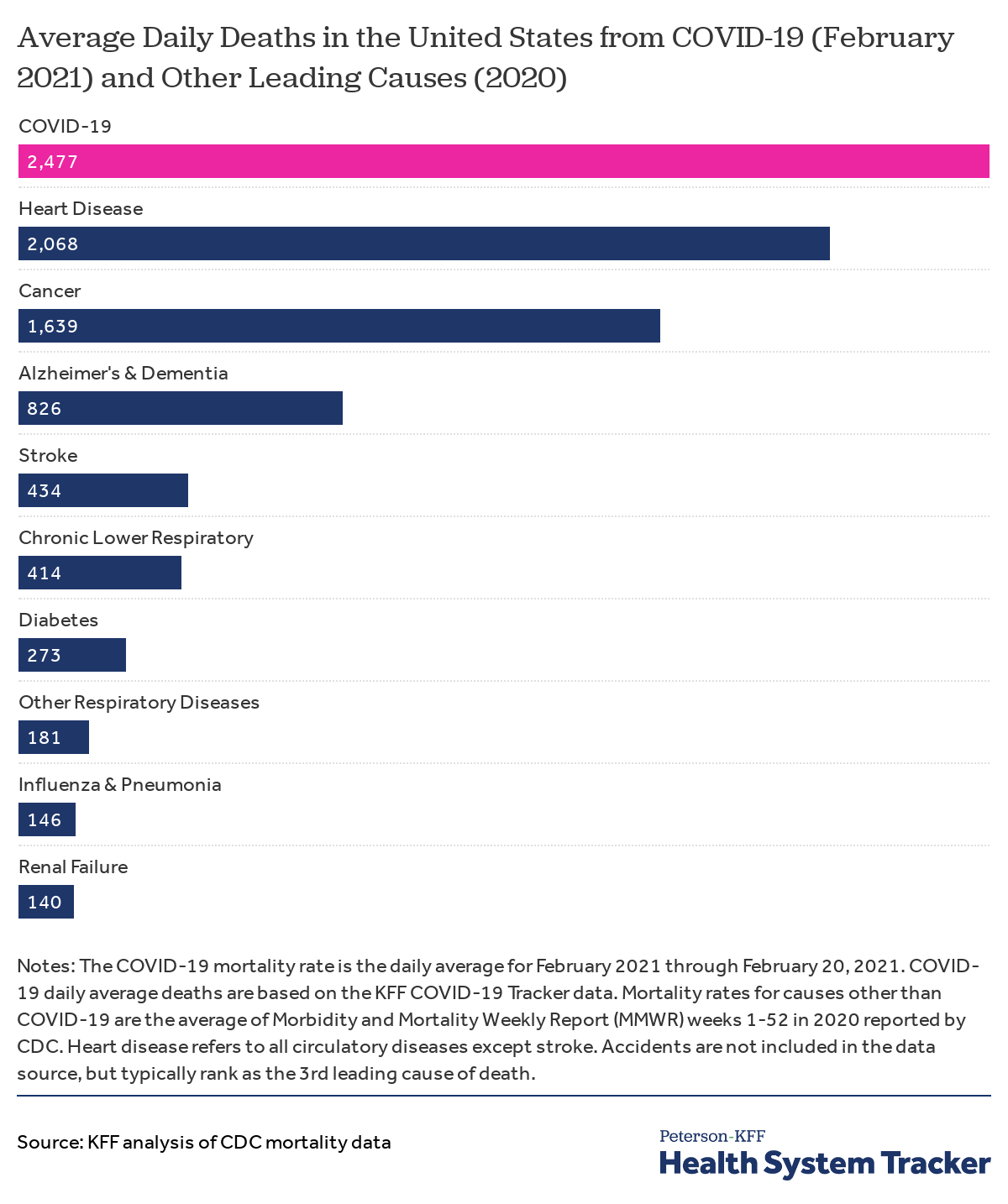
A decade later, everything still remains…not the same. We have three grandchildren now; the kids have been married for some time. Our foster daughter is getting married this summer. We had the COVID19 Pandemic with nearly three million dead from it (by comparison the chart below shows the daily number of deaths from COVID as compared to the daily number of deaths from other causes. I repeatedly ran across COVID19 deaths referred to as “excess deaths”. Apparently the census takers count on a certain number of people dying every day…:Heart disease, cancer, and Alzheimer’s STILL claim way too many lives.
However, the ripples in the time line since that diagnosis are still active; not as huge, certainly, but they are still there. Lifestyle changes – for me for the worse (I spent too much of the past ten years eating too much…), some for the better – like we’ve both retired. As well, since that time, we’ve met MANY people whose lives withered under the impact of breast cancer. Many, many recovered, thank God and the doctors He’s had working on the breast cancer front (and the Alzheimer’s front!).
I’ll keep blogging, especially about medical development of tools to fight against both diseases. So, keep reading and if you have questions or need a virtual shoulder to cry on, let me know.
Resource: https://www.healthsystemtracker.org/brief/covid-19-is-the-number-one-cause-of-death-in-the-u-s-in-early-2021/, https://img.datawrapper.de/jw0qD/full.png
Sunday, January 10, 2021
GUY’S GOTTA TALK ABOUT…Alzheimer’s #34: Other Kinds of Dementia?
Actually, I had no idea that there were so many causes of dementia. According the Wikipedia, dementia is “a set of symptoms caused some sort of brain damage, usually brought on by disease, though it can also result from injury. Over time, there is an increase in problems with memory, thinking, and behavior. These accumulate until they begin to affect the ability of a person to do what we would consider everyday activities. There are also emotional problems, difficulties with language, and decreased motivation. A person’s consciousness isn’t usually affected.[What does THAT mean??? By definition, consciousness is variously, “awareness of internal or external existence.” However, despite thousands of years of attempting to define what ‘consciousness’ is, Schneider and Velmans conclude that consciousness is ‘at once the most familiar and most mysterious aspect of our lives.’”] Dementias change a person’s usual mental functioning, and the person’s cognitive decline is faster than what we would expect in normal aging. In 2013, dementia was reclassified as a major neurocognitive disorder, with varying degrees of severity, and with all KINDS of causes.”
So then, what are these different kinds of dementia?
Vascular Dementia (second most common after Alzheimer’s): caused by a lack of blood flow to the brain. Vascular dementia can happen as you age and can be related to atherosclerotic disease or stroke. Symptoms can appear slowly or suddenly (this may have happened in my mom. She DID have congestive heart failure and absolutely did have changes in how she viewed the world and did things for herself.)
AIDS-Related Dementia: It’s also possible for those with HIV to develop cognitive impairment and dementia, especially if they’re not taking antiviral medications.
Dementia with Lewy bodies: caused by protein deposits in nerve cells. This interrupts chemical messages in the brain and causes memory loss and disorientation. There are similarities between this and both Parkinson’s and Alzheimer’s. Visual hallucinations, trouble falling asleep at night, or fall asleep unexpectedly during the day, fainting or getting lost or disoriented may also occur.
Parkinson’s Disease: This disease can cause problems with reasoning and judgment leading to trouble understanding visual information or remembering how to do simple daily tasks. They may even have confusing or frightening hallucinations, become more than normally irritable. Depression or paranoia, trouble speaking because of forgotten words, or getting lost during a conversation can also happen.
Frontotemporal dementia: This disease affects the front and side parts of the brain, which control language and behavior and may strike people as young as 45 years old. It does appear to run in families. It can cause loss of inhibitions and motivation, as well as compulsive behavior, create problems with speech, including forgetting the meaning of common words.
Creutzfeldt-Jakob disease (rarest form of dementia): Oddly enough, I came across this disease while researching for a science fiction story I wrote (currently it’s in submission). The symptoms are similar to the other dementias, but only 1 in 1 million people are diagnosed with it every year. That said, CJD progresses so quickly that victims often die within a year of diagnosis as it also affects the body as well, causing twitching and muscle stiffness.
Wernicke-Korsakoff syndrome: This disease is a one-two kick to the groin. Initially, Wernicke’s encephalopathy, is initiated by a lack of vitamin B-1, leading to bleeding in the lower sections of the brain, causing double vision and a loss of muscle coordination. If untreated, these symptoms decrease, and the signs of Korsakoff syndrome kick in. Trouble processing information, learning new skills, and remembering things. Technically, Wernicke-Korsakoff syndrome is not a dementia. However, symptoms are similar enough to dementia to warrant the classification. Also, W-K can result of malnutrition or chronic infections. However, the most common cause for this vitamin deficiency is alcoholism. In a stranger reaction, people with this dementia will make up information to fill in the gaps in their memories without realizing what they’re doing.
Mixed dementia: Very common, usually a combination of vascular dementia and Alzheimer’s. In nearly half of people diagnosed with Alzheimer’s actually have this form.
Normal pressure hydrocephalus: Typically caused by injury, bleeding, infection, or brain surgery, there’s a build-up of excess fluid in the brain’s ventricles. The ventricles are fluid-filled spaces that rely on just the right amount of fluid to work properly. When the fluid builds up excessively, it places extra pressure on the brain.
Huntington’s disease: a genetic condition that causes dementia (juvenile and adult onset) causing premature breakdown of the brain’s nerve cells, which can lead to dementia and impaired movement causing jerking, difficulty walking, and trouble swallowing, difficulty focusing on tasks, controlling impulses, trouble speaking clearly, and difficulty learning new things.
Dementia caused by Multiple Sclerosis: Sometimes happens.
Alcohol and drug abuse: Finally, these can cause brain damage not apparent immediately, rather showing up as a person ages.
So, now we know. Dementia has multiple causes that all lead to similar symptoms. Forewarned is forearmed.
Resource: https://www.healthline.com/health/types-dementia#huntingtons-disease, https://en.wikipedia.org/wiki/Consciousness
Image: https://upload.inkspire.org/uploads%2F1503370874800-Alzheimer-disease-patients.jpg
Sunday, September 27, 2020
GUY’S GOTTA TALK ABOUT…Alzheimer’s #32: Alzheimer’s in the time of COVID19…part 2
Dad’s diagnosis of Alzheimer’s stayed hidden from everyone until I took over the medical administration of my parents in 2015. Once I found out, there was a deafening silence from most of the people I know even though virtually all of them would add, “My _____ had Alzheimer’s…” But there was little help, little beyond people sadly shaking heads. Or horror stories. Lots of those. Even the ones who knew about the disease seemed to have received a gag order from some Central Alzheimer’s Command and did little more than mumble about the experience. Not one to shut up for any known reason, I started this part of my blog…
I originally posted this six months ago on March 29. In the ensuing half year, things have NOT gotten better. The closed doors of the care facility my parents lived in have NOT opened; in fact, as of today, the total number of cases and deaths from COVID19 for the age group my parents were in (+80) are: 1987 cases; 324 deaths.
For the sake of comparison, the WORLD death rate from COVID19 is 4%; for Minnesota, the death rate for COVID19, for my parent’s age group is 16%...that’s a death rate of 1 in 6…They lived on a floor with 25 rooms, some with husbands and wives, so there were roughly 37 people there.
Statistically, six of the residents would have succumbed to COVID19…
When the governor of Minnesota, the state I live in, announced that Sheltering-In-Place was going to be mandatory, I had a sudden image of what the COVID-19 pandemic would be like for Mom (who had age-related dementia) and Dad (diagnosed Alzheimer's in 2014).
It wasn’t pretty.
All long term care facilities have closed their doors, allowing employees only to enter and leave. Mom and Dad lived in one moving in 2015, starting in assisted living. They could come and go as they chose, but as Mom’s health deteriorated, she stayed in more than she went out. Finally, she’d broken down so far that we convinced them both to move into Memory Care – because they provided Hospice Care and there was a good chance she was going to need it.
She died in 2016; dad followed three years later.
Toward both of their ends, there was a lot of delusion, a lot of imagination, a lot of confusion that only increased until they each went to meet their maker. That confusion was about normal, everyday things – meals, times, years, seasons, objects…
When I think of trying to explain the COVID-19 global pandemic to them, it gives me a headache. Especially when with Dad, I would be bound to explain it every single day – like how to work his TV or his phone or his clock...or that Mom had died weeks/months/years earlier – and he would forget twenty minutes later and call to tell me his TV wasn’t working or he’d lost his keys or his wallet.
How are families dealing with it?
“‘He hears the news, knows that routines have changed, sees that kids and grandkids are home from school or lost a job, but ‘coronavirus’ and ‘COVID-19’ don’t register.’ It can be heartbreaking and difficult to explain this pandemic to your loved ones and know what to do.”
And what happens when the facility shuts down to visitors? I can’t imagine what I would have done if I couldn’t have gone to see Dad two to seven times a week! (I would have drawn on the assurance that my siblings would take care of him. He was fine when I went to South Korea for four weeks to see my son, daughter-in-law, and grandkids. Dad had been stationed in Japan during the Korean Conflict, so he had an anchor to place me as “away”.) That might have helped during this time as well – explain that I’ll be away and will call as I can…
“It’s important to communicate changes that may cause anxiety or upset a person living with dementia. If you are unable to visit, let the person know. Set up a plan and create a new habit. This will help them to grow accustomed to new changes. Reassure them that you will keep in touch in other ways. The reasons why you can’t visit will be secondary and can be explained simply if needed.”
And the whole “Wash your hands; wash your hands; wash your hands” thing?
“Walk through the process with them, saying each step at a time…Use your hands to model what needs to be done and use a soothing tone…Since frequent handwashing can dry out skin, keep a moisturizer on hand, especially because older loved ones may already have delicate and fragile skin…Accept that people will touch their faces and just do the best you can with distractions.”
All in all, anyone reading this whose parents have Alzheimer’s or other dementias, you have my deepest sympathy. If you need to talk, you can leave a message. I'd be happy to be a shoulder to cry on...
Resource: https://www.health.state.mn.us/diseases/coronavirus/stats/covidweekly39.pdfImage: https://upload.inkspire.org/uploads%2F1503370874800-Alzheimer-disease-patients.jpg
Sunday, August 2, 2020
GUY’S GOTTA TALK ABOUT…Alzheimer’s #31: Reflecting On the Past, Unforgettable
Sunday, June 7, 2020
GUY’S GOTTA TALK ABOUT…Alzheimer’s #30: How Many Times Can I Revisit the Past?
Saturday, September 28, 2019
GUY’S GOTTA TALK ABOUT #46…and final GGTA…Breast Cancer…Not the End of the Blog, Just…
Saturday, August 3, 2019
GUY’S GOTTA TALK ABOUT…Alzheimer’s #25: After Alzheimer’s