Showing posts with label Alzheimer's. Show all posts

Sunday, May 30, 2021

RELATED MEDICAL ISSUES RIGHT NOW! #2: Osteoporosis And YOU! (What???)

From the first moment my wife discovered she had breast cancer, there was a deafening silence from the men I know. Even ones whose wives, mothers or girlfriends had breast cancer seemed to have received a gag order from some Central Cancer Command and did little more than mumble about the experience. Not one to shut up for any known reason, I started this blog…
From the first moment I discovered my dad had been diagnosed with Alzheimer’s, it seemed like I was alone in this ugly place. Even ones who had loved ones suffering in this way; even though people TALKED about the disease, it felt for me like they did little more than mumble about the experience. Not one to shut up for any known reason, I added a section to this blog…

The immediate crisis that was Breast Cancer and Alzheimer’s have passed. There are, however ancillary issues like testing and treatments that may not be directly related to BC or A but intersect with them. Harvested from different websites, journals and podcasts, I’ll translate them into understandable English and share them with you. Today: Osteoporosis!


My wife recently had a DEXA Scan (DEXA is an acronym for a truly incomprehensible medical procedure: Dual Energy X-ray Absorptiometry.), though the author of the article, who is a retired med tech, notes, “a mouthful of a term that actually tells a lot about this procedure”…I would argue that it doesn’t mean ANYTHING to a normal person!

So let’s break it down. First of all, it’s a special kind of x-ray. OK, that’s pretty easy. X-rays are something we all understand (I marvel that it’s no longer necessary to “develop the film”. It all pops up on a computer screen now, pretty much instantly!)

“As the scanning arm is moved slowly over your body, a narrow beam of low-dose X-rays will be passed through the part of your body being examined. This will usually be your hip and lower spine to check for weak bones (also called osteoporosis)”.

The doctor looks at the how thick (which is (mostly) what “density” is) and she makes a determination based on what’s normal and what’s not.

There are two scores they give you, the T-score and the Z-score. I'll stick with the more understandable T-score!

The T-score compares your bone density to the BEST bone density for your gender. [For the mathematically inclined: “It is reported as the number of standard deviations below the average, which is based on the bone density of a healthy 30-year-old adult.”] If it’s more than -1 your bone density is normal. Between -1 to -2.5 shows something called “osteopenia” means it’s less dense than it SHOULD be, but not disaster yet. You are at some risk of developing osteoporosis. But if it’s less than -2.5 (-2.7, -3.0, -3.2, etc.) that generally means osteoporosis.

What’s osteoporosis? Simple: It’s the weakening of bones in the body. It is caused by lack of calcium deposited in the bones. That means that when you DO smack a bone and you have osteoporosis, the bone’s more likely to break – rather than just getting a bone bruise.

What can you do if you have osteopenia (pre-osteoporosis) or actual osteoporosis? Well, listen to your doctor for one! But what about BEFORE the emergency?

Include plenty of calcium in your diet.
Good sources of calcium include dairy products, almonds, broccoli, kale, canned salmon with bones, sardines and soy products, such as tofu. If you find it difficult to get enough calcium from your diet, ask your doctor about supplements.

Pay attention to vitamin D.
Your body needs vitamin D to absorb calcium. Good sources of vitamin D are salmon, trout, whitefish and tuna. Also, mushrooms, eggs and fortified foods, such as milk and cereals, are good sources of vitamin D. Plain old being out in the sun also contributes to the body's production of vitamin D.

Include physical activity in your daily routine.
(Isn’t it WEIRD how doing exercise can help you feel better and live longer?) Weight-bearing exercises, such as walking, jogging, and climbing stairs, can help you build strong bones and slow bone loss.

Avoid substance abuse.
Don't smoke. Woman should avoid drinking more than one alcoholic beverage a day. Men? No more than two alcoholic drinks a day.

There’s stuff you can do before an emergency. And if you’ve hit the panic button? The same things are helpful, PLUS doing what the doc says!

Resources: https://www.verywellhealth.com/what-is-a-dexa-scan-190167, https://www.mayoclinic.org/healthy-lifestyle/adult-health/in-depth/bone-health/art-20045060
Image: https://encrypted-tbn0.gstatic.com/images?q=tbn:ANd9GcQWFDJVgpz0G9kdb-eRXgRxMiv-Qz-Moaiw9w&usqp=CAU

Sunday, February 21, 2021

GUY’S GOTTA TALK ABOUT…Alzheimer’s #35: Did Placing Mom and Dad in a Care Facility Hasten Their Deaths?

Dad’s diagnosis of Alzheimer’s stayed hidden from everyone until I took over the medical administration of my parents in 2015. Once I found out, there was a deafening silence from most of the people I know even though virtually all of them would add, “My _____ had Alzheimer’s…” But there was little help, little beyond people sadly shaking heads. Or horror stories. Lots of those. Even the ones who knew about the disease seemed to have received a gag order from some Central Alzheimer’s Command and did little more than mumble about the experience. Not one to shut up for any known reason, I started this part of my blog…

Did placing Mom and Dad in a care facility hasten their deaths?

The short answer is, for Mom, hmmm. They were living in the condominium they’d purchased seventeen years earlier when Mom started her precipitous slide after having a hip replacement in October of 2014 and refusing to do the prescribed exercises...and being just plain...older than she was the first time they'd replaced it. They moved into an Independent Living/Assisted Living/Memory Care facility (after long, arduous discussions, arguments, and confrontations…that was a horrible time I have no desire to recall let alone relive…) in September of 2015. Mom passed away in July of 2016. Dad moved in the same day as Mom, then passed in February of 2019 – 10 months for Mom; 3 years, seven months later…Short answer for Dad, is he probably lived LONGER going there…

First thing I’m going to note is that when I started searching Google for this essay, the FIRST thing that comes up (sometimes for two pages!) are ADVERTISEMENTS for nursing homes, assisted living facilities, and memory care facilities.

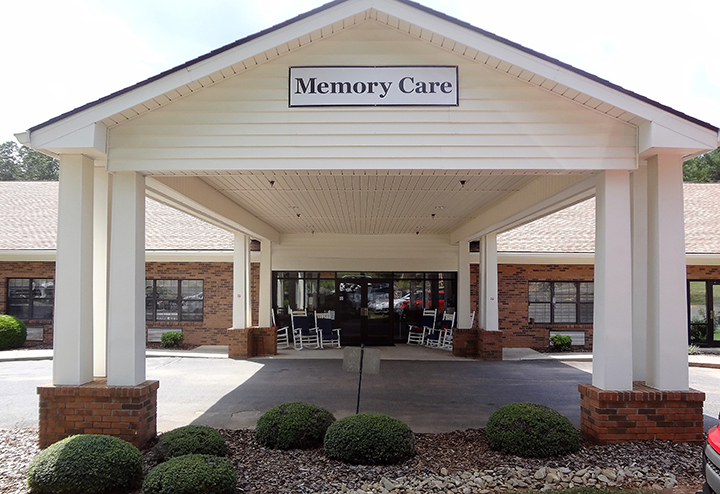
My parents were in a top tier facility, (then) half of the place was senior independent living. The other half was (then), two floors of assisted living and one of memory care. (Today, an entire wing of independent living has been added, and a second floor of memory care…)

There was underground parking, a spa and swimming pool, gourmet dining, barber/beauty shop, stunning appointments, a full activity program, a chapel with regular services, a medical clinic sent someone to the facility every other day, there’s nothing Mom and Dad DIDN’T have!

And yet they died eventually. Mom passed first and my brother and wife were “on watch” the moment she died. Dad? He was actually alone. I got the call from the facility while I was working (high school counselor), and I left to find him silent, in his room.

It was NOT a surprise; me and my siblings had been holding “death watches” for two weeks after he had a bad fall and reportedly’d had a small stroke. That was the beginning of his long slide. After a hospital stay, we’d allowed him to be placed on hospice care in order to get meds and frequent care (NOT 24/7) the facility wasn’t set up for that; but we wanted him to die in a familiar place. Mom died in her bed. We’d had to get a hospital bed for Dad for several reasons as well as rearrange his room to accommodate it and clear pathways for him to be able to see the TV and for us to sit – and to keep things as “normal” as we could.

Ya know…this has stirred a whole, Helluvalot of crap in me. I’m going to stop now and come back next week. Sorry…

Sunday, January 10, 2021

GUY’S GOTTA TALK ABOUT…Alzheimer’s #34: Other Kinds of Dementia?

Dad’s diagnosis of Alzheimer’s stayed hidden from everyone until I took over the medical administration of my parents in 2015. Once I found out, there was a deafening silence from most of the people I know even though virtually all of them would add, “My _____ had Alzheimer’s…” But there was little help, little beyond people sadly shaking heads. Or horror stories. Lots of those. Even the ones who knew about the disease seemed to have received a gag order from some Central Alzheimer’s Command and did little more than mumble about the experience. Not one to shut up for any known reason, I started this part of my blog…


Actually, I had no idea that there were so many causes of dementia. According the Wikipedia, dementia is “a set of symptoms caused some sort of brain damage, usually brought on by disease, though it can also result from injury. Over time, there is an increase in problems with memory, thinking, and behavior. These accumulate until they begin to affect the ability of a person to do what we would consider everyday activities. There are also emotional problems, difficulties with language, and decreased motivation. A person’s consciousness isn’t usually affected.[What does THAT mean??? By definition, consciousness is variously, “awareness of internal or external existence.” However, despite thousands of years of attempting to define what ‘consciousness’ is, Schneider and Velmans conclude that consciousness is ‘at once the most familiar and most mysterious aspect of our lives.’”] Dementias change a person’s usual mental functioning, and the person’s cognitive decline is faster than what we would expect in normal aging. In 2013, dementia was reclassified as a major neurocognitive disorder, with varying degrees of severity, and with all KINDS of causes.”

So then, what are these different kinds of dementia?

Vascular Dementia (second most common after Alzheimer’s): caused by a lack of blood flow to the brain. Vascular dementia can happen as you age and can be related to atherosclerotic disease or stroke. Symptoms can appear slowly or suddenly (this may have happened in my mom. She DID have congestive heart failure and absolutely did have changes in how she viewed the world and did things for herself.)

AIDS-Related Dementia: It’s also possible for those with HIV to develop cognitive impairment and dementia, especially if they’re not taking antiviral medications.

Dementia with Lewy bodies: caused by protein deposits in nerve cells. This interrupts chemical messages in the brain and causes memory loss and disorientation. There are similarities between this and both Parkinson’s and Alzheimer’s. Visual hallucinations, trouble falling asleep at night, or fall asleep unexpectedly during the day, fainting or getting lost or disoriented may also occur.

Parkinson’s Disease: This disease can cause problems with reasoning and judgment leading to trouble understanding visual information or remembering how to do simple daily tasks. They may even have confusing or frightening hallucinations, become more than normally irritable. Depression or paranoia, trouble speaking because of forgotten words, or getting lost during a conversation can also happen.

Frontotemporal dementia: This disease affects the front and side parts of the brain, which control language and behavior and may strike people as young as 45 years old. It does appear to run in families. It can cause loss of inhibitions and motivation, as well as compulsive behavior, create problems with speech, including forgetting the meaning of common words.

Creutzfeldt-Jakob disease (rarest form of dementia): Oddly enough, I came across this disease while researching for a science fiction story I wrote (currently it’s in submission). The symptoms are similar to the other dementias, but only 1 in 1 million people are diagnosed with it every year. That said, CJD progresses so quickly that victims often die within a year of diagnosis as it also affects the body as well, causing twitching and muscle stiffness.

Wernicke-Korsakoff syndrome: This disease is a one-two kick to the groin. Initially, Wernicke’s encephalopathy, is initiated by a lack of vitamin B-1, leading to bleeding in the lower sections of the brain, causing double vision and a loss of muscle coordination. If untreated, these symptoms decrease, and the signs of Korsakoff syndrome kick in. Trouble processing information, learning new skills, and remembering things. Technically, Wernicke-Korsakoff syndrome is not a dementia. However, symptoms are similar enough to dementia to warrant the classification. Also, W-K can result of malnutrition or chronic infections. However, the most common cause for this vitamin deficiency is alcoholism. In a stranger reaction, people with this dementia will make up information to fill in the gaps in their memories without realizing what they’re doing.

Mixed dementia: Very common, usually a combination of vascular dementia and Alzheimer’s. In nearly half of people diagnosed with Alzheimer’s actually have this form.

Normal pressure hydrocephalus: Typically caused by injury, bleeding, infection, or brain surgery, there’s a build-up of excess fluid in the brain’s ventricles. The ventricles are fluid-filled spaces that rely on just the right amount of fluid to work properly. When the fluid builds up excessively, it places extra pressure on the brain.

Huntington’s disease: a genetic condition that causes dementia (juvenile and adult onset) causing premature breakdown of the brain’s nerve cells, which can lead to dementia and impaired movement causing jerking, difficulty walking, and trouble swallowing, difficulty focusing on tasks, controlling impulses, trouble speaking clearly, and difficulty learning new things.

Dementia caused by Multiple Sclerosis: Sometimes happens.

Alcohol and drug abuse: Finally, these can cause brain damage not apparent immediately, rather showing up as a person ages.

So, now we know. Dementia has multiple causes that all lead to similar symptoms. Forewarned is forearmed.

Resource: https://www.healthline.com/health/types-dementia#huntingtons-disease, https://en.wikipedia.org/wiki/Consciousness
Image: https://upload.inkspire.org/uploads%2F1503370874800-Alzheimer-disease-patients.jpg

Sunday, November 22, 2020

GUY’S GOTTA TALK ABOUT…Alzheimer’s #33: The Many Ugly Faces of Dementia

Dad’s diagnosis of Alzheimer’s stayed hidden from everyone until I took over the medical administration of my parents in 2015. Once I found out, there was a deafening silence from most of the people I know even though virtually all of them would add, “My _____ had Alzheimer’s…” But there was little help, little beyond people sadly shaking heads. Or horror stories. Lots of those. Even the ones who knew about the disease seemed to have received a gag order from some Central Alzheimer’s Command and did little more than mumble about the experience. Not one to shut up for any known reason, I started this part of my blog…


While my dad had a diagnosed case of Alzheimer’s and I tracked his gradual decline based on the 7 stage (I look at them more closely here: https://breastcancerreaper.blogspot.com/search?q=seven+stage) system as opposed to the simpler but less descripting 3 stage system, we found that my mom was suffering from something they called “age associated memory impairment” (https://alzheimer.ca/en/about-dementia/do-i-have-dementia/differences-between-normal-aging-dementia). As well, she would have vivid dreams and sometimes think they were real, and even have occasional hallucinations.

That was a difficult time which ended with my mom passing three years before my dad did.

Welcome to another round of age associated memory impairment that is sliding into dementia.

According to several sites (see below), there are warning signs of this condition:
  • Asking the same question repeatedly
  • Having trouble completing simple or routine tasks
  • Forgetting words
  • Using the wrong word
  • Getting lost in familiar places
  • Losing everyday items like keys or purses
  • Sudden changes in mood
  • Loss of interest in hobbies, projects or events
My brother-in-law recently moved into a facility whose specialty is in helping men who have reached this point in their lives.

It’s been difficult to see this happen. At one point, though he was in his forties, he enthusiastically took part in the annual Iron Man race; he built a wooden canoe in his garage; he and his younger brother started a furniture making business and they had and used a massive shop in his back yard; he was a computer programming consultant for a major banking corporation. He had a sharp mind, a razor wit, and kept a small hobby farm where he lived during the summers after he retired.

He is now a shadow of his former self and sometimes forgets his baby sister’s name (my wife). He can barely walk and rarely tries.

I miss the old brother-in-law, but he’s at arm’s length (though we’ve been in-laws for more than thirty years), he’s ten years older than me. So, this has been extremely hard on my wife and she is SO sad to sit and watch her brother fade away – an event whose horror is exacerbated by the fact that we can’t see him because of COVID-19 restrictions.

When she talks to him on the phone, I (of course) hear clearly, and it regularly brings back jarring memories of me dealing with my dad as he descended into Alzheimer’s hell. Those memories are dredged up every time I overhear their conversations.

I hate dementia. I hate Alzheimer’s. My heart goes out to anyone who reads this who is suffering through this hideous time during which our parents/siblings/spouses turn into awful caricatures of their former selves…All you can do is hang on and keep moving forward. Lame advice at its worst, I know.

Resource: https://www.alz.org/alzheimers-dementia/what-is-dementia, https://alzheimer.ca/en/about-dementia/do-i-have-dementia/10-warning-signs-dementia, https://archive.alzheimer.ca/sites/default/files/files/national/core-lit-brochures/10-warning-signs_print-friendly.pdf?_ga=2.104771462.740806038.1606054473-1557823224.1606054473, https://blackbearrehab.com/mental-health/substance-induced-disorders/persisting-dementia/

Image: https://upload.inkspire.org/uploads%2F1503370874800-Alzheimer-disease-patients.jpg

Sunday, September 27, 2020

GUY’S GOTTA TALK ABOUT…Alzheimer’s #32: Alzheimer’s in the time of COVID19…part 2

Dad’s diagnosis of Alzheimer’s stayed hidden from everyone until I took over the medical administration of my parents in 2015. Once I found out, there was a deafening silence from most of the people I know even though virtually all of them would add, “My _____ had Alzheimer’s…” But there was little help, little beyond people sadly shaking heads. Or horror stories. Lots of those. Even the ones who knew about the disease seemed to have received a gag order from some Central Alzheimer’s Command and did little more than mumble about the experience. Not one to shut up for any known reason, I started this part of my blog…

I originally posted this six months ago on March 29. In the ensuing half year, things have NOT gotten better. The closed doors of the care facility my parents lived in have NOT opened; in fact, as of today, the total number of cases and deaths from COVID19 for the age group my parents were in (+80) are: 1987 cases; 324 deaths.

For the sake of comparison, the WORLD death rate from COVID19 is 4%; for Minnesota, the death rate for COVID19, for my parent’s age group is 16%...that’s a death rate of 1 in 6…They lived on a floor with 25 rooms, some with husbands and wives, so there were roughly 37 people there.

Statistically, six of the residents would have succumbed to COVID19…

When the governor of Minnesota, the state I live in, announced that Sheltering-In-Place was going to be mandatory, I had a sudden image of what the COVID-19 pandemic would be like for Mom (who had age-related dementia) and Dad (diagnosed Alzheimer's in 2014).

It wasn’t pretty.

All long term care facilities have closed their doors, allowing employees only to enter and leave. Mom and Dad lived in one moving in 2015, starting in assisted living. They could come and go as they chose, but as Mom’s health deteriorated, she stayed in more than she went out. Finally, she’d broken down so far that we convinced them both to move into Memory Care – because they provided Hospice Care and there was a good chance she was going to need it.

She died in 2016; dad followed three years later.

Toward both of their ends, there was a lot of delusion, a lot of imagination, a lot of confusion that only increased until they each went to meet their maker. That confusion was about normal, everyday things – meals, times, years, seasons, objects…

When I think of trying to explain the COVID-19 global pandemic to them, it gives me a headache. Especially when with Dad, I would be bound to explain it every single day – like how to work his TV or his phone or his clock...or that Mom had died weeks/months/years earlier – and he would forget twenty minutes later and call to tell me his TV wasn’t working or he’d lost his keys or his wallet.

How are families dealing with it?

“‘He hears the news, knows that routines have changed, sees that kids and grandkids are home from school or lost a job, but ‘coronavirus’ and ‘COVID-19’ don’t register.’ It can be heartbreaking and difficult to explain this pandemic to your loved ones and know what to do.”

And what happens when the facility shuts down to visitors? I can’t imagine what I would have done if I couldn’t have gone to see Dad two to seven times a week! (I would have drawn on the assurance that my siblings would take care of him. He was fine when I went to South Korea for four weeks to see my son, daughter-in-law, and grandkids. Dad had been stationed in Japan during the Korean Conflict, so he had an anchor to place me as “away”.) That might have helped during this time as well – explain that I’ll be away and will call as I can…

“It’s important to communicate changes that may cause anxiety or upset a person living with dementia. If you are unable to visit, let the person know. Set up a plan and create a new habit. This will help them to grow accustomed to new changes. Reassure them that you will keep in touch in other ways. The reasons why you can’t visit will be secondary and can be explained simply if needed.”

And the whole “Wash your hands; wash your hands; wash your hands” thing?

“Walk through the process with them, saying each step at a time…Use your hands to model what needs to be done and use a soothing tone…Since frequent handwashing can dry out skin, keep a moisturizer on hand, especially because older loved ones may already have delicate and fragile skin…Accept that people will touch their faces and just do the best you can with distractions.”

All in all, anyone reading this whose parents have Alzheimer’s or other dementias, you have my deepest sympathy. If you need to talk, you can leave a message. I'd be happy to be a shoulder to cry on...

Resource: https://www.health.state.mn.us/diseases/coronavirus/stats/covidweekly39.pdf
Image: https://upload.inkspire.org/uploads%2F1503370874800-Alzheimer-disease-patients.jpg

Sunday, August 2, 2020

GUY’S GOTTA TALK ABOUT…Alzheimer’s #31: Reflecting On the Past, Unforgettable


Dad’s diagnosis of Alzheimer’s stayed hidden from everyone until I took over the medical administration of my parents in 2015. Once I found out, there was a deafening silence from most of the people I know even though virtually all of them would add, “My _____ had Alzheimer’s…” But there was little help, little beyond people sadly shaking heads. Or horror stories. Lots of those. Even the ones who knew about the disease seemed to have received a gag order from some Central Alzheimer’s Command and did little more than mumble about the experience. Not one to shut up for any known reason, I started this part of my blog…

As morbid as it might seem, I’ve saved two photos from “the end” of Dad’s struggle against Alzheimer’s.

One is him sleeping in his bed, four days before he died. The other is the apartment him and mom lived in; and passed in; empty of all their worldly possessions after we’d picked over the stuff and took what we wanted.

As an aside, my wife went across the street yesterday to talk to the daughter of a neighbor who passed suddenly…eight years ago. The house is still there, unsold, and my wife found out, still unemptied. Her clothing still hangs in a closet because one of her daughters has been unable to release her into death…I hope she doesn’t come back to haunt somebody, but I can, with my fervid imagination, come up with a wildly weird and creepy story…possibly involving this creepy tree my son took a picture of:


The point of all this is that my wife and I were talking about retirement. I retired a couple of months ago, she a bit more than a year ago. We were reflecting on the amount of time helping Dad had consumed. As the sibling closest to Mom and Dad’s place, I was more-or-less on call at all hours. At first, it amounted to little more than taking Mom and Dad to their appointments (medical and recreational); but as they deteriorated, the “appointments” increased dramatically. After Mom died, it grew worse because she was no longer there to answer Dad’s questions.

It was only mildly irritating at first, but as his Alzheimer’s shifted into high gear and he plunged precipitously over the edge of deterioration, he forgot more and more and was able to function less and less. The virtually daily battle with the television set was perhaps my greatest pain-in-the-butt. He had NO IDEA how to work the remote and it had to be reset almost daily. I tried everything – taping the keys down (he peeled the tape away or reached the back of the TV to mess with the buttons…my brother glued a cover over them and he pried it off.), hiding the remote, anything! That prompted HIM to start hiding the remote. Weekly, I had to search for it, finding it in various places in his apartment (gym bag, bathroom drawers, dresser drawers, pillowcase, bedside drawers…under the couch, in the couch, in the bed…once in the mini fridge he had)

Then there were the constant phone calls. One I remember vividly:

“Guy, I have some bad news.”
“What is it, Dad?” My heart had started to race.
“I think your mother left me,” he answered with grim seriousness. I had to take a deep breath, and in this case, my explanation that Mom had died two years earlier, met with a deep sigh after which he said, “I know. I don’t understand why I can’t remember that. It all seemed to clear to me then…”

While this isn’t an anniversary (except my wife and mine’s 33rd Wedding Anniversary), it’s a reflection on the fact that Alzheimer’s and its effects don’t disappear. Sometimes, they don’t even grow old or dimmer.

Sometimes, it seems like they will be unforgettable…

Resource:

Sunday, June 7, 2020

GUY’S GOTTA TALK ABOUT…Alzheimer’s #30: How Many Times Can I Revisit the Past?


Dad’s diagnosis of Alzheimer’s stayed hidden from everyone until I took over the medical administration of my parents in 2015. Once I found out, there was a deafening silence from most of the people I know even though virtually all of them would add, “My _____ had Alzheimer’s…” But there was little help, little beyond people sadly shaking heads. Or horror stories. Lots of those. Even the ones who knew about the disease seemed to have received a gag order from some Central Alzheimer’s Command and did little more than mumble about the experience. Not one to shut up for any known reason, I started this part of my blog…

As I detailed in Alzheimer’s In the Time of COVID-19 (https://breastcancerreaper.blogspot.com/2020/03/guys-gotta-talk-aboutalzheimers-28.html), I’ve been thinking a lot about what my parents would have done, what I do, and where this all might end…

Not the spread of the disease itself – we already expect that there will be a surge in July or August of this year. With the wave of protest against police brutality blossoming across the face of the planet, and the close confines that promotes (in addition to a “mask optional” paradigm, despite leadership trying to lead by example), a surge is inevitable. The same types of protests have exploded in other countries, giving rise to the sense that while it’s horrible in the US (and I’ve lived in the epicenter of Minneapolis most of my life), it is an issue everywhere.

Not the protests – we’ve set ourselves up for a major societal paradigm shift (and there’s plenty of blame to go around (as well as strenuous efforts by our elected politicians to shift the blame off of their desks and onto anyone else they can think of (https://time.com/5848705/disband-and-replace-minneapolis-police/)). HUMANITY has to come up with a better way to interact.

And that’s another reason why I’m glad my parents are not here to witness this.

A local CUB that used to be open 24 hours has both boarded up its windows, redirected customers to use a single entrance/exit, and cut its hours in half. That was the CUB my (mother usually) they shopped at. I can only barely imagine the look on my mother’s face on pulling into the parking lot to see the windows boarded up. Now, don’t get me wrong, Mom was a tough old bird. She worked in a first-ring suburban high school, and when she married my dad, she married an inner city, 1940’s “youth gang” member. This Wikipedia entry precisely explains what my dad experienced from 1946 (he was 15) to his adulthood: “However youth gangs are said to be an important social institution for low income youths and young adults because they often serve as cultural, social, and economic functions which are no longer served by the family, school or labor market. Youth gangs tend to emerge during times of rapid social change and instability. Young people can be attracted to joining a youth gang for a number of reasons. They provide a degree of order and solidarity for their members and make them feel like part of a group or a community.

“The diffusion of gang culture to the point where it has been integrated into a larger youth culture has led to widespread adoption by youth of many of the symbols of gang life. For this reason, more and more youth who earlier may have not condoned gang behavior are more willing, even challenged to experiment with gang-like activity. Youth gangs may be an ever-present feature of urban culture that change over time in its form, social meaning and antisocial behavior.”

She would be no stranger to this kind of unrest – Mom and Dad raised us through the 1967 Minneapolis North race riots (https://www.minnpost.com/mnopedia/2017/07/july-1967-civil-unrest-plymouth-avenue/). This was where Dad  grew up and Mom worked…

But, how would she have coped with this? I have a good idea what Dad would have said – if he hadn’t been creeping into stage three (https://breastcancerreaper.blogspot.com/search?q=Stages+of+Alzheimer%27s), he’d have had plenty to say…

Mom was always the positive one; often looking for the best in people. Dad was more cynical with the world at large – though not with his grandchildren!

At any rate, my initial question, “How many times can I revisit the past?” is pertinent here. I often drive past the place they spent the last four years of their lives because I shop at the grocery store that Mom and (rarely!) Dad shopped at when they lived in the Assisted Living and Memory Care facility. It’s expanding, and the marvelous view they once had of a nearby park and playground has been blocked by a “newer” Independent/Assisted/Memory Care facility (in fact, I believe these kinds of places (ALL of which require VERY LARGE BANK ACCOUNTS for collateral in order to even apply to live there)) have become a cash cow for “apartment builders”…

Sorry, a bit of a soapbox there. I can continue to visit the past as long as it has relevance for the present and the future. While the chances for me and my siblings developing Alzheimer’s aren’t all that much worse than if Dad hadn’t had Alzheimer’s ( https://breastcancerreaper.blogspot.com/2019/10/guys-gotta-talk-aboutalzheimers-26.html, https://breastcancerreaper.blogspot.com/2020/04/alzheimers-research-right-now-7.html), it’s still there.

I will CONTINUE to visit the past as long as it informs the future – which sounds an awful lot like what I’m going to be doing in this new age of civil unrest…Oh, and just for comparison, I’ll point you to the following comments on an episode of STAR TREK: DEEP SPACE NINE – https://faithandsciencefiction.blogspot.com/2019/02/possibly-irritating-essays.html


Sunday, April 12, 2020

GUY’S GOTTA TALK ABOUT…Alzheimer’s #29: STAR TREK and Alzheimer’s

Dad’s diagnosis of Alzheimer’s stayed hidden from everyone until I took over the medical administration of my parents in 2015. Once I found out, there was a deafening silence from most of the people I know even though virtually all of them would add, “My _____ had Alzheimer’s…” But there was little help, little beyond people sadly shaking heads. Or horror stories. Lots of those. Even the ones who knew about the disease seemed to have received a gag order from some Central Alzheimer’s Command and did little more than mumble about the experience. Not one to shut up for any known reason, I started this part of my blog…

On another blog I keep, I complained that while science fiction dealt with all kinds of disabilities, few I’d run across dealt with dementia, or Alzheimer’s in specific. I found some, as I reviewed here: https://faithandsciencefiction.blogspot.com/2018/06/possibly-irritating-essay-no-futures.html

I was shocked then as my wife and I were re-watching the last season of STAR TREK: Deep Space Nine. Broadcast at the close of the 20th Century, when we were just beginning to feel the effects of dementia and Alzheimer’s (Dad was diagnosed in 2014 and died in 2019 of complications stemming from Alzheimer’s.)

Alzheimer’s was identified 120 years ago and since then has moved from an obscure condition including “…memory loss, paranoia, and psychological changes. Dr. Alzheimer noted in the autopsy that there was shrinkage in and around nerve cells in her brain.”

At the turn of the century, Alzheimer’s and other dementias didn’t even make the “Top Ten” list of global causes of death. Nineteen years later, it has skyrocketed to the sixth most common cause of death among humans, though in 2017, it was the FOURTH most common cause of death on Earth. In 2019, it was the 6th most common cause of death in the US, topped by heart disease at #1.

So, you’d think it would engender quite a bit more fiction than it does; and in the field of speculative fiction, you’d think it would be a gold mine of story ideas.

It’s not.

In fact, just like in the real world, it seems like no one wants to talk about it at all. Of course, I did – twenty years ago in ANALOG Science Fiction and Fact. The June 2000 issue carried my story “A Pig Tale” in which a researcher illicitly used a drug designed to treat Alzheimer’s to “rewrite” her father’s memory, erasing his suicide attempt. You can read it here: http://theworkandworksheetsofguystewart.blogspot.com/2013/04/a-pig-tale-june-2000-analog-science.html

At any rate, in the ST:DS9 episode, “Once More Unto the Breach”, a Klingon with dementia – and a glorious reputation from the past – wants to die in glory. Commander Worf, an old friend of his, arranges a place for him on a dangerous mission. “Klingon Kor is growing old and senile, and asks Worf for one last chance to die in battle. Worf uses his sway to get him on a ship, and though he initially he is humiliated, he eventually gets his warrior's death.”

While the cause of his loss of memory is laid on “senility”, it’s more than that. Just watch the episode – Kor is not only forgetting things, he’s paranoid as well as reliving the past as if it’s the present. It’s this aspect of his Alzheimer’s that nearly kills everyone.

Dad’s retreat into the past never endangered anyone’s lives, though his denial that he was starting to get confused when driving – and a harrowing turn across five lanes of traffic – might easily have killed people besides himself. That retreat caused constant problems for us and led to embarrassing revelations of his past. This manifested itself several times for me when he became convinced that my mom had left him because of imagined (recalled?) marital indiscretions. That happened far more often than I wanted to count.

How WOULD a disease like Alzheimer’s manifests itself in sapient beings other than Human? How might they be treated? Would a cure for one be a cure for another? What if other sapient civilizations practiced “senicide”? STAR TREK: The Next Generation dealt with this issue in the episode “Half A Life” in which a man in his “prime” is culturally required to end his life. The troubled Lwaxana Troi tries to convince him to live; an offer he eventually and regretfully refuses.

I’m always on the look out for stories that deal with senescence, Alzheimer’s, and dementia. If you know of any others, let me know. In the meantime, I’ll continue my search to cross post here and on my regular blog!

Image:  https://upload.inkspire.org/uploads%2F1503370874800-Alzheimer-disease-patients.jpg

Sunday, March 29, 2020

GUY’S GOTTA TALK ABOUT…Alzheimer’s #28: Alzheimer’s In The Time Of COVID-19


Dad’s diagnosis of Alzheimer’s stayed hidden from everyone until I took over the medical administration of my parents in 2015. Once I found out, there was a deafening silence from most of the people I know even though virtually all of them would add, “My _____ had Alzheimer’s…” But there was little help, little beyond people sadly shaking heads. Or horror stories. Lots of those. Even the ones who knew about the disease seemed to have received a gag order from some Central Alzheimer’s Command and did little more than mumble about the experience. Not one to shut up for any known reason, I started this part of my blog…

When the governor of Minnesota, the state I live in, announced that Sheltering-In-Place was going to be mandatory, I had a sudden image of what the COVID-19 pandemic would be like for Mom (who had age-related dementia) and Dad (diagnosed Alzheimer's in 2014).

It wasn’t pretty.

All long term care facilities have closed their doors, allowing employees only to enter and leave. Mom and Dad lived in one moving in 2015, starting in assisted living. They could come and go as they chose, but as Mom’s health deteriorated, she stayed in more than she went out. Finally, she’d broken down so far that we convinced them both to move into Memory Care – because they provided Hospice Care and there was a good chance she was going to need it.

She died in 2016; dad followed three years later.

Toward both of their ends, there was a lot of delusion, a lot of imagination, a lot of confusion that only increased until they each went to meet their maker. That confusion was about normal, everyday things – meals, times, years, seasons, objects…

When I think of trying to explain the COVID-19 global pandemic to them, it gives me a headache. Especially when with Dad, I would be bound to explain it every single day – like how to work his TV or his phone or his clock...or that Mom had died weeks/months/years earlier – and he would forget twenty minutes later and call to tell me his TV wasn’t working or he’d lost his keys or his wallet.

How are families dealing with it?

“‘He hears the news, knows that routines have changed, sees that kids and grandkids are home from school or lost a job, but ‘coronavirus’ and ‘COVID-19’ don’t register.’ It can be heartbreaking and difficult to explain this pandemic to your loved ones and know what to do.”

And what happens when the facility shuts down to visitors? I can’t imagine what I would have done if I couldn’t have gone to see Dad two to seven times a week! (I would have drawn on the assurance that my siblings would take care of him. He was fine when I went to South Korea for four weeks to see my son, daughter-in-law, and grandkids. Dad had been stationed in Japan during the Korean Conflict, so he had an anchor to place me as “away”.) That might have helped during this time as well – explain that I’ll be away and will call as I can…

“It’s important to communicate changes that may cause anxiety or upset a person living with dementia. If you are unable to visit, let the person know. Set up a plan and create a new habit. This will help them to grow accustomed to new changes. Reassure them that you will keep in touch in other ways. The reasons why you can’t visit will be secondary and can be explained simply if needed.”

And the whole “Wash your hands; wash your hands; wash your hands” thing?

“Walk through the process with them, saying each step at a time…Use your hands to model what needs to be done and use a soothing tone…Since frequent handwashing can dry out skin, keep a moisturizer on hand, especially because older loved ones may already have delicate and fragile skin…Accept that people will touch their faces and just do the best you can with distractions.”

All in all, anyone reading this whose parents have Alzheimer’s or other dementias, you have my deepest sympathy. If you need to talk, you can leave a message. I'd be happy to be a shoulder to cry on...


Saturday, December 21, 2019

GUY’S GOTTA TALK ABOUT…Alzheimer’s #27: Dementia? Alzheimer’s? What’s the Difference???


Dad’s diagnosis of Alzheimer’s stayed hidden from everyone until I took over the medical administration of my parents in 2015. Once I found out, there was a deafening silence from most of the people I know even though virtually all of them would add, “My _____ had Alzheimer’s…” But there was little help, little beyond people sadly shaking heads. Or horror stories. Lots of those. Even the ones who knew about the disease seemed to have received a gag order from some Central Alzheimer’s Command and did little more than mumble about the experience. Not one to shut up for any known reason, I started this part of my blog…

I came here today to write an article on the difference between dementia and Alzheimer’s. The chart below summarizes it SO neatly, that I’m just going to share the chart today.

However, I’m also going to add a couple of things. First, my mom suffered from dementia due to aging, possibly exacerbated by disease (vascular disease, as she was diagnosed with congestive heart failure years prior to her death) or even mini strokes. An old and dear friend of mine was diagnosed with ARD, AIDS-Related Dementia (“When HIV spreads to the brain, it results in encephalopathy (a disease which affects the brain's function), which causes dementia. The greater the spread of infection in the brain, the worse the dementia symptoms become.”)


The chart above says everything else I wanted to say.

I continue to learn about Alzheimer’s, this hated and fearsome disease that took my father less than a year ago. Let’s hope we can put down partisan differences in Congress and get back to the work of serving the people and fund more effective research on stopping it…if only: https://www.congress.gov/bill/116th-congress/senate-bill/740/text, https://alzimpact.org/press/press_release/id/144


Saturday, October 26, 2019

GUY’S GOTTA TALK ABOUT…Alzheimer’s #26: Halloween Horror Story – Will I Get Alzheimer’s?


Dad’s diagnosis of Alzheimer’s stayed hidden from everyone until I took over the medical administration of my parents in 2015. Once I found out, there was a deafening silence from most of the people I know even though virtually all of them would add, “My _____ had Alzheimer’s…” But there was little help, little beyond people sadly shaking heads. Or horror stories. Lots of those. Even the ones who knew about the disease seemed to have received a gag order from some Central Alzheimer’s Command and did little more than mumble about the experience. Not one to shut up for any known reason, I started this part of my blog…

“Dang! Where’d I leave my keys? Have you seen my keys, honey?”

“Right where you left them, dear!”

“Yeah, but where was THAT?”

When I forget ANYTHING; a name, a face, a thing, a story idea, where I parked the car…for a moment I feel a surge of horror as I think, “Am I getting Alzheimer’s?”

I’d like to say such thoughts are uncommon, but I’d be lying. I can say I don’t live in FEAR of Alzheimer’s; I can also say, though, that it’s a regular thought. Googling (Do you realize that we turned a corporate name into a  verb? Sort of eerie, don’t you think?) “fear of Alzheimer’s”, I found this:  “A Google search for the statistics related to the risk of developing Alzheimer’s in your lifetime returns over 3 million results. You could pore over them and feed your fear, or you could accept the reality that if you are 60 years old today, the odds of developing Alzheimer’s are 4.8%, or in other words, there is a 95.2% chance that you won’t develop the disease.”

My first thought, of course, was “is that a general chance or does it include people whose parents were diagnosed with Alzheimer’s?” Digging deeper: “If you have a first-degree relative with Alzheimer’s disease (e.g. mother, father, sibling), your risk of developing the illness is about two to three times higher than someone else your age who doesn’t have a family member with the illness.”

OK – that seems straightforward. That puts my chance of developing Alzheimer’s at (using 2.5 times as likely) at 12%. That’s three chances in twenty-five or about one in twelve; twelve and a half to be precise. So, if we put twelve and a half people in a room, I will have Alzheimer’s, eleven others will not, and there will be a grisly murder for someone like Hercule Poirot to solve. Which, being in a writing state of mind, puts an idea into my head…

Just so you know, this has had a salutary effect on me because I see clearly that the WORST thing that can happen to me is NOT Alzheimer’s. At any rate, as I was settling into bed last night, I found myself wondering WHY I would fear being diagnosed with Alzheimer’s. Remarkably quickly, it came down to the same fear I’ve had all my life.

That fear was also based on watching my dad, sometimes my mom, and a gigantic number of people around me both family and not, drinking alcohol. I am a teetotaler, ie “pledged to total abstinence from drink”. My biggest fear is losing control. I think that fear also has to do with me avoiding using drugs, playing games and organized sports (if I lose, I get angry and lose control of my emotions); and in general avoiding competitions. I DO like biking, swimming, hiking, and camping and I initially started all of them alone and they remain entirely NON-competitive, so I won’t lose control.

But Alzheimer’s? My dad would tell Air Force sex stories to my sister, and me about the first date he had with mom when she passed out drunk and he had to carry her home where she threw up. And I remember a night my dad came home so wasted, he fell off the three steps up to our house and I stayed up with him while my mom went bowling. He begged God to kill him most of that time…

Loss of control is a driving force in my life, and I DO have a temper. My grandfather never made it past private after four years in the Army – because he’d get in a fight whenever he DID get promoted and get busted back to private. Me and the rest of my family have an interesting history of violence as well. I absolutely don’t want to go spilling my guts to family and strangers in an Alzheimer’s driven bout of reliving the past as if it was that moment. Do I have more dirt in my life than the average person? No, but I’d rather the dirt that IS buried REMAINED buried and not come spooging out of my mouth from an addled brain.

Advice for preventing Alzheimer’s rides on observation that doing certain things can reduce the chance of developing it, but none of that has the numerical veracity of the chances of developing AD. “Better educational attainment; lifelong participation in mentally stimulating work and leisure activities; exercise; Mediterranean-type diet (low in saturated fats and red meats, more fish, vegetables and nuts, legumes and olive oil); improved sleep can help prevent Alzheimer's and is linked to greater amyloid clearance from the brain; greater social contact; make as many healthy lifestyle choices as you can; while smoking, obesity, high blood pressure, high cholesterol and blood sugar, all increase the risk of developing Alzheimer’s disease and other forms of dementia.”

So, last of all, the Harvard article referenced below has this to say, BE AWARE OF THE SYMPTOMS OF ALZHEIMER’S: “Forgetting where you parked your car can be annoying. If it happens all the time, it can be disturbing, and you may worry that it's a sign of a more serious condition. But don't panic. There's a difference between normal age-related memory slips, such as forgetting where the car keys are, and more serious signs of memory loss, such as forgetting what car keys are used for.

As strange as it sounds, that is a comfort as well. I remember calls from Dad, frantic because he couldn’t find his car keys – and then discovering them in the check replacement box. Forgetting where and forgetting what for are quantum differences, but for me, they are still scarier than being in a party of twelve and finding half a body in the drawing room with Colonel Mustard and a pipe wrench…


Saturday, August 3, 2019

GUY’S GOTTA TALK ABOUT…Alzheimer’s #25: After Alzheimer’s


Dad’s diagnosis of Alzheimer’s stayed hidden from everyone until I took over the medical administration of my parents in 2015. Once I found out, there was a deafening silence from most of the people I know even though virtually all of them would add, “My _____ had Alzheimer’s…” But there was little help, little beyond people sadly shaking heads. Or horror stories. Lots of those. Even the ones who knew about the disease seemed to have received a gag order from some Central Alzheimer’s Command and did little more than mumble about the experience. Not one to shut up for any known reason, I started this part of my blog…

While my wife and I were celebrating our 32nd anniversary, I chanced to start thinking about how this was the first summer in…hmmm

How many years has it been since Mom and Dad’s lives collided with mine? Not that it was an accident; not that it wasn’t necessary; but once I became the neighborhood contact and helper for my parents, my life changed drastically. Spontaneity vanished. We couldn’t just “drive up North" or go camping without making plans and preparing and notifying people.

Learning an entirely new vocabulary, I became a lay-expert on the disease, its symptoms, and its non-treatment. I added it to my breast cancer blog because the advent of the disease in my father and also my mother (who had, most likely, age-related dementia at the end) abruptly dominated my life as much as breast cancer had.

How many years?

We interred Dad’s remains this summer six weeks and two days ago (June 27, 2019); he passed six months ago (February 4, 2019). Mom passed away three years ago (July 27, 2016). They moved into Assisted Living in September of 2015 (I think – but that doesn’t seem like that LONG ago! Could Mom and Dad have declined to a point of death in just four short years? It doesn’t seem possible!) Yet, it happened.

I was a regular visitor to Mom and Dad’s for a couple of years before that as Mom had stopped driving and I took over getting her to her appointments. Of course, that was about the time she began her serious decline. We’d discussed them moving out of their townhome because of her decreasing mobility and Dad’s increasing memory issues. They fought that one tooth-and-nail for a long time. Then Mom had her last knee replacement. She was certain she’d bounce back just like she had from the previous one. She was around my age – in her early sixties – when she started the process of becoming a “bionic woman” (https://en.wikipedia.org/wiki/The_Bionic_Woman) with both hips and both knees replaced, as well as wearing a pacemaker. It was our standing joke.

But when she was in her early 80s, she begged for and eventually got, her second knee replacement. But she wasn’t a kid anymore and afterward, she was in so much pain, she refused to do PT. She refused to walk. Edema set in. I started coming to their home to help; and discovered Dad’s “pill system”. I got permission to see Mom’s records (because I was going to all of her appointments and taking her to the hospital) and eventually Dad’s medical records as well, for the same reason…the rest, shall we say, is history.

So, a minimum of a year before they moved into assisted living: five years. So five years in which my grandchildren aged, my son and daughter aged, my daughter got married six months after my mom passed – and we were able to add a “taco bar” to the reception menu, which is what new son-in-law had wanted from the beginning.

Let’s say a half of a decade.

Wasted, some people would say. For me, it was a time of incredibly rough growth. I am not the man I was four or five years ago. What kind of man am I now? Hmmm. I’m not sure yet. If you follow the blog, maybe you’ll see me change or the better.

Images from my personal files.

Saturday, May 25, 2019

GUY’S GOTTA TALK ABOUT…Alzheimer’s #24 – “If I forget where I left my keys, do I have Alzheimer’s?”


Dad’s diagnosis of Alzheimer’s stayed hidden from everyone until I took over the medical administration of my parents in 2015. Once I found out, there was a deafening silence from most of the people I know even though virtually all of them would add, “My _____ had Alzheimer’s…” But there was little help, little beyond people sadly shaking heads. Or horror stories. Lots of those. Even the ones who knew about the disease seemed to have received a gag order from some Central Alzheimer’s Command and did little more than mumble about the experience. Not one to shut up for any known reason, I started this part of my blog…

I know the question above sounds dumb, but…

If you have a parent, or spouse, or partner who has been diagnosed with Alzheimer’s or one of several dementias (Creutzfeldt-Jakob disease, dementia with Lewy bodies, frontotemporal dementia, Parkinson's disease, Huntington's disease, mixed dementia, and normal pressure hydrocephalus, and others as well), you may have started wondered if you were going to get the diagnosis someday, too.

If you haven’t, maybe you’d better START thinking about it. I’m pretty sure Mom and Dad never thought about it, so that when Dad was diagnosed by his doctor, he denied it. Vehemently. Violently. To the point that, honest to God, we thought MOM was crazy. We thought MOM was the one with dementia.

When I took over their medical matters – and managing dentist visits, drug regimens, checkups, and appointments – I found the words clearly written in a 2014 visit. Dad continued to deny it until…well, he continued to deny it until he was in a memory care unit. The only way we got him THERE was because when Mom reached her last days, the care facility they were living in offered hospice care (they offered it in ANY of the units, but we told Dad it was just downstairs). He moved in and ever after that, would talk about living in another room and wanting to go back there.

I out-and-out lied to him, telling him he and Mom had been in the unit from the beginning. Who knows, maybe that made the Alzheimer’s worse; I’ll never know.

There were lots of incidents and issues Dad had leading up to his death, but one of them was continually forgetting where he’d left things. His wallet was absolutely key there. He’d get frantic if he didn’t know where it was. When they lived in a townhouse, once he’d put his wallet in a half-used box of checks which was actually sitting on the ledge in the kitchen. But we searched for two days for that one. By the time he got to the memory care unit, there were only a few places he’d put it (the oddest being in his pillow case…) but there were times when it would “disappear” and I’d search for it until I’d pretty much turned the entire (tiny) apartment upside down. He’d always find it a couple days later. I SWEAR he was hiding it in his underwear!

Let’s come to me (because, you know, in caring for Alzheimer’s patients, even if you’re not actually DOING the care, “It’s all about ME!”). When I can’t remember where I left something or forgot to go to an appointment, or I KNOW I did something, but it’s clearly not been done, I think for a horrifying moment that I’ve finally reached the point where Alzheimer’s is about to claim another victim.

The “logical” me (and there’s a big part of me that IS…I’m a SCIENCE teacher!) knows that simple short term memory lapses are a part of the aging process. As the article referenced below asks: “When does an ordinary memory lapse indicate something more serious, like early Alzheimer’s disease or another form of dementia?”

Here are some things we can watch out for – with the help of spouse, family, friends, and co-workers:

“…forgetfulness and other symptoms may develop over a period of many years.

“Increasingly, research indicates that feeling you are forgetful may be cause for concern. A study conducted by Dr. Reisberg and colleagues found that seniors with subjective memory complaints are, over many years, 4.5 times more likely to develop mild cognitive impairment or dementia than those who do not have such memory complaints. That’s one reason why it’s important to pay attention for signs of being forgetful, and to seek medical attention about early signs of dementia and a possible dementia evaluation and work-up…it helps to consider some key symptoms of mild cognitive impairment and the early stages of dementia.

“Forgetting a friend’s name or not remembering a lunch date is something that most people without dementia do from time to time. Someone with early dementia, though, might repeatedly forget names or plans, and forget all about the incident soon afterward. Curiously, while someone with early dementia may forget something that happened the previous evening, they may recall in detail events that happened in the more distant past, last year, say, or during their childhood.

“At these early stages of dementia, family members, friends and colleagues may begin to notice that something seems wrong…Such situations may, understandably, trigger feelings of anger and defensiveness. They can also produce anxiety, which can in turn make anyone even more forgetful. The anxiety may be particularly pronounced in someone in the early stages of dementia.

“…those in the early stages of dementia may also have problems with judgment and planning. Someone with early dementia might, for example, become distracted in preparing a recipe or forget the rules of a card game…[or]…find it impossible to do everyday chores, like balancing a checkbook, that they used to find easy…Unusual changes in personality can also occur, like showing bursts of anger for no reason…and while many of us plop down on the couch to watch TV after a long day at work, someone with dementia may show little or no initiative in reaching out to friends and stare at the TV for hours or sleep all day.”

So far, I don’t THINK these have been happening to me, but it pays to be aware.  NOT paranoid, but aware, and above all, HONEST. I will NOT reach the point Dad did, denying that there’s any problem…


Saturday, April 27, 2019

GUY’S GOTTA TALK ABOUT…Alzheimer’s #23: Catharsis and Lingering Thoughts


Dad’s diagnosis of Alzheimer’s stayed hidden from everyone until I took over the medical administration of my parents in 2015. Once I found out, there was a deafening silence from most of the people I know even though virtually all of them would add, “My _____ had Alzheimer’s…” But there was little help, little beyond people sadly shaking heads. Or horror stories. Lots of those. Even the ones who knew about the disease seemed to have received a gag order from some Central Alzheimer’s Command and did little more than mumble about the experience. Not one to shut up for any known reason, I started this part of my blog…

You don’t have to read past this because it is, if I do say so, something of a downer. As I am writing this AFTER I wrote the words below, I realize that there was something cathartic about it…So if you DO read past this, don’t blame me for not warning you…

Yesterday afternoon, I drove past the senior residence where my parents spent the final years of their lives.

Amazingly, nothing had changed.

Amazing to me, but not to anyone else, because there are only a few of us for whom the entire world changed when Dad passed away almost 3 months ago.

I make jokes with my wife sometimes, saying, “Oh! I have to out to see Dad!” We both laugh, but deep down inside of me…I don’t feel anything.

My dad and I; in fact my parents and I, to be truthful, had an odd relationship. They were 1950s distant – not that they slept in different beds like Ozzie and Harriet or Ricky and Lucy Ricardo, but they ascribed to the 1950s dictum that you raise your kids then ignore them after they get married (except for obligatory seasonal family get-togethers and visits to see grandchildren).

At least that’s the way it was for me until my parents reached their declining years. I didn’t go shopping with my mom or to sporting events with my dad. We hadn’t shared those things while I was growing up, so we didn’t share those things when I was older. I rarely socialized with my parents outside of familial obligations…until their decline reached a point where they needed me to transport them and start to keep track of appointments and take them to the hospital and intervene in their medication dosing regimens.

By then, there was no time left to have fun. By then, I assumed the role of caretaker (though I have no idea if anyone other than my wife and daughter had any idea how invested I was in that. The answer was so deeply that my life became little more than work and parents.) Even when they moved to the senior care facility I started this essay with, and there were people there to care for them, I was constantly on call. After my mother passed away, I was literally on-call as I was the child who lived closest to the facility. For the two years following Mom’s passing, I went to the place at least once a week – to reset the TV, get groceries (even though they provided meals and snacks, Dad never wanted to depend on that. He always kept soda, milk, cereal, crackers, cookies, and candy…uh…handy.) Toward the end, the milk would sit until I had to throw out an untouched bottle and everything but the soda and candy went uneaten.

Honestly? I felt as if I were taking care of strangers and then a stranger. That made it even more uncomfortable when Dad would tell me that I was the only one he could count on; or that I was his only friend…

Why did it make me so uncomfortable? Because, horrible person that I am, I didn’t care anymore. It took my breath away when I realized that I actually may not have EVER cared. I’d felt misplaced in my family since adolescence; an outlier with little or no interest in the things that consumed the others. My family and I camped, wrote, biked, traveled, read, gardened, and not a single one of us ever joined a sports team – except my son ran track in eighth and ninth grade. We had no “equipment closet” (filled with smelly hockey equipment, usually!) because I couldn’t have cared LESS about sports. Religion was important  to me, too (it became important to my siblings later in their lives. It was important to me when I was a teenager and served to accentuate my weirdness. By the time I started college, I rarely spoke with any of them. I continued to live at home, drive to college, and work, but in every way, I was just a “lodger”.

And suddenly I found myself filling the role of intimate (in more ways than one…) for my parents. I may very well be processing that for a long, long time…