Showing posts with label Encouragement. Show all posts

Sunday, April 10, 2022

Encouragement (In Suffering, Pain, and Witnessing Both…) #20: What do I say to others who are diagnosed with breast cancer?

The older I get, the more suffering and pain I’ve experienced; and the more of both I stand witness to. From my wife’s (and many, many of our friends and coworkers) battle against breast cancer; to my dad’s (and the parents of many of our friends and coworkers) process as he fades away as this complex disease breaks the connections between more and more memories, I have become not only frustrated with suffering, pain, and having to watch both, I have been witness to the suffering and pain among the students I serve as a school counselor. I have become angry and sometimes paralyzed. This is my attempt to lift myself from the occasional stifling grief that darkens my days…


The one thing you can say to someone who has had the world-shattering diagnosis of breast cancer (or any cancer in fact), is guaranteed to be the right thing to say, no matter what, no matter your relationship with that person.

That “magic phrase” is to say…nothing.

The magic has never been in your words, the magic has ALWAYS been in your presence in their lives. For me? Words have always failed when a friend, relative, or a loved one hears that blood-chilling sentence, “I’m sorry, but based on our tests, the tumor we found is cancerous…”

The doctor typically keeps on talking; how early they caught it, how many treatments are available, how good science has gotten in dealing with it, how your friends will rally around you…the victim is deaf to any words after those fateful thirteen words.

You can BE with them. Comforting words are just that – compressed energy waves that travel through the air until they reach the eardrum and set it to vibrating, creating electric currents that reach the eardrum and vibrate creating MORE electric currents that go to the brain, where they’re interpreted as words…

Being with them is a TACTILE sensation. You are solid in a world that has suddenly turned upside down.

From the American Cancer Society, “Some people worry about what to say when a person with cancer talks or asks about dying. Listen to them and be open and honest…There are no magic words for a person who is dying, but often your presence and support goes a long way.”

Specific to breast cancer? Nothing in particular, but Healthline offers this, “You may think that if a friend is telling you they have breast cancer that they want to talk about the diagnosis. The truth is, they may not. They may just be letting you know.” So, be sensitive. LISTEN. That’s so important when you’re with someone who has a BC diagnosis. What they REALLY DON’T WANT TO HEAR is “encouraging stories”! They don’t want to know that your great aunt had breast cancer and beat it. The ONLY time you can share particulars (MEN, pay attention!) is if you, yourself are a breast cancer survivor.

Even then, ask if they want to talk. If it’s early in the diagnosis, they’re hearing from doctors and clinics and hospitals and programs…until they’re ready to puke. They may just want SILENCE. Your wife/girlfriend/lover may just want to put her head on your shoulder. For a while. For hours. They may just want to be held. ASK. But be there.

BE THERE! Cedar-Sinai's Samuel Oschin Comprehensive Cancer Institute, writes, “I see it every day. People who have a great caregiver in their lives generally get through treatment better than patients who are more isolated. In fact, there's evidence that chronic loneliness can worsen outcomes. Women who don't have strong social ties, or who lack the support of a partner, have a higher risk of recurrence and poorer survival rates.”

BE THERE, even if you have to force yourself to keep your mouth shut. Do it.

Resources: https://www.cancer.org/treatment/caregivers/when-someone-you-know-has-cancer.html#:~:text=Listen%20to%20them%20and%20be,support%20goes%20a%20long%20way., https://www.healthline.com/health/expert-tips-talk-to-friend-with-breast-cancer#what-to-say, https://www.cedars-sinai.org/blog/woman-life-breast-cancer.html
Image: http://www.quoteambition.com/wp-content/uploads/2017/04/encourage-quotes-destiny.jpg

Sunday, December 19, 2021

Encouragement (In Suffering, Pain, and Witnessing Both…) #19: Suggestions for Working for Holiday “Cheer”

The older I get, the more suffering and pain I’ve experienced; and the more of both I stand witness to. From my wife’s (and many, many of our friends and coworkers) battle against breast cancer; to my dad’s (and the parents of many of our friends and coworkers) process as he fades away as this complex disease breaks the connections between more and more memories, I have become not only frustrated with suffering, pain, and having to watch both, I have been witness to the suffering and pain among the students I serve as a school counselor. I have become angry and sometimes paralyzed. This is my attempt to lift myself from the occasional stifling grief that darkens my days…


Holidays are scientifically confirmed BAD times of the year for many people. Depression is worse. Alienation is worse. Loneliness is MUCH worse.

If you add to that the death of traditions you share with someone being treated for breast cancer or worse, shared with someone who died from it; the holidays can be downright HORRIBLE.

Cute Santas don’t cut it. Sleighbells jingling do nothing to alleviate the grief. No matter how many Christmas cookies you eat or spins of the dreidel you do or candles you light at Kwanza or curses you fling at people around you who are ENJOYING the Winter Solstice…none of those things change the feeling of loss inside of you.

Because, with loss or disruption in your life due to cancer, it IS all about you…

There are web sites that offer specific steps to deal with cancer or Alzheimer’s during the holidays. I’ve made a sort of composite wisdom from these sites. I’m sure there are others, so just visit them or even make up new solutions with your family. You’re surviving so far, you have internal strength!

FIRST: PLANNING can help avoid holiday stress. Individuals who experience the most difficulty with the holiday season are those who have given little thought to the challenges they will encounter. Consider ahead of time what may be expected of you, both socially and emotionally.

Keep it simple: Make a list of what is most meaningful to you and prioritize. Some families even create new traditions at times like this!

Enjoy special moments: Work to focus on traditions that have been established, but make them new to include people as they are TODAY rather than on how cancer or Alzheimer’s has changed a holiday or special occasion.

Give yourself the gift of acceptance: Acceptance, not so much of the loss, but of the grief you are experiencing is one step in the healing process. Thinking about and remembering your loved one at this time or how things USED to be brings pain and sadness. Don’t fight it, but let those around you into your grief and share it. It’s OK to be sad at this time.

Communicate with success in mind: Alzheimer’s can diminish a person’s ability to communicate. Cancer can seem all consuming. Be calm and supportive if the person has trouble communicating. Avoid criticism. For example, “You should be thankful for the holidays you’ve had!” isn’t useful. Stay in the present and if you are dealing with someone with Alzheimer’s, be flexible, and don’t argue with them.

Embrace hope: Do something that gives you a break from worries, and renews your sense of hope and satisfaction with life. Watching a favorite movie together with friends is low stress and can be a peaceful joy. Let go of what you can.

Celebrate strengths: You’ve all grown stronger in spirit during this time. Give thanks for what you can during the holidays.

Remember that it’s not about how much or how little you spend: This season is about making memories and celebrating the blessed and happy times.

Resources: https://www.cancercare.org/publications/55-coping_with_cancer_during_the_holidays?gclid=CjwKCAiAh_GNBhAHEiwAjOh3ZCRFbEsc68RBsQvfi1mNduPtAOYnYRVYL9WxUE02YRM_kAM5-wy2mRoCz-UQAvD_BwE, https://blog.dana-farber.org/insight/2019/11/coping-with-the-holidays-when-you-have-cancer/, https://www.oncolink.org/support/coping-with-cancer/oncolink-holiday-survival-guide/coping-tips-for-the-holidays/surviving-and-thriving-during-the-holiday-season-tips-for-patients-caregivers, https://harrisonseniorliving.com/parsons/10-holiday-tips-for-alzheimers
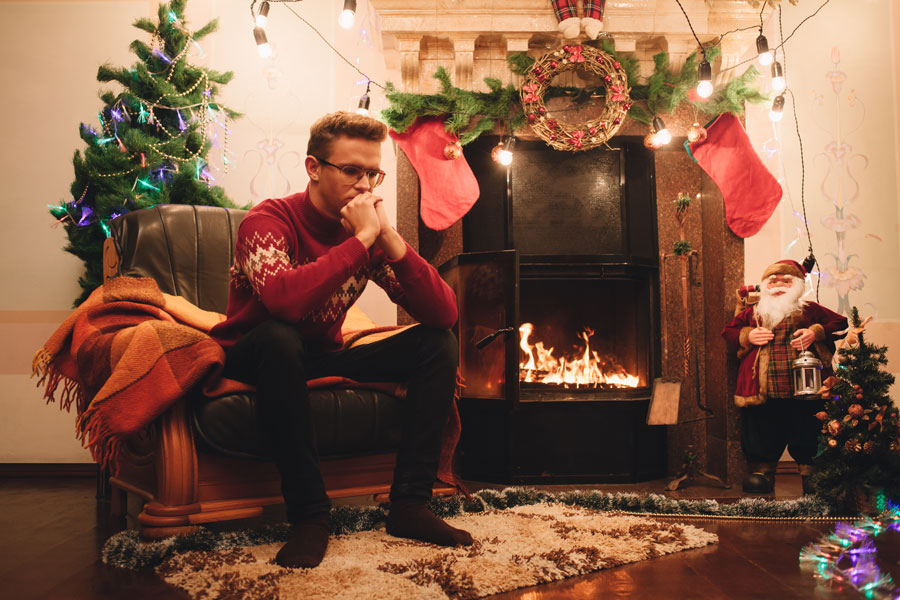
Image: https://www.yournewfoundation.com/wp-content/uploads/2019/11/MAIN-IMAGE_Grieving-at-Christmas_Foundations-Counseling.jpg

Sunday, October 24, 2021

Encouragement (In Suffering, Pain, and Witnessing Both…) #18: Dealing With ANGER…

The older I get, the more suffering and pain I’ve experienced; and the more of both I stand witness to. From my wife’s (and many, many of our friends and coworkers) battle against breast cancer; to my dad’s (and the parents of many of our friends and coworkers) process as he fades away as this complex disease breaks the connections between more and more memories, I have become not only frustrated with suffering, pain, and having to watch both, I have been witness to the suffering and pain among the students I serve as a school counselor. I have become angry and sometimes paralyzed. This is my attempt to lift myself from the occasional stifling grief that darkens my days…


Anger.

Angry.

We are NOT supposed to be angry because our beloved has “The Big C” and it’s unconscionable to add more stress to their already shattered lives.

We CAN’T be mad because it’s unproductive. We need to be focused on their recovery!

Anger does absolutely nothing but tie our guts up in knots; blinds us to needs our loved one has; is incredibly selfish!

I was angry. My daughter was angry. My son – no obvious effect except supportive…which of course shames me.

But what if we ARE mad? At God…at society…at chemical companies…at biology…How much more complex can cancer get?

Is there any kind of hope?

I was always told that God is big enough to handle my anger.

King David shouted at God, “How long, O LORD? Will you forget me forever? How long will you hide your face from me? How long must I wrestle with my thoughts and every day have sorrow in my heart?” (Psalm 13:1)

“And the nations were enraged…” (Revelation 11:18)

King David served God for a long time; Jesus will return to save His people. He can handle our anger. In their book, ANGRY WITH GOD, the authors quote Pierre Wolff: “When people can express harsh feelings to the One who [who is] the object [of that anger], love is already stronger in them than their feelings. Love is already transforming, transfiguring, this feeling into something else, something closer to love than to hatred.”

On the blog, “PS, I Love You”, author Khadejah wrote, “I was frustrated, scared, and sad that they couldn’t tell me sooner. I wasn’t mad at my mom for being diagnosed with breast cancer, I was mad that she always has to downplay her health to protect me. Well, I’m not doing that anymore. It’s time for me to protect her. I’m strong enough to handle it.”

At the Stanford Medicine website, I found, “Although your spouse has cancer, the illness is really happening to both of you. Your life is being disrupted in many of the same ways. You are sharing many of the same emotions and concerns…It can be tremendously reassuring and comforting to your loved one to know that the two of you are facing the illness together and that your support and involvement will be steadfast and unwavering regardless of what happens.”

A book from the National Cancer Institute, aimed at teenagers, concludes: “No booklet or person can tell you exactly how everything is going to work out. Cancer is tough, and your life may never be quite the same. But in the end, you will get through it. Why? You’re strong. And you are capable—even if you don’t always feel that way.”

Finally, from the 2010 article, “Coping with cancer: The perspective of patients’ relatives”, by MariĆ«t Hagedoorn, Ulrika Kreicbergs & Charlotte Appel, the conclusion, “…cancer has an effect on the whole family. Remarkably though most relatives adapt well to the cancer of a loved one. That is only a minority appears to be at risk for psychological morbidity. Bereavement has been found to impact psychological well-being in the short-term, but it does also not appear to be a major risk factor for severe psychopathology…Future studies that focus on the interactions between patients and family members are of great importance to further the field by providing more insight into the family dynamics of dealing with cancer.”

Resources: https://www.tandfonline.com/doi/full/10.3109/0284186X.2010.536165, https://www.cancer.gov/publications/patient-education/when-your-parent-has-cancer.pdf, https://med.stanford.edu/survivingcancer/cancer-and-stress/when-your-spouse-has-cancer.html, https://psiloveyou.xyz/my-mom-told-me-she-has-cancer-and-i-got-mad-at-her-ba3c88b5b9a0, https://www.amazon.com/Angry-God-Michele-Novotni/dp/1576832228
Image: http://www.quoteambition.com/wp-content/uploads/2017/04/encourage-quotes-destiny.jpg

Sunday, August 15, 2021

Encouragement (In Suffering, Pain, and Witnessing Both…) #17: SUPPOSED to be "Good Words From the Medical Community", But...

The older I get, the more suffering and pain I’ve experienced; and the more of both I stand witness to. From my wife’s (and many, many of our friends and coworkers) battle against breast cancer; to my dad’s (and the parents of many of our friends and coworkers) process as he fades away as this complex disease breaks the connections between more and more memories, I have become not only frustrated with suffering, pain, and having to watch both, I have been witness to the suffering and pain among the students I serve as a school counselor. I have become angry and sometimes paralyzed. This is my attempt to lift myself from the occasional stifling grief that darkens my days…from JCO Oncology Practice: An American Society of Clinical Oncology Journal, https://ascopubs.org/doi/full/10.1200/JOP.2017.026195


I tell you, finding encouraging quotes from doctors and nurses, nurse practitioners and physician assistants, and other medical personnel aimed at patients being treated for cancer – of ANY sort – was a bust! (No pun intended!)

It appears that they don’t have time to write down the encouragement that they obviously dole out on a moment-by-moment basis.

So, let’s look at the research:

“Although clinicians [the ‘front-line’ workers in cancer care, listed (by no means exhaustively) above] likely view kindness as a requisite component of providing cancer care, a number of stressors may interfere with their good intentions. The complexity of health care delivery systems, coupled with financial and institutional pressures, can create a barrier between clinicians and the care they wish to provide. Indeed, the care itself can be a barrier, as compassion fatigue is well described in providers who are routinely involved in emotionally charged conversations…”

So they MAY give encouraging support, but the brutal truth is that they aren’t getting paid to SAY nice things. They’re getting paid to do EFFECTIVE things in combatting cancer.

While the research doesn’t say much in the way of actual “encouragement”, it does lay out a plan for clinicians to follow when interacting with patients. This plan includes six “kindnesses”:

1) Deep Listening: clinicians take time to truly understand the needs and concerns of patients and their families

2) Empathy for the patient with cancer: expressed individually and by “the care culture”

3) Generous acts of Discretionary Effort: including timely care delivered by tools and systems that reduce stress and anxiety

4) Gentle Honesty: what is happening is conveyed directly in well-chosen, guiding words

5) Support for family: the physical and mental health of the supporting family (no matter what the constellation of the family is!) and their well-being are vital components of the care the patient receives

6) All of these work together as long as the clinicians are mindful both that the patients they’re treating are at a literal ALL TIME HIGH stress level, AND they understand that the clinicians themselves are also under stress

Of course this seems obvious when we’re sitting here in our own secure places, some people having sent their loved one Home, others at the very beginning of the long ordeal and are steeped in hope. But at the hospital, in the clinic, in the chemotherapy room, in the radiation suite…those are the times that the care and compassion of the CLINCICIANS can make a difference; the times when the family and loved ones can only look on in mute terror or stunned acceptance.

That is when the mindful clinician can step into both the family and the patient and create a calming, confident atmosphere that, while it CHANGES nothing, it feels hopeful, and it feels like someone knows what they are trying to do.

Sunday, July 4, 2021

Encouragement (In Suffering, Pain, and Witnessing Both…) #16: Sympathy for Another Passing…

The older I get, the more suffering and pain I’ve experienced; and the more of both I stand witness to. From my wife’s (and many, many of our friends and coworkers) battle against breast cancer; to my dad’s (and the parents of many of our friends and coworkers) process as he fades away as this complex disease breaks the connections between more and more memories, I have become not only frustrated with suffering, pain, and having to watch both, I have been witness to the suffering and pain among the students I serve as a school counselor. I have become angry and sometimes paralyzed. This is my attempt to lift myself from the occasional stifling grief that darkens my days…

Two days ago, a dear friend of ours lost her mother to Alzheimer’s.

Sad to say, she is one of a growing number of deaths that can be clearly related to Alzheimer’s. The question that’s always puzzled me is what EXACTLY does a person with Alzheimer’s die FROM? I get it when they get COVID19 or pneumonia, or cancer, or another disease – while it’s not directly related to AD, the disease is a factor.

Dad fell because he was disoriented – he’d been taking a set of dresser drawers apart with the intent of fixing them. Most likely he was exhausted from his efforts (the mess he made emptying it, tipping it over on its side and pulling it toward the toilet so he had somewhere to sit while he worked on it); the bed linens win complete disarray (the weekly staff practice of stripping the beds except for the spread); and the huge raspberry scrape and bump on his head which had never been reported to us! (led my sister who had visited him that day, to surmise the worst – that he’d been robbed or beat up or something else horrifying) no one on staff was able to explain the state of the room. We had to assume the worst and lodged a complaint with the facility…and found out the details (in parenthesis above) after some sleuthing…

Dad fell again not long after, which required a visit to the hospital and the acceleration of his deterioration. He never recovered from that incident and died several weeks later.

But what HAPPENS to an AD patient’s body? Does the immune system stop protecting them? Is there heart damage? What?

We DO know that Alzheimer’s and risk of heart failure occur together (https://www.ncbi.nlm.nih.gov/pmc/articles/PMC4409079/) (though the relationship between them is unclear); as well as high cholesterol. As well, besides the obvious alteration of mobility and memory loss, Alzheimer’s can also affect muscles, making them less flexible and more rigid (https://www.entrustdesoto.com/blog/how-does-alzheimers-effect-the-body-physically/) as well as creating difficulties in maintaining weight because AD affects the ability of a patient to both chew and swallow.

Recent research has also shown that AD affects the actual bacteria in the intestines: “New researches indicate that gastrointestinal tract microbiota are directly linked to dementia pathogenesis through triggering metabolic diseases and low-grade inflammation progress.” So, AD patients not only have trouble physically chewing their food, they also have trouble digesting it – which most likely leads to a decreasing desire to eat, which leads to weight loss…

OTOH, Dad was eating just fine a month before he died:

So, deterioration can happen very quickly. An aging immune system can in fact, have a profound impact on AD: “The aging of the immune system involves a series of changes which decrease the ability to fight off infections and increase chronic low-grade inflammation. These changes can promote chronic age-related diseases, including Alzheimer’s disease. The immune system can affect cognition, and the majority of genes shown to influence Alzheimer’s disease risk impact the function of the immune system. This suggests that aging-related changes to the immune system may impact the risk and rate of cognitive decline, and that maintaining a healthy immune system could help stave off dementia.” (https://www.alzdiscovery.org/cognitive-vitality/blog/is-there-a-link-between-the-immune-system-and-cognitive-health)

So, this is the opposite – AD isn’t caused by an again immune system (at least not that we know of yet…) but that system failure can exacerbate AD…

All of this to say, our sympathies lie with you, DC; you and your family at the loss of your dear Mom…It’s NOT encouragement in the usual way today; rather I want to acknowledge the loss and offer my heartfelt prayers in this time of BOTH grief, and resignation at the end to suffering.

Resources: (embedded above)
Image: http://www.quoteambition.com/wp-content/uploads/2017/04/encourage-quotes-destiny.jpg

Sunday, April 18, 2021

Encouragement (In Suffering, Pain, and Witnessing Both…) #15: Words From the Founder of the ONLY Breast Cancer Survivors Group Made Up of Women of Color!

The older I get, the more suffering and pain I’ve experienced; and the more of both I stand witness to. From my wife’s (and many, many of our friends and coworkers) battle against breast cancer; to my dad’s (and the parents of many of our friends and coworkers) process as he fades away as this complex disease breaks the connections between more and more memories, I have become not only frustrated with suffering, pain, and having to watch both, I have been witness to the suffering and pain among the students I serve as a school counselor. I have become angry and sometimes paralyzed. This is my attempt to lift myself from the occasional stifling grief that darkens my days…

Just for context, I have lived in the infamous city of Brooklyn Center…and not just in the city – about a mile-and-a-half from the Police Station that was front and center of the civil unrest following the murder of Daunte Wright. Demographics as of 2020:


Because of the civil unrest and because of these numbers, I started to wonder about both the incidence and treatment of women and men for both breast cancer and Alzheimer’s in communities with a large percentage of black and brown residents. I’ll get to that in the next several posts, but for today, I’m looking at encouragement in the face of breast cancer.

“Sisters Network® Inc. (SNI), founded in 1994, by visionary Karen Eubanks Jackson, is a leading voice and only national African American breast cancer survivorship organization in the United States. Their purpose is to save lives and provide a broader scope of knowledge that addresses the breast cancer survivorship crisis affecting African American women around the country.”

“As she learned more about the impact of the disease in the African American community, she found a staggering breast cancer mortality rate, limited culturally sensitive materials, and a general lack of support and sisterhood for those diagnosed. She has endeavored to make a difference on a national level, by breaking through the silence and shame of breast cancer that immobilize many African American women and ultimately impede early detection and affect survival rates.”

When asked about successes in the program, Jackson went on to tell a rare, but deeply inspiring story: “A woman approached me who had heard of Sisters Network. She was scared, so I went with her to the doctor, who confirmed that she did have cancer. Although she had her own accounting business, she didn’t have health insurance. The reason this case is unusual, is that I just happened to have an opportunity to go on a radio program to talk about Sisters Network, and I shared this woman’s story. We were attempting to raise money to help her cover the cost of treatment. Shockingly, someone contacted us to pay for her treatment—an anonymous donor.

“This was a wonderful but unusual story. Really, every day we have success stories. We are out there talking to women in our community about breast health, helping the newly diagnosed, and providing support to long-term survivors. We’re providing the education that they need and connecting them to resources.”

“There is hope. Get over the initial shock and fear of the words “breast cancer” and get on with living. I personally know many long-term survivors. I am a 26-year survivor; one of our members is a 15-year triple- negative survivor. There is hope.”

Resources: https://www.sistersnetworkinc.org/mission.html, https://conquer-magazine.com/issues/special-issues/april-2020-breast-cancer/1219-finding-strength-in-the-company-of-her-sisters-an-interview-with-karen-eubanks-jackson-of-sisters-network
Data source: https://worldpopulationreview.com/us-cities/brooyn-center-mn-population

Sunday, December 20, 2020

Encouragement (In Suffering, Pain, and Witnessing Both…) #14: Encouragement During Holidays

From the first moment my wife discovered she had breast cancer, there was a deafening silence from the men I know. Even ones whose wives, mothers or girlfriends had breast cancer seemed to have received a gag order from some Central Cancer Command and did little more than mumble about the experience. Not one to shut up for any known reason, I started this blog…

I remember the first holiday during my wife’s recovery – the double mastectomy had been in March; chemotherapy had taken most of the summer. Then the holidays were upon us.

I didn’t write about ANYTHING having to do with them. I certainly don’t remember what we did, but my guess is that family time was curtailed and we likely spent that time at home.

The significant thing was that I DIDN’T WRITE ABOUT IT.

If you take a moment and notice the nearly 500 posts I’ve done since March of 2011, you can imagine the significance of that. I was writing about different kinds of cancers as well as describing the origins and effects of the various drugs she’d endured during chemotherapy.

I was NOT talking about either her feelings or my feelings during the holidays. There are no comments on Thanksgiving or the first day of school or any other significant days during that time. Everything was focused on CANCER. DEFEATING CANCER. My “Christmas Message” in 2012 was “Chemo Killed Colds?” How meaningful.

Maybe I was mad still? My daughter certainly was.

Finally, in 2013, I dealt with it. Below you’ll find the post I managed to write then…

-----------------------------

Random, huh?

Whew! Talk about random! Why would thoughts of death intrude on this holy time of year when we celebrate Santa Claus, children, “Ho, ho, ho!”, RUDOLPH THE RED-NOSED REINDEER…

Oh, and the Birth of the Christ Child.

I think about how Target and Walmart and Kay Jewelers and Marshall’s have coopted the season. And Christians fight back with pictures of Santa kneeling at the Manger.

My wife and daughter and I watched one of our season’s favorites the other night, Joyeux NoĆ«l (a 2005 French film about the World War I Christmas truce of December 1914, depicted through the eyes of French, Scottish and German soldiers…written and directed by Christian Carion…creened out of competition at the 2005 Cannes Film Festival…nominated for Best Foreign Language Film at the 78th Academy Awards. The film was one of Ian Richardson's last appearances before his death on 9 February 2007.)

The one Christian Holy Day Wall Street has never been able to coopt is Easter, because Easter is secularly speaking, about a gruesome, governmental execution. For Christians it’s about sacrifice and Resurrection – much like the film, Joyeux NoĆ«l.

Much like life in the shadow of death that breast cancer brings to everyone who experiences it, or loves someone who experiences it, or works with those who experience it.

This holiday season is somewhat sober for me for many reasons. Yet somehow that has created in me a deeper appreciation for the joy of this same season – a profound thankfulness for many, many things. This thankfulness isn’t like the Christmas play in MERRY CHRISTMAS, CHARLIE BROWN! Rather it’s like the thankfulness of Linus’ recitation of Luke 2: 1-14 – calm, peaceful, fully aware of what he is saying.

May your Holy Day Season be the same.

[An interesting side-story, from Wikipedia: "Carion's youth was spent in his parent's farm fields in Northern France, where he was constantly reminded of World War I as the family often found dangerous, unexploded shells left over from the conflicts in the fields. He had also heard of the stories in which French soldiers would leave their trenches at night to meet with their wives in the surrounding German-occupied towns and return to fight the next morning. Carion stated that he'd never heard of the actual Christmas truce incidents while growing up in France, as the French Army and authorities suppressed them, having been viewed as an act of disobedience. He was introduced to the stories via a historian who showed him photos and documents archived in France, Great Britain, and Germany, and became fascinated. He tried to portray all of the soldiers with equal sympathy, as "the people on the frontline can understand each other because they are living the same life and suffering the same way", so he could understand how the truce could have come about.[5] He endeavored to stay true to the real stories, but one of the things he had to change was the fate of the cat that crossed into various trenches. In reality, the cat was accused of spying, arrested by the French Army and then shot by a firing squad, as an actual traitor would have been. The extras in the movie refused to participate in this scene, so it was amended to have the cat imprisoned."]

Sunday, October 25, 2020

Encouragement (In Suffering, Pain, and Witnessing Both…) #13: When the Battle Has Passed and All That’s Left Are the Memories

The older I get, the more suffering and pain I’ve experienced; and the more of both I stand witness to. From my wife’s (and many, many of our friends and coworkers) battle against breast cancer; to my dad’s (and the parents of many of our friends and coworkers) process as he fades away as this complex disease breaks the connections between more and more memories, I have become not only frustrated with suffering, pain, and having to watch both, I have been witness to the suffering and pain among the students I serve as a school counselor. I have become angry and sometimes paralyzed. This is my attempt to lift myself from the occasional stifling grief that darkens my days. 

My first post for these encouragement essays went up in February of 2018; that’s close to three years ago…

As I sit here typing this, Mom and Dad have been gone four years and a year-and-a-half ago respectively. I’ve mused on how glad I am that neither one had to suffer through COVID19, but the things that have had to occur because of it. They never had to witness images like this: https://images.wsj.net/im-169334?width=1280&size=1 

I know for certain my dad would have recalled a scene from a movie we watched together: https://cinematicrandomness.com/wp-content/uploads/2017/11/Andromeda-Strain-The-FM001-1024x512.png 

That was called The Andromeda Strain (1971); this is called The COVID19 Pandemic…

I’m sure they’ll make a movie out of it someday.

I could, I guess, go down the rabbit hole and relate figures and stories that are NOT encouraging. It would be easy. It certainly seems that that is the route the newsmakers have chosen – bombarding us with horror stories dramatically narrated by brave journalists risking their lives to “tell us the truth”…

Don’t get me wrong, the news my wife and I watch make CERTAIN that after a zillion hours of horror, they toss us a very thin bone of hope, tastefully edited to have a ray of sunshine in otherwise grim and dark days. All we have to do is elect Joe Biden and give the senate over to the Democratic Party and all of our troubles will be over. Great-great-grandpa Joe will take all our troubles on his shoulders and Mother Nancy will make certain that the memory of the past four years of Evil Incarnate are erased from history…

It's hard to find encouragement here – except in the actions of regular people whose political affiliation isn’t the issue. Rather their HUMANITY is the issue.

Follow the link to this article written by one Steven Vera, Chief Executive Officer of Wachusett Ventures, LLC, which operates two Connecticut and two Massachusetts nursing homes. This appeared in the April 18, 2020 issue of The CT Mirror. It’s inspiring, hopeful, and ENCOURAGING:

https://ctmirror.org/category/ct-viewpoints/a-tribute-based-on-observation-and-experience/

Image: http://www.quoteambition.com/wp-content/uploads/2017/04/encourage-quotes-destiny.jpg

Sunday, July 5, 2020

Encouragement (In Suffering, Pain, and Witnessing Both…) #12: Transfiguring Anger To Hope


The older I get, the more suffering and pain I’ve experienced; and the more of both I stand witness to. From my wife’s (and many, many of our friends and coworkers) battle against breast cancer; to my dad’s (and the parents of many of our friends and coworkers) process as he fades away as this complex disease breaks the connections between more and more memories, I have become not only frustrated with suffering, pain, and having to watch both, I have been witness to the suffering and pain among the students I serve as a school counselor. I have become angry and sometimes paralyzed. This is my attempt to lift myself from the occasional stifling grief that darkens my days…

After the initial terror. After the grief. After the acceptance. After the body pain. After you’ve watched the love of your life  suffer. After you’ve watched you mother suffer.

When you arrive at anger.

What do you do?

Blame is easiest, so it’s first. The trouble is escaping blame. Escaping anger.

At first, you can use the anger to fight the cancer; use the anger to: power your discipline, meet the “chores” of the doctor visits, the hospital stays, the treatment regimen. Channel it for good – join the research, walk the walks, bike the bikes, support others.

“Anger can range from mild irritation or frustration to rage. Some survivors may feel angry about how cancer affected their lives. They might have new physical, financial or emotional challenges. A certain amount of anger is normal. Yet some survivors may need help to get past strong feelings of anger.”

Another response is to unload and ignore others so long as your own needs are met, like this journalist: https://well.blogs.nytimes.com/2016/08/11/the-anger-of-cancer/ Don’t get me wrong, I viscerally understand the need to lash out and straighten everyone out that cancer is horrible and that you’re suffering. But to make the determination that everyone ELSE needs to suffer is irresponsible and unhelpful. It’s incredibly easy to believe that your feelings and attitude are superior to others; those who have no platform to tell the world exactly how superior their position is and who everyone needs to think the same way. Who knows how many people read this column and crashed into hopelessness?

Anger has to be transformed – NOT avoided, not dismissed, not ignored, not flaunted as virtue.

To transform: “transfigure, convert means to change one thing into another; suggests changing from one form, appearance, structure, or type to another; suggests so changing the characteristics as to alter the use or purpose: ‘to convert a barn into a house’.”

We rarely – I venture to say never – use the word transfigure in this 21st Century, possibly because it became associated with Christianity a Biblical event called the Transfiguration.

Wikipedia says, “The transfiguration of Jesus is a story told in the New Testament when Jesus is transfigured and becomes radiant in glory upon a mountain…”[Ah, yes, “a story”…they might as well have written “a fairytale only ignorant fools believe” – me”] “…the transfiguration is a pivotal moment, and the setting on the mountain…is the point where human nature meets God: the meeting place of the temporal and the eternal, with Jesus himself as the connecting point, acting as the bridge between heaven and earth.”

Anger transfigured creates something good from something bad, reversing a slide into hopelessness. “Nancy Brinker's life was forever changed by her sister's battle against breast cancer. Susan Goodman Komen died at the age of 36. Founded in her memory in 1982, the Susan G. Komen Breast Cancer Foundation was born from a sister's love and a solemn promise to do something to stop breast cancer from taking more lives…” This organization has had a profound effect on women all over the world.

Another organization that came out of breast cancer and has had a profound, if entirely different effect, on humanity: “Gilda's Club was founded by Joanna Bull, Radner's cancer psychotherapist and co-founded with Radner's widower, Gene Wilder (himself a cancer survivor) and broadcaster Joel Siegel (who died after a long battle with the disease). Joanna Bull started the project with just $10,000 and networked in the New York cancer support community. She became the executive director of the first club opened in New York City in 1995, after a long fundraising campaign that included movie trailers featuring Wilder in theaters around the country who acted as the celebrity spokesman. The organization took its name from Radner's comment that cancer gave her ‘membership to an elite club I'd rather not belong to’…Gilda's Club is famous for its signature red doors meant to symbolize Radner's ‘vibrancy’.”

Personally? I became involved with Relay For Life: “…community-based fundraising event for the American Cancer Society and many other Cancer related institutions, societies and associations. Each year, more than 5,000 Relay For Life events take place in over twenty countries. Events are held in local communities, university campuses and in virtual campaigns. As the American Cancer Society's most successful fundraiser and the organization's signature event, the mission of Relay For Life is to raise funds to improve cancer survival, decrease the incidence of cancer, and improve the quality of life for cancer patients and their caretakers.” (A note: for some reason, someone has reported issues with the Relay for Life Wiki entry, one of which is “relying too much on primary sources” (what should it rely one? The hearsay of the complainer?)…so, what does Wikipedia WANT that would maintain its “encyclopedic tone”? I wish I could add a laughing emoji as Wikipedia is so NON-encyclopedic and IS sensationalistic, editable by anyone and everyone who has an axe to grind and a political/philosophical agenda to promote. While Wiki is sometimes a good place to start research, I know of NO ONE who takes it seriously…)

How do you transfigure anger? Get involved. Support your loved one. ACT, then continue to act and perhaps don’t write essays designed to share your anger rather than your hope.
                                                      

Sunday, May 10, 2020

Encouragement (In Suffering, Pain, and Witnessing Both…) #11: Encouragement From Other Faiths or No Faith


The older I get, the more suffering and pain I’ve experienced; and the more of both I stand witness to. From my wife’s (and many, many of our friends and coworkers) battle against breast cancer; to my dad’s (and the parents of many of our friends and coworkers) process as he fades away as this complex disease breaks the connections between more and more memories, I have become not only frustrated with suffering, pain, and having to watch both, I have been witness to the suffering and pain among the students I serve as a school counselor. I have become angry and sometimes paralyzed. This is my attempt to lift myself from the occasional stifling grief that darkens my days…

I can only speak personally of the encouragement I get from my Christian faith.

But because breast cancer and Alzheimer’s Disease is a worldwide epidemic (isn’t that what’s meant by being “pandemic”?), I am certain other faiths respond as well with encouragement.

So, I did some research. Before I go to faith, though, let me give you some numbers:

China: Officially there are 4 faiths in China; but between half and three fourths of Chinese are non-religious

India: Primarily Hindu and Islam (94 percent). The other six percent encompass Christians, Sikhs, and Buddhists and a smattering of others.

South America: More than 91 percent are Catholic, though only half of those consider themselves devout. Roughly 5 percent are Muslims, and the remaining four percent are a mixture of protestant, Judaism, Buddhist, Hinduism, BahĆ”'Ć­, Shinto, and indigenous creeds and rituals.

So, below please find quotes of encouragement from across the Human spectrum.

We begin with Hindu strength:

“The essence of Hinduism is the same essence of all true religions: Bhakti or pure love for God and genuine compassion for all beings.”

“You are what you believe in. You become that which you believe you can become.”

“From suffering comes the knowledge of suffering. From the knowledge of the suffering comes the solution to suffering. From the solution to suffering comes the ultimate freedom. Suffering, therefore is the teacher and also the cause in which the effect, liberation, is hidden.”

“Whatever happened was good. Whatever is happening is good. Whatever will happen will also be good.”

“Your Strength is how calmly, quietly and peacefully you face life.” Yogi Bhajan.

Comfort from the Koran:

“No disaster strikes except by permission of Allah . And whoever believes in Allah – He will guide his heart. And Allah is Knowing of all things.”

“And We will surely test you with something of fear and hunger and a loss of wealth and lives and fruits, but give good tidings to the patient.”

“When disaster strikes them, say, ‘Indeed we belong to Allah, and indeed to Him we will return.’ Those are the ones upon whom are blessings from their Lord and mercy. And it is those who are the [rightly] guided.”

“Allah does not charge a soul except (with that within) its capacity.”

“The word of Allah is the medicine of the heart.”
  
I’ve shared words of encouragement from Christianity many times, so we’ll conclude with words of hope that have no religious affiliation:

 “You’re like this little blip of light that lasts for a very brief time and you can shine as brightly as you choose.”

“Someone said the pain would go away, but I’m not sure that’s where I want it to go.”

“Ever since I learned we are made of the same stuff as the cosmos, I lost my fear of death.”

“If your grief is an angry child today, try to be as gentle and patient as you would with a child, and give them space to rage.”

“While the concepts and definitions of suffering are certainly man-made and can vary from one person to person, I would certainly say that it is not pointless and that it has to have some biological value. From a strictly Darwinian sense, suffering must provide some benefit. Perhaps it strengthens or enhances the biochemical process that involved kinship and love. This in turn fosters behaviors like: strength in numbers (clans) and cooperation. Or could it be that my suffering allows me to better relate to others who are suffering…”

There you go; be encouraged and share your love with those who are suffering with you or those who suffer as well.


Sunday, March 1, 2020

Encouragement (In Suffering, Pain, and Witnessing Both…) #10: What Could POSSIBLY Be Funny About Alzheimer’s???


The older I get, the more suffering and pain I’ve experienced; and the more of both I stand witness to. From my wife’s (and many, many of our friends and coworkers) battle against breast cancer; to my dad’s (and the parents of many of our friends and coworkers) process as he fades away as this complex disease breaks the connections between more and more memories, I have become not only frustrated with suffering, pain, and having to watch both, I have been witness to the suffering and pain among the students I serve as a school counselor. I have become angry and sometimes paralyzed. This is my attempt to lift myself from the occasional stifling grief that darkens my days…

OK, while looking for encouragement for people who are dealing with a parent or grandparent or a partner who’s been diagnosed or is showing signs of dementia or Alzheimer’s, I guess I was thinking of sober, considered wisdom.

I was NOT thinking about the humorous side of Alzheimer’s.

That there are people who CAN think this way is a testament to their ability to draw on a source of strength I was unable to with Dad’s Alzheimer’s descent.

With my wife and daughter in particular, we were able to draw strength from the humor of her struggle against breast cancer, joining others with what you could call “gallows humor” (definition: (aka, black humor) “a comic style that makes light of subject matter that is generally considered taboo, particularly subjects that are normally considered serious or painful to discuss.”

I was never able to find the “funny” side of Alzheimer’s. It was far too grim; too immediate for me. I dreaded walking into his room and have him ask the question, “Have you seen your mom?”

Or worse…

“I have to tell you some news,” he said one day.
“What’s wrong, Dad?” I asked, freezing at the door. He lived in the memory care unit of a large retirement community. What could have happened?

“It’s your mother,” he said, his voice dark and grave.

I rolled my eyes. My mother, his wife, had died two years earlier. His Alzheimer’s prevented him from recalling her death because it was too recent. I didn’t have to brace myself, so I started into his apartment. He said suddenly, “I think your mother left me for another man.”

That was a new one and because I’d been dealing with him for so long, I paused before I said, “Oh, she wanted me to tell you that she’s going shopping for the day with the OWLs.” They were a group of women my mom had known for decades. They had traveled together, gone to the wedding of their respective children together; they’d even gone to the funeral of one of the OWLs several months before Mom died.

Dad accepted that with relief, and we moved on. It wasn’t the last time he went through that, and I know to HIM, it was a real terror.

At any rate, it never occurred to me that we could laugh at the horrendous disease. The poster below was the one on the page that I linked below that made me laugh:

So, while laughter isn’t a medicine that cures Alzheimer’s, it’s definitely something to cozy up to and perhaps give yourself a brief moment of life!


Saturday, January 18, 2020

Encouragement (In Suffering, Pain, and Witnessing Both…) #9: Encouragement Through Recurrence…


The older I get, the more suffering and pain I’ve experienced; and the more of both I stand witness to. From my wife’s (and many, many of our friends and coworkers) battle against breast cancer; to my dad’s (and the parents of many of our friends and coworkers) process as he fades away as this complex disease breaks the connections between more and more memories, I have become not only frustrated with suffering, pain, and having to watch both, I have been witness to the suffering and pain among the students I serve as a school counselor. I have become angry and sometimes paralyzed. This is my attempt to lift myself from the occasional stifling grief that darkens my days…

We don’t know this from personal experience, but in the past few weeks, three others we know have experienced a recurrence – ie., “When cancer returns after a period of remission…[it] in spite of the best efforts to rid you of your cancer, some cells from your cancer remained...the same cancer coming back after some period of time.”

In an article from the Mayo Clinic, “A cancer recurrence brings back many of the same emotions you felt when you were first diagnosed with cancer…

  • Distress – The shock of having cancer come back after you assumed it was gone can cause distress — sometimes more so than your first diagnosis did.
  • Self-doubt – You may doubt the wisdom of your past treatment decision…Try not to look backward. Instead, focus on your current situation and what you need to do now to move forward.
  • Anger – It's very common and reasonable to be angry that your cancer has returned.
  • Fatigue – It's normal to feel that you can't deal with cancer again.

Take heart in the fact that you were able to do it the first time, even though you might have doubted yourself back then. Also:

  • You know more now. 
  • You've built relationships. 
  • You've done this before. 
  • Use these experiences to your advantage. They can help you feel more in control when making decisions about your treatment.
Finally, encouragement from the Bible:

“Faith; it does not make things easy, it makes them possible” (Luke 1:37)

“He gives power to the faint, and to him who has no might, he increases strength” (Isaiah 40:29)

“I will strengthen you and help you. I will uphold you with my righteous hand” (Isaiah 41:10)

“The Lord will fight for you. You need only to be still” (Exodus 14:14)


Saturday, September 14, 2019

Encouragement (In Suffering, Pain, and Witnessing Both…) #8: When The Battle Has Been Lost…


The older I get, the more suffering and pain I’ve experienced; and the more of both I stand witness to. From my wife’s (and many, many of our friends and coworkers) battle against breast cancer; to my dad’s (and the parents of many of our friends and coworkers) process as he fades away as this complex disease breaks the connections between more and more memories, I have become not only frustrated with suffering, pain, and having to watch both, I have been witness to the suffering and pain among the students I serve as a school counselor. I have become angry and sometimes paralyzed. This is my attempt to lift myself from the occasional stifling grief that darkens my days…

I can barely comprehend this because I’ve pretty much blocked – or have forgotten – what people did when people I loved and cared for died. (I’m deliberately not using the euphemism here even though that “passed” or “passed away” works well for me. It makes others, like my daughter, angry.)

In recent history, I’ve lost my mother, my father, my brother-in-law, mother-in-law, father-in-law, as well as two former students.

What I remember most clearly however, is those who were with me.

Certainly with me physically, but more importantly much of the time FOR ME, they chose to simply sit with me or stand by me or gently touch a shoulder, elbow, arm. They didn’t need to speak.

The Bible mentions this kind of “with-ness”: “Rejoice with those who rejoice, and weep with those who weep.” (Romans 12:15)

“Although the world is full of suffering, it is full also of the overcoming of it.” Helen Keller

“One word frees us of all the weight and pain of life: that word is love.” Sophocles

“Out of suffering have emerged the strongest souls; the most massive characters are seared with scars.” Kahlil Gibran

“New beginnings are often disguised as painful endings.” Lao Tzu

“Compassion is to share the pain without sharing the suffering.” Shinzen Young

“Life is short and we have never too much time for gladdening the hearts of those who are travelling the dark journey with us. Oh be swift to love, make haste to be kind.” Henri Frederic Amiel

“For your every tear, know that I'll always be here. To bare one pain we both will share, know I'll never disappear.” Anthony Liccione

“Shared joy is increased, shared pain is lessened.” Spider Robinson

The others are good, but I will take the Bible verse to heart because that is the one thing that helped me bear up; it is the one thing I can DO for others. Be there.

Resources: various

Sunday, July 7, 2019

Encouragement (In Suffering, Pain, and Witnessing Both…) #7: “20 Things To Do To Encourage Someone With A Breast Cancer Diagnosis”


The older I get, the more suffering and pain I’ve experienced; and the more of both I stand witness to. From my wife’s (and many, many of our friends and coworkers) battle against breast cancer; to my dad’s (and the parents of many of our friends and coworkers) process as he fades away as this complex disease breaks the connections between more and more memories, I have become not only frustrated with suffering, pain, and having to watch both, I have been witness to the suffering and pain among the students I serve as a school counselor. I have become angry and sometimes paralyzed. This is my attempt to lift myself from the occasional stifling grief that darkens my days…

It’s simple today – instead of recreating the wheel, I’ll share something with you that was meaningful to me: https://www.health.com/health/gallery/0,,20738293,00.html


Saturday, March 9, 2019

Encouragement (In Suffering, Pain, and Witnessing Both…) #6: And Then There’s Peace…

The older I get, the more suffering and pain I’ve experienced; and the more of both I stand witness to. From my wife’s (and many, many of our friends and coworkers) battle against breast cancer; to my dad’s (and the parents of many of our friends and coworkers) process as he fades away as this complex disease breaks the connections between more and more memories, I have become not only frustrated with suffering, pain, and having to watch both, I have been witness to the suffering and pain among the students I serve as a school counselor. I have become angry and sometimes paralyzed. This is my attempt to lift myself from the occasional stifling grief that darkens my days…

If you skim this blog, you know that my dad died a bit over a month ago of…while not precisely complications of Alzheimer’s, then a series of events precipitated by his Alzheimer’s symptoms.

I guess it’s hard for me to say that Dad “died of Alzheimer’s, because it’s not a “deadly disease” like measles or breast cancer or bubonic plague or influenza. The end result was the same no matter what.

During the years-long experience – I started my Alzheimer’s portion of this blog in September of 2016 – I learned a lot and I felt a lot. I learned the language of Alzheimer’s and how others treated people with Alzheimer’s.

But perhaps the hardest part for me was watching my dad’s personality drain away. At his funeral, people at the gathering repeatedly mentioned that my dad “liked to have a good time”. A few people shared stories and everyone there was able to imagine ANOTHER instance where it was obvious that he enjoyed life and enjoyed enhancing it with sports – both playing and watching, as well as hosting and going to parties. The parties started when he met my mother! That’s a lot of years of parties!

By the time he passed on February 4, 2019, we were lucky if he spoke while we were sitting with him in his apartment for an hour – and this was before he had his stroke. He was often virtually silent when I went to spend short periods of time with him several times a week. He seemed distant, not intentionally, but because he simply seemed to be living in a moment and didn’t see much reason to comment on anything that he’d already commented on over the previous 87 years.

That was hard until I learned to just sit. Just “be” as the Mindfulness people say. When I quit fretting; quit enumerating the things I “had to do”, I started enjoying my time with him more; not because of the sparkling conversation, or physical humor, or streams of jokes (THAT’S how I deal with one of my brothers), but just sitting with him. Sometimes we didn’t talk for the entire time, only occasionally looking at each other, usually with a TV on between us, but sometimes in silence. We never did do music, except for when the recreational director led singing or we went to a concert together in the second floor theater. Then he’d sing and laugh and clap.

When he did pass away, I was at peace with it. Of course I missed him, but I felt as if I’d spent “quality time” with him as we sat in his dimly lit, very warm apartment. It’s hard to understand now, but this period of simply sitting with him came out of an article I commented on here, https://breastcancerreaper.blogspot.com/2018/11/guys-gotta-talk-aboutalzheimers-20-what.html

Dad’s reality was very different from mine. He was sometimes frustrated because, as an active man, he’d rarely stay in one place, let alone sit still. But as Alzheimer’s progressed, he slowed down – not by choice, but because his brain wasn’t functioning at peak efficiency. But slowing down sometimes offers us a chance to see the world from a different perspective; again, he didn’t WANT this, but it was his reality and it was slower than the one he’d spent his first 85 years in. Though it frustrated him, it gave me a glimpse into what it would be like to slow down a bit for myself. I’ve taken to sitting by our fireplace more often now, sometimes even in the morning before I go to work.

He’s at peace now, but I think he imparted a little bit of that peace to me even before he passed away. I’d like to continue to cultivate that sense as I grow older, myself.

Job 5: 23 says, “For you will be in league with the stones of the field, And the beasts of the field will be at peace with you.”

Image: http://www.quoteambition.com/wp-content/uploads/2017/04/encourage-quotes-destiny.jpg