A NEWLY DIAGNOSED T2 DIABETIC, breast cancer husband's observations mixed up with an Alzheimer's son's musings
Sunday, June 14, 2026
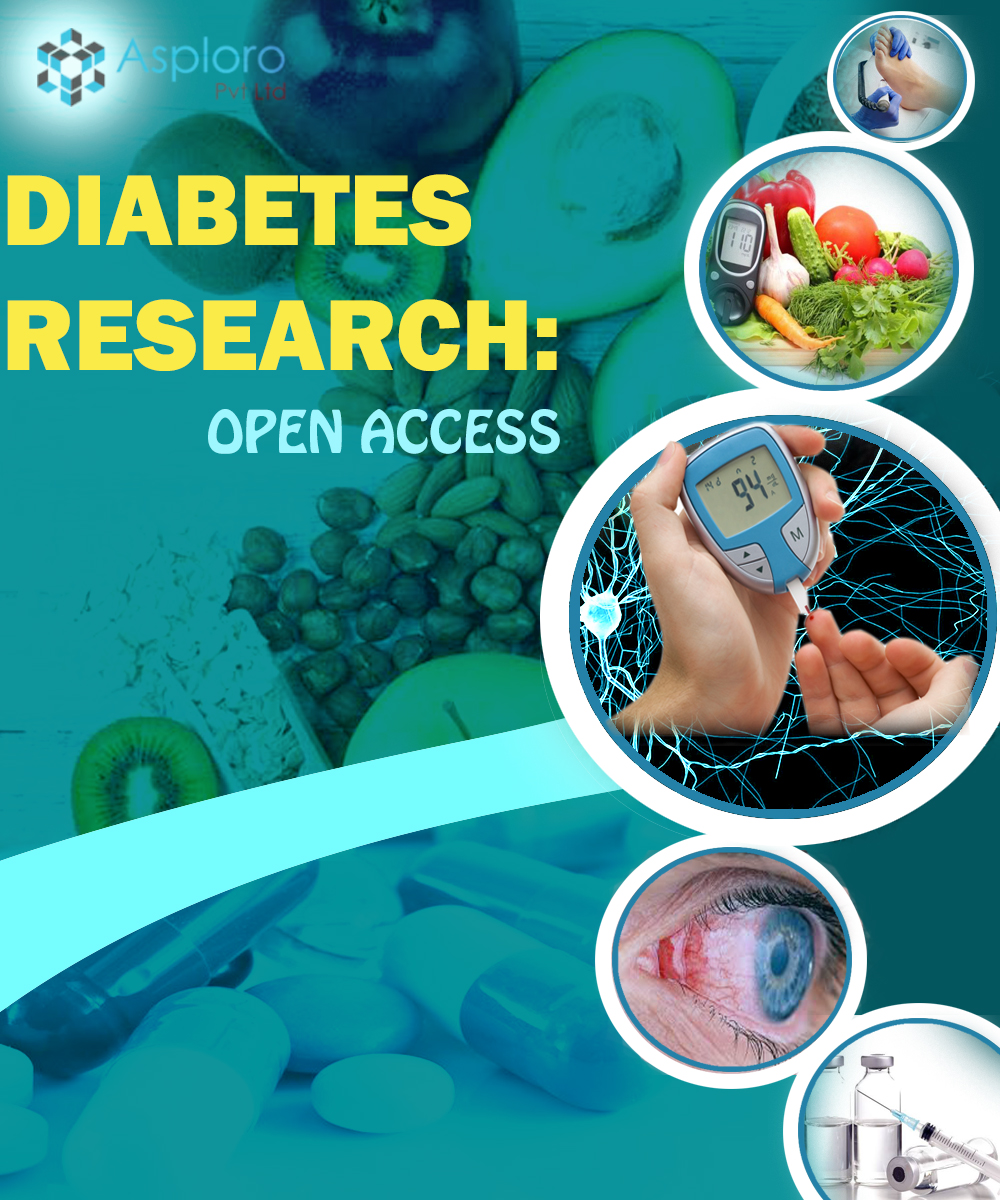
DIABETES RESEARCH RIGHT NOW! #43 KETO and Type 2 Diabetes??? Who Knew?
The paper opens with “We showed that three months of a ketogenic diet was able to improve beta-cell function in patients with type 2 diabetes, and these improvements were associated with changes in the proinsulin-C-peptide ratio, a biomarker of pancreas stress….Other than bariatric surgery or large-volume intentional weight loss, interventions for improving beta-cell function in type 2 diabetes do not currently exist.”
So: “In English PLEASE!”
First of all, is a “ketogenic diet” the same as “being on keto” (Or is it “going keto” or “On a keto diet”?) “The ketogenic or keto diet…” Answer to first question is “Yes, they are the same thing.”
Second then, is what the HECK is a “keto diet”: it’s a diet that “includes eating high-fat, low-carbohydrate foods to reach ketosis. In ketosis, the body uses fat for fuel, instead of sugar (glucose). This produces acids known as ketones.”
Something I’ve never read in these glowing advertisements for these FABULOUS “Keto Diets” is that ketones STINK: “It is a very common and predictable side effect that occurs when your body enters ketosis”, ketone breath has been “compared to your breath smelling like acetone (aka, nail polish remover), paint thinner, rotten fruit, or sweetly metallic…” YUMMY!
Second, it basically ditches balanced eating: “…eating different amounts of fat, protein and carbs in a day.” It breaks out like this, besides the fact that you weigh everything (the science is sound here – you’re balancing the fats, proteins and carbs in order to lose weight and become more healthy.) It looks like this: “four grams of fat for every 1 gram of combined protein/carb eaten throughout the day. Avoiding all carb-rich foods (like pasta, potatoes, fruit, etc.) is key here. Also, for every serving of protein-rich food, you need four servings of a fatty food (heavy cream, avocado, olive oil, full fat cheese, etc.)”.
So, let’s say we do this. It will “…improve beta-cell function in patients with type 2 diabetes; the improvements were associated with changes in the proinsulin-C-peptide ratio, a biomarker of pancreas stress….”
And I’m lost again…what is a “proinsulin-C-peptide ratio”? In plain English: “…A proinsulin-C-peptide ratio is a lab test that measures how hard your pancreas is working to produce insulin. In the pancreas, proinsulin is the inactive "raw material" your body builds into insulin – which you need to change glucose into something your CELLS can use. The pancreas chops the proinsulin in half, turning it into active, usable insulin. The C-peptide is the leftover "waste" and is dumped. When everything is working perfectly, your pancreas easily chops up all the raw proinsulin into ready-to-use building blocks for insulin. BUT, if your pancreas is under heavy strain it gets overwhelmed and starts dumping unfinished, "raw" proinsulin into the bloodstream before it has a chance to fully process it, You now have high levels of unfinished proinsulin compared to C-peptide. It is a warning sign that your beta cells are struggling and may be a predictor for developing diabetes.”
So, properly managed, a keto diet can HELP repair OUR messed up pancreas – NOT heal it, but help it work better. So, the choice is ours; at least now you have somewhere to start when you ask your doctor if a keto diet is something you want to try…
Links: https://www.endocrine.org/news-and-advocacy/news-room/2026/keto-diet-may-improve-beta-cell-function-in-people-with-type-2-diabetes, https://health.ucdavis.edu/blog/good-food/what-is-the-keto-diet-and-can-it-be-beneficial-for-you/2025/05 Image: https://asploro.com/wp-content/uploads/2019/12/Diabetes-Research_Open-Access.jpg
Sunday, December 29, 2024
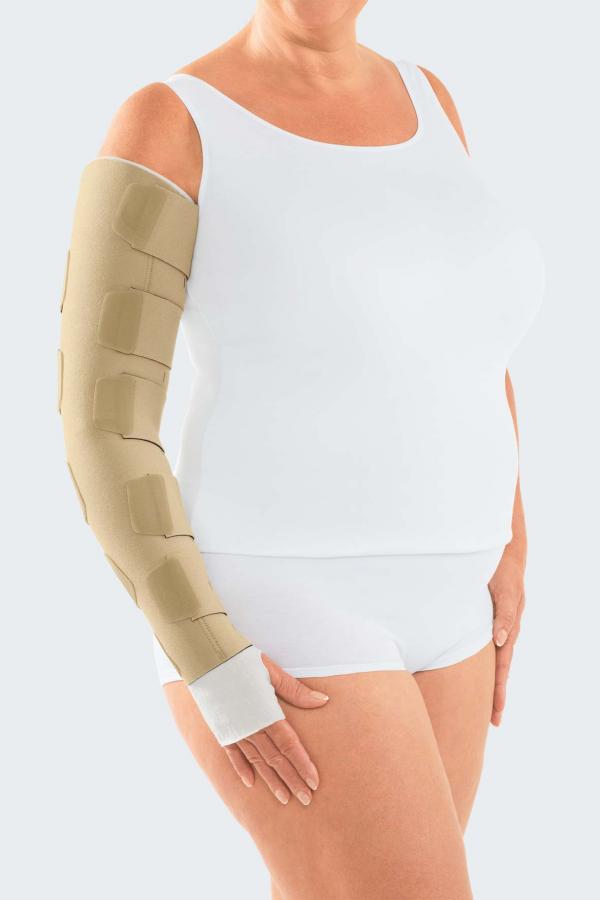
BREAST CANCER RESEARCH RIGHT NOW! #82: Lymphoedema: The 'Hidden' Cancer Side-effect No One Talks About
Twelve years later, my wife “…[still] wakes up every single morning with a reminder of [her] cancer journey, because [her] lymphoedema is staring [her] in the face – Matt Hazledine” (BTW—men can have breast cancer; as well, there are other diseases that cause lymphoedema. WE ARE NOT IMMUNE!)
The biggest question when she started her recovery was “where the HECK does lymphoedema come from???”
“The lymph system is made up of ‘lymph nodes’ and vessels that is part of the body's circulatory system. Its main job is to carry away fluids and proteins that naturally leak out of tissues. The nodes filter out dead cells and broken proteins, and returns the fluid back to the bloodstream.
This system is incredibly important in destroying germs and viruses, dumping waste, and keeping the fluids in your body balanced. It defends your body from disease by constantly circulating white blood cells allowing them to hunt out viruses, bacteria, fungi and parasites. If you've ever been sick, and your mom feels your neck, she’s checking to see if your lymph nodes are “swollen” – it's most likely your lymphatic system helping you fight an infection right then. When there’s a PROBLEM with your lymph system, you may be seeing the results of some really nasty diseases like heart failure, Alzheimer's Disease, IBS (aka Inflammatory Bowel Syndrome) and any number of the VAST number of cancers.
“Lymphoedema can affect anyone, and doesn't discriminate by gender, age, ethnicity, or socioeconomic status," says Karen Friett, chief executive at the Lymphoedema Support Network, a non-profit in the UK.
It’s a common result for people dealing with certain cancers and the treatments for them like surgery or radiation. That’s because along with killing cancer cells, the lymph nodes are damaged or removed. It affects one in five women treated for breast cancer; 2-29% of prostate cancer treatments; and a terrifying 90% of people treated for cancer in the head or neck! Worse, lymphoedema can be a genetic condition, which people are born with; or it can be the result of traumatic injuries, obesity, or even certain infections. ANYTHING that damages the lymphatic system.
The author of the article , Matt Hazledine, who founded Lymphoedema United, developed secondary lymphoedema in 2011 after suffering a severe episode of cellulitis, a potentially life-threatening bacterial infection that can quickly escalate to sepsis. (Frighteningly, in September of 2022, I as diagnosed with cellulitis…fortunately, it was only a staph/strep infection on my lower legs, replete with weeping sores, dying skin, swelling, pus, and horrendous itching.)
Hazeldine discovered that “…some cancer survivors…wished the cancer had taken them, because they wake up every single morning with a reminder of their cancer…their lymphoedema…staring them in the face…They actually deem the lymphoedema to be more of a challenge than the cancer.”
The general view of the medical world is that “lymphoedema” isn’t a big deal, and even if it IS, there’s no treatment. They relegate it to a “disease of whiners”! However, 2024 Paris Paralympian bronze medalist Didi Okoh would NEVER be categorized as such! She suffers from primary lymphoedema. Okoh says she was repeatedly ignored by A&E doctors when she developed cellulitis twice. “I was crying in agony, trying hard not to pass out. Because I knew it wouldn't be good while I had a 41C (106F) temperature,” she said. “It was literally life or death. Twice I have been left, once for seven hours, and once for three hours, without any treatment, despite me having all the symptoms of cellulitis, and telling the doctors they needed to put me on antibiotics now, before I go into sepsis!” Each bout of cellulitis left her with irreversible tissue damage in her leg. She adds, “Every time I get an infection in that leg, it damages that leg. It resets to a bigger size, and I can't get it down to its prior size.”
Here in the US, “Despite playing such a vital role in our body, the lymphatic system is almost entirely overlooked in most medical education systems. A survey conducted in the US found that throughout an entire medical degree, less than 25 minutes was dedicated to the lymphatic system!”
Maybe “corporate medicine” finds it hard to admit that it is NOT entirely in control and that there remain some MYSTERY to their sometime “god-like” practice?
“Combined with a severe lack of research and funding into finding treatment solutions, it has meant that lymphoedema has been largely overlooked compared to the impact it has on millions of patients'
"We are at least 100 years behind on research [into the lymphatic system]," says Kristiana Gordon, consultant physician and associate professor at St George's University Hospital in London, which is the only teaching hospital in the UK to have a dedicated module covering the lymphatic system in its undergraduate medical degree.
"Even if the students aren't interested in lymphoedema, at least they will have heard of and seen it, and know where to send the patients," says Gordon.”
Things MUST be better here in the good-ole US of A! We MUST rank Numero Uno in best health care ON THE PLANET!!!
Maybe try #19…Sweden is #1…(“Of course they are! No one lives there!”)
SAY IT ISN’T SO!!! “Must be the Russian/Chinese are messing with the ranking!!!” [If it had been, you’d think they’d have ranked themselves higher than #29 and #27 respectively…]
Hmmm…The fact appears to be that “In the US…long-term cancer survivors with lymphoedema are left out of pocket by their condition with costs that are up to 112% higher than those without lymphoedema. The condition not only impacts their savings but their productivity.”
There seems to be a glimmer of hope for the future: “Not wanting others to experience the same difficulties they did a decade ago, both Hazledine and Rivera founded their own organizations to help support lymphoedema patients. Hazeldine wrote, “I wanted to short-cut that journey to finding the right management strategy and support for them.” Thirteen years after receiving his own diagnosis he says: “You're not alone, you can live well with lymphoedema.”
Author of this article, Katherine Wang, is a research fellow at University College London in the UK whose work focuses on developing wearable devices to alleviate the pain and swelling caused by lymphoedema while allowing patients to self-manage their condition. Her work is inspired by the experience of her uncle's condition. She went with him to an appointment where he told the doctor about his legs. After briefly examining him, the doctor said: “Oh, that's lymphoedema, there's nothing we can do about that, I can tell you that much," dismissing my uncle's pain and concerns.
She adds, “What happened to my uncle wasn't unique. Lymphoedema is an incredibly common condition, which affects 250 million people globally. In the UK, 450,000 individuals have lymphoedema, while in the US there are as many as 10 million people suffering from the condition.
Sunday, November 26, 2023
DIABETES RESEARCH RIGHT NOW! #12: For Type 2 Diabetics? Jump-Starting the Pancreas???
Every month, I’ll be highlighting Diabetes research that is going on RIGHT NOW! Harvested from different websites, journals and podcasts, I’ll translate them into understandable English and share them with you. Today: The FACT is that as much as I would like it to be…THIS IS NOT TODAY! But it IS in the future and scientists are working on it!
“Everybody with diabetes has a reduced number of beta cells, but all still have some beta cells. Everyone with diabetes needs more beta cells. We set out years ago to find drugs that could help beta cells replicate,” Dr. Andrew F. Stewart at Mount Sinai Hospital of New York, says.
But some of us are a bit impatient. As a science teacher who CONTINUES his education in many areas of science, I have a vested interest in research dealing with breast cancer, Alzheimer’s Disease, and Type 2 Diabetes. I did a bit of searching, and we have few genuinely radical ways of treating our condition using sugar scavengers and drugs (both solid and injectable) that deal with the glucose in our blood in various ways: “Several classes of type 2 diabetes medicines exist. Each class of medicine works in a different way to lower blood sugar. A medication may work by causing the pancreas to make and release more insulin, limiting the liver's ability to make and release sugar, blocking the action of enzymes in the intestines that break down carbohydrates, slowing how quickly cells take in carbohydrates, improving cells' sensitivity to insulin, limiting the kidneys' ability to take in sugar, which increases the amount of sugar that leaves the body in urine, and slowing how quickly food moves through the stomach.”
While those keep millions of us alive and able to enjoy life to its fullest extent, I wondered about what LONG-TERM treatments might be like.
In the old 1986 STAR TREK movie, “THE VOYAGE HOME”, an elderly woman is laying on a surgical stretcher, waiting in a hospital corridor. Obviously listless and in pain, Doctor McCoy of the USS Enterprise hurries past. He takes a moment to ask her what’s wrong. She tells him she’s waiting for dialysis. Genuinely surprised, he says, “My God! What is this, the Dark Ages? He turns back to the patient and hands her a large white pill. As they later escape with Chekov, the old lady is in a wheelchair, wildly waving her arms, crying, “The doctor gave me a pill and I grew a new kidney! The doctor gave me a pill and I grew a new kidney!”
As if…
On the other hand…why not? The future is already HINTING at what is to come!
In the January 27, 2022 issue of the medical journal, Frontiers in Cell and Developmental Biology “Mount Sinai researchers are developing a novel two-drug approach to treating diabetes that enables the regeneration of insulin-producing pancreatic beta cells. A team led by Andrew F. Stewart, identified an orally-active drug class that could make beta cells REPLICATE, creating living WORKING beta cells! The prototype drug, called harmine, is a natural product found in plants. Pure harmine has never been studied carefully in humans, but at doses shown to be effective at inducing rodent and human beta cell regeneration in laboratory animals, AND it appears to be safe.”
However, this is not a Sci-Fi movie where they use the drug and POOF! everything is OK. “Although harmine is a monoamine oxidase inhibitor (MAOI), no psychoactive properties have been identified in animal studies at the doses we are employing, but animals can’t tell you if they’re hallucinating,” Dr. Stewart notes, adding “We’ll learn from this study what the maximum tolerable dose of harmine is in humans.”
Currently, MAOIs are used as “…antidepressants easing depression by affecting chemical messengers used to communicate between brain cells. Like most antidepressants, MAOIs work by ultimately effecting changes in the brain chemistry that are operational in depression.” SO far, harmine doesn’t seem to alter your brain in a negative way – though testing is ESSENTIAL if they want to eventually market the new treatment.
Most recently, Dr. Stewart and his team, found evidence to suggest that “the combination of a GLP-1RA (drugs like Trulicity) with the DRK1A inhibitor harmine TOGETHER started human beta cell replication in human pancreatic islets both in the lab and when they were transplanted into diabetic mice. The GLP-1RA and harmine combination also normalized glucose in diabetic mice compared to either drug alone…”
So, there’s HOPE! Maybe not RIGHT NOW, but perhaps soon…
Links: https://www.mayoclinic.org/diseases-conditions/type-2-diabetes/in-depth/diabetes-treatment/art-20051004#:~:text=A%20medication%20may%20work%20by,quickly%20cells%20take%20in%20carbohydrates.; https://www.sciencedirect.com/topics/neuroscience/beta-cell; https://reports.mountsinai.org/article/endo2022-_3_beta-cell-harmine; Study shows reactivation of beta-like cells in the pancreas to produce insulin (medicalxpress.com)
Sunday, March 27, 2022
BREAST CANCER RESEARCH RIGHT NOW! #82: Radical increase in the effectiveness of breast cancer immunotherapy!
Every month, I’ll be highlighting breast cancer research that is going on RIGHT NOW! Harvested from different websites, journals and podcasts, I’ll translate them into understandable English and share them with you. Today: How a new treatment might make triple-negative breast cancer cells vulnerable to immune therapy.
First of all, what IS immunotherapy? “Cancer immunotherapy is a form of cancer treatment that uses the power of the body’s own immune system to prevent, control, and eliminate cancer.”
The immune system of your body is what fights against infections. There are a bunch of cells in it that fight against infections. White blood cells (aka wbc’s) are the ones you usually hear about. If you are sick, a doctor may order a white cell count. When there are high numbers, then you have some sort of infections. The main organs of the immune system is called the lymph system. There’s NO lymph “heart”, instead, you just moving around pushes the lymph around her bodies.
The nodes and cells in the lymph system are full of different kinds of “immunoglobulin”, which is abbreviated “Ig”. There are a WHOLE BUNCH of kinds of Ig that are labeled just by a letter of the alphabet. Each kind does something different. For example, IgG is the major immunoglobulin class in the body and is found in the blood stream and in body tissues, like muscles, heart, brain, and many other places – including the breasts.
The wbc’s that help the immunoglobulins are gathered in what are called “lymph nodes”. You find them alongside all of your joints, especially in your neck “I have swollen glands! I must be sick!), armpits, and groin – but also your inside elbow and knee joints, wrists, and ankles. That’s because that’s where you move and that pushes the lymph around your body.
Anyone who has had breast cancer surgery that has progressed to Stage 2 or higher, may have had lymph nodes surgically removed.
All right, now you’re up to speed.
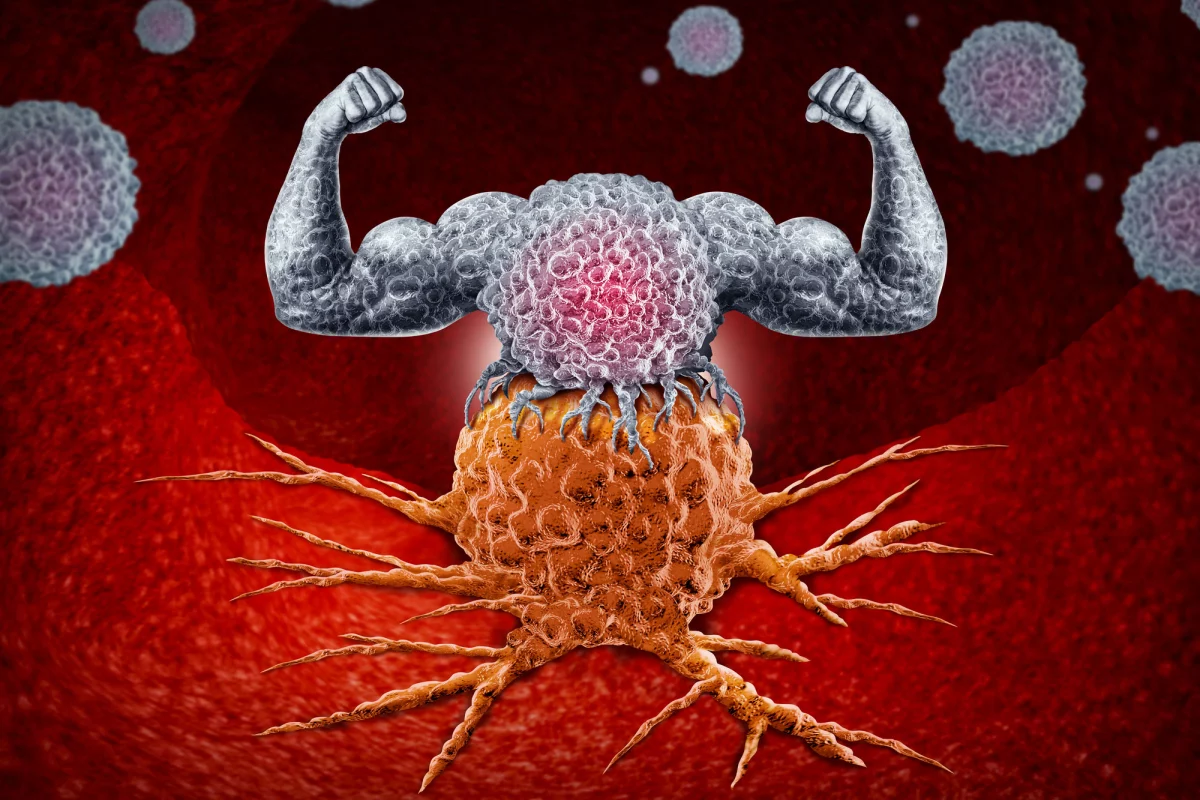
The most aggressive types of tumors are what cause “triple-negative breast cancer”. The worst part about this kind of BC is that even though only 15% of cases are triple-negative, it’s one of the most rapidly growing and it affects younger patients. The problem has been all along, that breast cancer (and ANY kind of cancer) cells “hide” from the immune systems by messing with the outside of the cancer cells. In this work, researchers found that tumor stem cells are the main cause of immunotherapy resistance and THAT’S because these cells are invisible to the immune system, making immunotherapy ineffective.
Their “cloaking device” is a chemical called the LCOR factor. The cancer cell doesn’t produce enough of the LCOR factor for the immunoglobulins and the other lymph system cells to SEE them. And if they can’t SEE them, then there’s no way to kill something that’s in stealth mode because our chemotherapy can’t see cancer cells to kill them.
If our own, natural immune system can’t see them, then the chemotherapy drugs can’t see them to kill them, either.
While this isn’t a TREATMENT yet, the researchers, inspired by the technology used in the design of the vaccines that are taming COVID-19 are using a similar strategy to transport and deliver LCOR genes into tumor cells, in super tiny bag-like structures. These bags carry this LCOR gene as a message to the cell (the “message is called RNA). The cell takes the information and were shown to do so successfully. Once it gets into the cell, it triggers the RIGHT function, the cancer cell makes “too much” LCOR, and stands out like a neon green spray-painted beach ball – and the immunoglobulins and all the other germ-death cells attack. This would be one of the many treatments for preventing, managing, or treating different cancers and it would probably be used along with surgery, chemotherapy, radiation, or targeted therapies to improve their effectiveness.
Remember, this isn’t a TREATMENT…yet…but it IS a promise!
Resources: https://www.sciencedaily.com/releases/2022/03/220317120351.htm, https://www.cancerresearch.org/immunotherapy/what-is-immunotherapy?gclid=Cj0KCQjw0PWRBhDKARIsAPKHFGilSbHi2YI7CCJCwCqQDo4GvpK3WdPGtEAUBtR9n8wbY-hABOUPFvYaAuOpEALw_wcB, https://primaryimmune.org/immune-system-and-primary-immunodeficiency#:~:text=The%20cells%20of%20the%20immune%20system%20can%20be%20categorized%20as,%2C%20antibodies%2C%20and%20complement%20proteins.
Image: https://assets.newatlas.com/dims4/default/bdbf594/2147483647/strip/true/crop/2000x1333+0+0/resize/1200x800!/format/webp/quality/90/?url=http%3A%2F%2Fnewatlas-brightspot.s3.amazonaws.com%2F39%2Ff0%2Fdf48dd224c8789e14f0b9adcd858%2Fdepositphotos-321601022-l-2015.jpg
Sunday, February 20, 2022
BREAST CANCER RESEARCH RIGHT NOW! #81: The Department of Defense Takes on Breast Cancer!
Every month, I’ll be highlighting breast cancer research that is going on RIGHT NOW! Harvested from different websites, journals and podcasts, I’ll translate them into understandable English and share them with you. Today: DEPARTMENT OF DEFENSE - CONGRESSIONALLY DIRECTED MEDICAL RESEARCH PROGRAMS
My son has been in the Army for the past eight years. He’s a staff sergeant and after two overseas duties (one for 4 years, with his family; one for one year, alone), in conflict zones.
To tell you the truth, I was stunned. There’s some very, very serious money involved here. Its complete name: Department of Defense Congressionally Directed Medical Research Programs (CDMRP), Breast Cancer Research Program (BCRP): Anticipated Funding Opportunities for Fiscal Year 2022.
The CDMRP originated in 1992 via a Congressional appropriation to foster novel approaches to biomedical research in response to the expressed needs of its stakeholders-the American public, the military, and Congress.
Why? “The FY22 Defense Appropriations Act is anticipated to provide funding for the BCRP to support innovative, high-impact research with clinical relevance that will accelerate progress to end breast cancer for Service Members, Veterans, and the general public.”
DANG!
What’s the outline of the plan? “Applications submitted to the FY22 BCRP must address one or more of the following overarching challenges”:
1. Primary prevention of breast cancer
2. Identify determinants of breast cancer initiation, risk, or susceptibility
3. Distinguish deadly from non-deadly breast cancers
4. Conquer the problems of overdiagnosis and overtreatment
5. Identify what drives breast cancer growth; determine how to stop it
6. Identify why some breast cancers become metastatic
7. Determine why/how breast cancer cells lie dormant for years and then re-emerge; determine how to prevent lethal recurrence
8. Revolutionize treatment regimens by replacing them with ones that are more effective, less toxic, and impact survival
9. Eliminate the mortality associated with metastatic breast cancer
The Armed Forces’ biggest initiative appears to be the identification of BC’s beginning; the risk or susceptibility of each individual to BC; to identify what drives cancer/tumor growth; and to identify why some BCs become metastatic and some do not.
The military would intend that the research they fund be aimed at first and foremost PREVENTING BC. In addition, they would expect to be able to tell if the BC is deadly or not; conquer the problem of overdiagnosis and overtreatment (from the article listed below: “Advances in the surgical management of breast cancer have an increasingly conservative approach [to the removal of BC tissue (aka “mastectomy”, my wife had a radical mastectomy)].”
They also expect that researchers would be looking for a way to determine why/how breast cancer cells lie dormant for years and then re-emerge and I imagine, use that information to find a way to prevent lethal recurrence. The expectation of the researchers is no less than revolutionizing treatment regimens by replacing them with ones that are more effective, less toxic, and impact survival. I DO know that there has been a move to that even since my wife’s treatment. Finally, their ultimate goal is to eliminate mortality associated with metastatic breast cancer.
It sounds like nothing less than a miracle. The intent, if I’m reading this right, is to disburse $61.2 million over the course 3-4 years. All focused on the prevention, identifying, determining, the revolution directed at conquering and ELIMINATING breast cancer.
Truly amazing…
Resources: https://cdmrp.army.mil/pubs/press/2022/22bcrppreann, https://www.frontiersin.org/articles/10.3389/fonc.2021.622621/full
Sunday, December 5, 2021
BREAST CANCER RESEARCH RIGHT NOW! #80: Breast Cancer Cells Use ‘Tiny Tentacles’ To Suppress The Immune System!!!!
Every month, I’ll be highlighting breast cancer research that is going on RIGHT NOW! Harvested from different websites, journals and podcasts, I’ll translate them into understandable English and share them with you. Today: HOW do breast cancer cells overpower your usually fantastic immune system?
So, what would happen if someone took the battery out of your car?
Could you start it? Check the time? Turn on the air conditioner? Turn on the heat? Signal a turn? Auto-open the doors or roll down the windows?
So, what does that have to do with breast cancer, you ask?
Researchers at Brigham and Women’s Hospital and MIT have discovered that “cancer [cells] can disarm its would-be cellular attackers by extending out nanoscale tentacles that can reach into an immune cell and pull out its power pack. Slurping out the immune cell's mitochondria powers up the cancer cell and depletes the immune cell.”
And what exactly does that mean?
After reading the book above to my grandson (his dad HATES the book and his mom isn’t real excited about it…I found it utterly charming! The cranky grandma reminds me of me!), I realized it was an excellent metaphor to use to communicate this new theory of how cancer cells defeat our usually robust immune system.
Imagine a cancer cell as a particularly nasty octopus (only with way more than 8 arms!). It invades the body (and we’re not even sure how THAT happens yet – they say it’s mutations, but WHAT CAUSES THE MUTATIONS THAT CAUSE CANCER? [Subject for another post!] and when the cancerous cell runs smack into a white blood cell (which is designed to EAT cells that don’t belong in your body), it extends these nanofibers (that is, “tentacles”)) into the white blood cell (or WBC).
Then it turns on the vacuum cleaners. But it doesn’t just pull a Dracula and drink all the blood from those WBC protectors. Each tentacle targets a very special organ (technically, its one of the numerous “organelles” in an individual cell) in a WBC called a mitochondria.
(I first ran across these organelles when I read Madeleine L’Engle’s children’s novel, A WIND IN THE DOOR…). The simplest explanation is that they are the “batteries” that power a cell – they create the energy that runs a cell. How? They suck up the sugar you eat.
Plain and simple. From the sugars, they break them into pieces and the build the battery whose brand name is ATP (the company’s full name is Adenosine Tri Phosphate). Any cell in the body can use this ATP to power the cell.
The Cancer Octopus, or, to introduce a phrase, “Canctopus” uses its tentacles to vacuum up the WBCs mitochondria…
No mitochondria, no power, and the WBC stops running. The cancer cell wins and starts to grow, adding the stolen mitochondria to its own engine so that it can crank up to NASCAR racer speed.
So the problem is now for scientists to figure out how to either tie the Canctopus’ tentacles in knots, or to get a new breed of WBCs to do a reverse flow on the cancer cell and suck THEIR mitochondria out! Wouldn’t THAT surprise the cancer cell!
Alas, any such construction is a long, long way into the future. I’ll keep you posted…
Resources: https://www.sciencedaily.com/releases/2021/11/211118203652.htm
Image: https://images-na.ssl-images-amazon.com/images/I/51FwQe4KpBL._SX218_BO1,204,203,200_QL40_FMwebp_.jpg
Sunday, October 10, 2021
BREAST CANCER RESEARCH RIGHT NOW! #79: New Study Shows New Drug Eliminates Breast Cancer in Mice!!!!
“A new approach to treating breast cancer kills 95-100% of cancer cells in mouse models of human estrogen-receptor-positive breast cancers and their metastases in bone, brain, liver and lungs. The newly developed drug, called ErSO, quickly shrinks even large tumors to undetectable levels.”
First of all, I need to put my hand over my heart and say, “All is well…” (from my daughter-in-law’s favorite movie, “Three Idiots” (watch it if you don’t mind subtitles, but it is funny, warm, and everything a Bollywood movie should be!) I was so excited, but I had to remind myself that the end is not nigh!
Why? Because right now ALL that they’re reporting is mouse trials, which is a long, long way away from you being able to go to your nearest Breast Cancer care center and demand the new drug! Most typically, the drug goes through three stages. First is preclinical research, when the drug is found and first tested in a test tube and in animals. Next, there are clinical studies when the drug is tested in people (many large cities have research institutes where you can sign on to be part of such a study). [I was involved with a family heart disease study called ARIC (Atherosclerosis Risk in Communities) as well as a study looking at the efficacy of mega doses of Vitamin D3 in preventing Diabetes…I was dismissed from the study when I developed a kidney stone…which, apparently, they expected would happen to some participants…]. The last stage is Post-clinical research, which takes place after the drug is approved and studies continue looking at long-term effects of the drug being studied.
ErSO researchers are still in the preclinical stage and likely will be for some time.
HOWEVER, the drug has an amazing performance, and the mice in the study didn’t develop any resistance to the drug, either. If it looked like some of the cancer escaped the first round of therapy and began to metastasize, a second round took care of the cancer cells as it had the first group of cells. “It is striking that ErSO caused the rapid destruction of most lung, bone and liver metastases and dramatic shrinkage of brain metastases, since tumors that have spread to other sites in the body are responsible for most breast cancer deaths.”
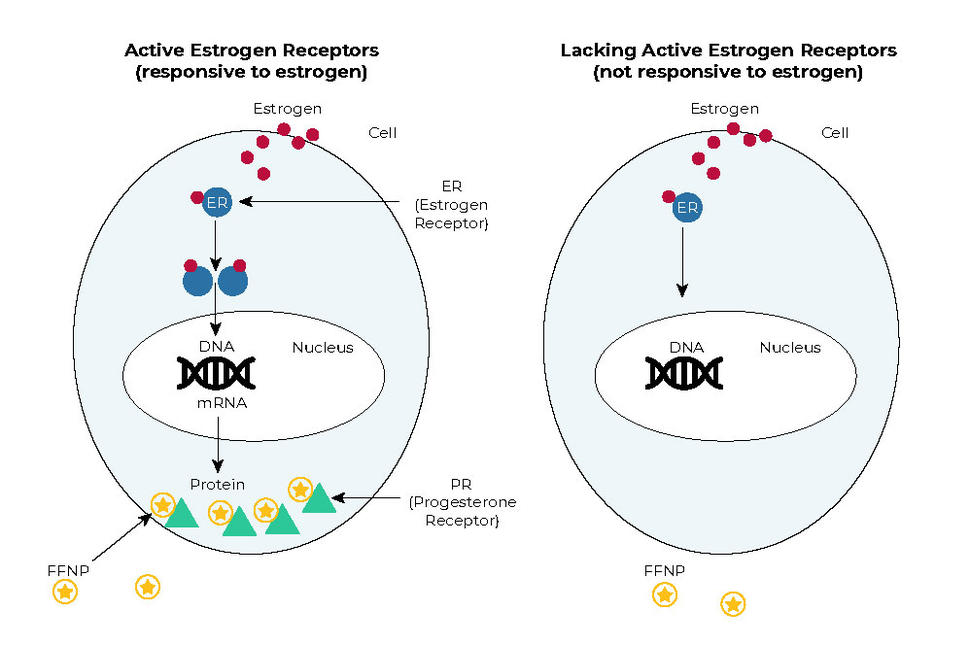
HOW does it work? First of all the technical explanation: “The activity of ErSO depends on a protein called the estrogen receptor, which is present in a high percentage of breast tumors. When ErSO binds to the estrogen receptor, it upregulates a cellular pathway that prepares cancer cells for rapid growth and protects them from stress. This pathway, called the anticipatory Unfolded Protein Response, or a-UPR, spurs the production of proteins that protect the cell from harm.”
Explaining estrogen receptors in a cells is best shown with a picture:
In a breast cancer cell, there are LOTS of these estrogen receptors. When the cells become cancerous, a “cellular pathway [opens up] that prepares cancer cells for rapid growth and protects them from stress – in other words, it spurs the production of proteins that protect the cell from harm.”
ErSO latches onto the estrogen receptor site and kicks it into overdrive, so instead of gently protecting the cancer cell from the body and any kinds of cancer drugs used, the cell starts to eat itself. It ONLY works on cells that have this estrogen receptor site…which is most cancer cells. It leaves the rest of the body’s cells alone – including hair cells…(many chemotherapy drugs kill hair cells, which is why hair loss during chemo is common…)
From a recent article in INTERESTING ENGINEERING, “Human clinical trials will go forward with a Bayer AG license of the new drug, with an eye toward testing ErSO's effectiveness against a broader spectrum of cancers that carry estrogen receptors.”
At any rate, this isn’t something we can use TODAY, but in the future? Who knows. Sounds like a cure to me!
Resources: www.sciencedaily.com/releases/2021/07/210722113058.htm, https://www.cancer.net/research-and-advocacy/introduction-cancer-research/how-are-cancer-drugs-discovered-and-developed, https://www.cancer.gov/sites/g/files/xnrzdm211/files/styles/cgov_article/public/cgov_image/media_image/2021-03/Functioning-ER_0.jpg?h=42b4009f&itok=RdBp3vn3, https://interestingengineering.com/kill-breast-cancer-cells
Image: https://inteng-storage.s3.amazonaws.com/img/iea/QjOd44kWOd/sizes/kill-breast-cancer-cells_md.jpg
Sunday, June 20, 2021
BREAST CANCER RESEARCH RIGHT NOW! #78: The “Future” of Breast Cancer
From the first moment my wife discovered she had breast cancer, there was a deafening silence from the men I know. Even ones whose wives, mothers or girlfriends had breast cancer seemed to have received a gag order from some Central Cancer Command and did little more than mumble about the experience. Not one to shut up for any known reason, I started this blog…
Every month, I’ll be highlighting breast cancer research that is going on RIGHT NOW! Harvested from different websites, journals and podcasts, I’ll translate them into understandable English and share them with you. Today: Is it WHEN or IF there will be a cure for breast cancer…and can there even BE a single cure?
With the rapid development of a vaccine against the COVID19 virus, I started to wonder if the advances made developing it would spill over into the fight against breast cancer. While it seems to be at least a POSSIBILITY a huge roadblock stands in the way.
"Experts now know that breast cancer isn’t one single disease. There are many different types of breast cancer with different causes and treatments.”
Where COVID19 was a single virus – even though variants continue to pop up – it was the same virus that infected everyone; breast cancer has not only variants, but entirely different diseases, so we could never do a massive campaign against breast cancer the way it was carried out against COVID19. At any rate, I’ll go into this more in a later essay, but for now, I’ll shelve the vaccine investigation and move on to my initial question, “Is there a cure for breast cancer?”
One similarity between COVID19 and the varieties of breast cancer was that its treatment depends on a number of factors. Every body’s response to the challenge to the immune system, whether it was COVID19 or breast cancer was different. Socioeconomic status (how rich/poor/employed/unemployed/where they live, etc.) also has an impact. The SES of both COVID19 and breast cancer victims determines the recovery of that person. As well, the stage of the cancer, its location, number, and size of tumors; the molecular and genetic characteristics of the cancer; and the overall health and treatment priorities of each patient will affect the success of any cancer (or COVID19) treatment.
The short and sweet of breast cancer and its treatment is, “There’s still no cure for breast cancer that has spread to distant parts of the body. However, treatment can help prolong and improve quality of life in people with MBC.”
Perhaps the first thing that is done when doctors discover breast cancer is to identify the type and stage.
Once that happens, oncologists (cancer doctors) can talk with the patient and devise a treatment plan. For my wife’s oldest friend, the treatment was a lumpectomy and radiation. For her, it was a double mastectomy followed by aggressive chemotherapy. It all depends. We live in a wealthy country, and perhaps the country with the highest level of technology to deliver healthcare. Does it GET to us? No idea (I also discovered that it depends entirely on the source of the ranking – which of course, can be deeply affected by the agenda of the organization issuing the ranking.) In the state I live in, The Mayo Clinic in Rochester, MN is among the top 10 cancer care hospitals in the country. As might be said for any of the hospitals so ranked, there is inevitably a “trickle down” effect. While the main work is done at the ranked hospital, everyone knows that you can move “up the ranks” as you search for treatment for your own, personal diagnosis.
Some types of breast cancers are: Estrogen receptor-positive; Progesterone receptor-positive, Human epidermal growth factor receptor 2 (HER2)-positive, estrogen receptor-negative, progesterone receptor-negative, HER2-negative. Breast cancer is also identified by where it was found in the breast as well as if it has progressed to the lymph nodes. Each step of diagnosis determines the treatment plan.
At any rate, I’ve detailed different types of treatments on the blog, the end result right now of course, is that “There’s still no cure for breast cancer that has spread to distant parts of the body.”
At least for now!
Resources: https://www.healthline.com/health/breast-cancer/breast-cancer-cure, BC Vaccine - https://medicine.wustl.edu/news/personalized-cancer-vaccines-for-breast-pancreatic-cancers-show-promise/ Best Cancer Treatment Hospitals: https://appliedradiationoncology.com/articles/top-cancer-hospitals-named-for-2020-2021 Image: https://hips.hearstapps.com/hmg-prod.s3.amazonaws.com/images/breast-cancer-vaccine-royalty-free-image-1571330334.jpg?crop=0.668xw:1.00xh;0.175xw,0&resize=480:*
Sunday, April 4, 2021
BREAST CANCER RESEARCH RIGHT NOW! #77: Androgens – MALE Sex Hormones May Have A POSITIVE Effect In Estrogen Receptor-driven Metastatic Breast Cancer!!!!
Androgens, the most recognizable of these hormones is testosterone; might be a possible treatment for breast cancer.
Abnormal estrogen activity is responsible for the majority of breast cancers, so researchers in Australia, after years of on-again, off-again research in using androgens to combat breast cancer, finally began to understand WHAT they were seeing. “…previous studies had produced conflicting evidence on how best to therapeutically target the androgen receptor for treatment of breast cancer, which caused widespread confusion and hampered clinical application.”
Despite numerous failures to use androgens against estrogen-positive breast cancer tumors, researchers found that “androgen receptor activation by natural androgen (or a new androgenic drug) had potent anti-tumour activity in all estrogen receptor positive breast cancers, even those resistant to current standard-of-care treatments. In contrast, androgen receptor inhibitors had no effect.” Because of advances in both breast cancer treatment and a growing understanding of how hormones work in the Human body, this “seminal finding has application beyond the treatment of breast cancer, including breast cancer prevention and treatment of other disorders also driven by estrogen (such as endometriosis and uterine fibroids).”
While promising, this is NOT a ready-to-use treatment at this time. It’s a discovery that will fund research in using androgens in new ways as researchers grow a better and better understanding of how androgens might be used to battle breast cancers in the future.
Resources: https://www.sciencedaily.com/releases/2021/01/210118113115.htm
Image: https://d2jx2rerrg6sh3.cloudfront.net/image-handler/ts/20200331104716/ri/750/picture/2020/3/shutterstock_536117299.jpg
Sunday, November 8, 2020
BREAST CANCER RESEARCH RIGHT NOW! #76: Disguised as a Safe Amino Acid, Cancer Killer Sneaks Into Cancer Cells!
In case you don’t remember your ancient history, here’s a brief lesson: The Trojan War between the Greeks and the independent city of Troy had lasted 10-years with the Greeks trying to pound down the walls of Troy. Someone go the idea of building a huge wooden horse then stuffing it with a strike team that included the famous warrior, Odysseus. The Greeks sailed away, and the Trojans figuring it was a sort of peace offering, pulled the horse into their city. At night the Greek got out of the horse, opened the gates for the rest of the Greek army – which had waited over the horizon then sailed back under cover of night. The Trojans, still none the wiser were caught totally by surprise and died under the swords of the Greeks.
Scientists have created a sort of “Trojan Horse” of a treatment for breast cancer. With this treatment, there isn’t even a drug used! It’s a super tiny particle that makes the cancer cell destroy itself. After slipping through the cell’s defenses (the cell doesn’t see the particle, all it sees is an amino acid it needs and can’t get from anywhere else. The particle then kicks off a reaction in the cell as it begins to overproduce an oxygen molecule that causes the cancer cells to self-destruct while remaining harmless to the healthy cells.
Each of those super tiny particles (nanoparticles, if you want to be specific; “nano” is a measurement of these particles that’s thirty THOUSAND times smaller than a single Human hair!) is covered with an amino acid (like you’d find in salon-grade hair products that specifically help provide hair with moisture and strength, as well as repairing surface damage.) that the cell can’t get inside the body – it only comes into the body through foods like meat and dairy products.
The full technical name of this weapon is “Nanoscopic phenylalanine Porous Amino Acid Mimic,” or Nano-pPAAM. The amino acid, then is called Phenylalanine – also the same kind of substance you see warnings about on some diet foods like Splenda, Equal, and NutraSweet: “Phenylketonurics: Contains phenylalanine” Phenylketonuria (PKU) is a dangerous buildup of phenylalanine can develop when a person with PKU eats protein-rich foods, such as milk, cheese, nuts or meat, and even grains such as bread and pasta, or aspartame.
Right now, there is always a chance that the cancer cells will become resistant to the drug treatment – no matter what it is – in this case, because the particle isn’t any kind of drug (like if you got a sliver in your finger, your body reacts against it, causing a painful infection that has to be treated…but you don’t have any kind of DISEASE…it’s just how your body works when it gets a sliver) the cells can’t “get used to it.”
It’s definitely something to keep an eye on in the future!
Resources: https://www.sciencedaily.com/releases/2020/09/200923124631.htm
Image: https://www.beltandroad.news/wp-content/uploads/2020/05/Trojan-Horse-at-Gelibolu-in-Turky-1000x1000.jpg