Saturday, September 26, 2015

ENCORE # 21! – Big Hairy Deal


http://voluume.fr/wp-content/uploads/2012/05/Encore-Sessions.jpgFrom the first moment my wife discovered she had breast cancer, there was a deafening silence from the men I know. Even ones whose wives, mothers or girlfriends had breast cancer seemed to have received a gag order from some Central Cancer Command and did little more than mumble about the experience. Not one to shut up for any known reason, I started this blog…That was four years ago – as time passed, people searching for answers stumbled across my blog and checked out what I had to say. The following entry appeared in November of 2011…

It’s been my experience that men don’t usually care that much about their hair. It’s also been my experience that hair is VERY important to women.

That’s why the most obvious result of chemotherapy – alopecia – has such a profound impact on women and the men who love them. Women who lose their hair are OBVIOUS to everyone who looks at them. They are noticed; they stand out in public in a way a bald man will never stand out. We admire it even – Kojack, The King of Siam, Captain Jean-Luc Picard are all heroes and we don’t even notice their shiny heads. But bald cops, Queens and starship Captains would be so odd that most of us wouldn’t even remember the rest of the record, reign or voyage.

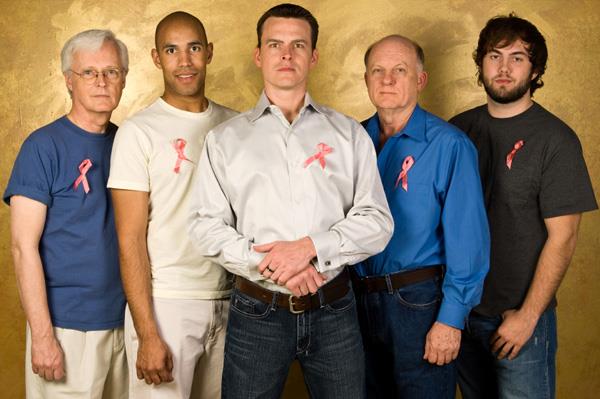
As men with wives, girlfriends and mothers who will or who have lost their hair because of breast cancer, we stand in an unusual place.

We have to be honest encouragers.

“Honey, how does this wig look on me?”

“Is the scarf the right color for my skin?”

“If I wear a baseball cap every day, will you still think I’m sexy?”

“If I don’t wear anything on my head in public, will you be embarrassed?”

The first response to each question is initially: “It looks fine, dear”, “It looks fine, dear”, “Of course I will”, “Nothing you could wear or not wear would embarrass me”.

The problem with the response is that our loved ones are our loved ones and a diagnosis of “stupid” does NOT go hand-in-hand with a diagnosis of breast cancer. They know when we are patronizing. I learned the hard way not to patronize my wife. When she asked one of the questions above, I had to take my time and think. I had to consider my answer not because I wanted to be right, but in order to battle the deep-seated desire to avoid inflicting any more pain on a person worn out from the constant fight against cancer.

So I studied her as she modeled the wig, scarf, hat or bald pate.

Honestly responding, I gave my opinion. When it was honest, it gave her FEEDBACK and while the ultimate choice was still hers, she most likely felt that my response – especially before her hair started to grow back – was honest and another data point in her effort to decide what to wear that day.

Ultimately, I could do nothing more important that to be consciously HONEST!

Sunday, September 20, 2015

BREAST CANCER RESEARCH RIGHT NOW! : Diabetes = Peripheral Neuropathy; Chemotherapy = Peripheral Neuropathy…What If You Have BOTH?


http://ecx.images-amazon.com/images/I/41S6QJ638WL.jpgFrom the first moment my wife discovered she had breast cancer, there was a deafening silence from the men I know. Even ones whose wives, mothers or girlfriends had breast cancer seemed to have received a gag order from some Central Cancer Command and did little more than mumble about the experience. Not one to shut up for any known reason, I started this blog…

Every month, I’ll be highlighting breast cancer research that is going on RIGHT NOW! Harvested from different websites, journals and podcasts, I’ll translate them into understandable English and share them with you. Today I’ll be referencing a number of different sources – let me state immediately and LOUDLY:

I AM NOT A DOCTOR. I AM READING THE SOURCES I NOTE BELOW AND SUMMARIZING, SOMETIMES CHANGING TECHNICAL TERMS INTO MORE COMMON ENGLISH DEFINITIONS. THIS IS NOT MEANT TO BE A DIAGNOSIS OR TREATMENT BLOG BUT A THOUGHT-PROVOKING ONE.

“Peripheral neuropathy is a set of symptoms caused by damage to the nerves that are away from the brain and spinal cord. These distant nerves are called peripheral nerves. They carry sensations (feeling) to the brain and control the movement of our arms and legs.”

Some of the symptoms of PN are: “pain that might be present all the time or come and go, like shooting or stabbing pain); burning; tingling; loss of feeling; it’s hard to pick up things and you drop things more often; balance problems; trouble with tripping or stumbling while walking; more sensitive to cold, heat, touch, or pressure; shrinking muscles; muscle weakness; trouble swallowing; constipation; trouble passing urine; blood pressure changes; as well as decreased or no reflexes.”

What causes PN?

Diabetes can. Chemotherapy with certain drugs can.

What if you have diabetes AND have been successfully treated for breast cancer?

Over a decade ago, it seems that the treatment was essentially: MORE DRUGS! (http://www.ncbi.nlm.nih.gov/pmc/articles/PMC2430688/)

Doctors today are taking a closer look at dealing with it: “In a recent…analysis…the…prevalence of [neuropathy caused by breast cancer chemotherapy] was 48%. Within the first month of completing chemotherapy, the prevalence of [neuropathy] was 68%; after 6 or more months of completing chemotherapy, the prevalence of [neuropathy] decreased to 30%.”

What’s the solution here?

There isn’t one yet. There are hopeful signs, however: “Clinical trials investigating… acupuncture and massage therapy are under way. A few small trials have investigated the use of Scrambler therapy, a device that provides noninvasive cutaneous electrostimulation, to treat [neuropathy]. The use of topical menthol...is also being investigated...”

That’s breast cancer.

How about diabetic neuropathy treatments?

Quite plainly: “There are currently no curative options for people with diabetic neuropathy; instead the condition is treated through pain relief or blood glucose control to stop the condition getting worse.”

In the same article from which the above quote was taken, there seems to be some hope in using stem cells FROM THE PATIENT THEMSELVES (“Mesenchymal stem cells can be obtained from several sources in the body, including fat tissue, tendons, umbilical cord blood and bone marrow. The most successfully transplanted MSCs have been those from the bone marrow.”)

Currently, doctors treat diabetic neuropathy “...based on three major approaches: intensive glycemic control and risk factor management, treatments based on pathogenetic mechanisms, and symptomatic pain management. Clinical guidelines recommend pain relief...through the use of antidepressants…opioids and topical agents such as capsaicin…[other drugs are listed] [But]...there is a growing need for studies to evaluate the most potent drugs or combinations for the management of [neuropathy] to maximize pain relief and improve quality of life. A number of agents are potential candidates for future use in PDN therapy, including [a sodium ion channel that in humans is encoded by the SCN9A gene]antagonists, calcium channel blockers, NGF antibodies, and angiotensin II type 2 receptor antagonists.”]

So – drugs, drugs, and more drugs...

You DID notice that the treatments for chemotherapy-induced neuropathy and diabetic neuropathy DON’T have anything in common, right?

If you GOOGLE “diabetic neuropathy, chemotherapy-induced neuropathy, treatment”…you get nothing that includes both. With 11 million women in the US with diabetes (https://diabetessisters.org/women-diabetes) and 300,000 dealing with breast cancer in the US alone (http://www.cancer.org/acs/groups/content/@research/documents/document/acspc-042725.pdf), you’d think that someone, somewhere, would link the two and do a teensy bit of research.

Anyone care to join me in politely asking the medical community to “GET ON THE STICK!!!!!”


Saturday, September 12, 2015

ENCORE #20! – Ripples


http://voluume.fr/wp-content/uploads/2012/05/Encore-Sessions.jpgFrom the first moment my wife discovered she had breast cancer, there was a deafening silence from the men I know. Even ones whose wives, mothers or girlfriends had breast cancer seemed to have received a gag order from some Central Cancer Command and did little more than mumble about the experience. Not one to shut up for any known reason, I started this blog…That was four years ago – as time passed, people searching for answers stumbled across my blog and checked out what I had to say. The following entry appeared in September of 2011...

While my daughter doesn’t often blog on her 20: A Journey of Hope, she does on her other site (http://think.o-my-soul.net/). Currently on the right hand side is her twitterfeed regarding a car accident she and I witnessed.

An elderly woman was driving her very nice car south on Washington Ave, parallel to Interstate 94 at about 4:30 PM. I’d picked my daughter up from Augsburg College where she’d just spent eight hours of attending classes in biopsychology and research methods. Traffic was light. We were chatting.

Many people use Washington to skip the heavy traffic feeding on to the interstate directly from the downtown Minneapolis area. They take it for a short jaunt through the fascinating businesses in the old Warehouse District, then enter the ramp at 22nd by crossing a usually light southbound lane of traffic.

I think she missed the ramp, got on to the next stretch that runs between 26th and Lowry and then, thinking the ramp was there, simply veered into oncoming traffic, looking for the ramp. She said to another bystander that she thought it was the turn on to Lowry she was making (and the Washington was a one way?). At any rate, what we saw was the woman’s car swerve deliberately into two oncoming cars.

My daughter says we experienced vicarious dissonance, “a type of vicarious discomfort resulting from imagining oneself in the speaker’s position, leading
to efforts to restore consonance”. In other words, we couldn’t believe that the woman was driving that way because we KNEW that that kind of driving couldn’t happen. We KNEW she should be in the northbound lane.

The resulting head-on collisions destroyed both her car and the badly damaged the other two. I was “first on the scene” and called 911, reported what I saw to police officer in charge after the arrival of two squad cars and a fire truck and my daughter and I moved on to home, deeply shaken.

As I drove, I thought about the accident and the effects it would have. Aside from burning itself into my daughter’s mind – she just got her license a bit over a week ago – and my own, the lives of the people in those cars will be irrevocably affected as well. The young Asian man whose older  model car doubtless carries only collision insurance is now car-less and likely will get piddly cash from the insurance company after endless wrangling over whether he caused the accident or not. The woman in the Volkswagen Beetle will experience the same thing, though by the newness of the car, it likely has more insurance.

And the elderly woman? Will she ever drive again? Will lawsuits (most likely formed by lawyerly vultures wishing to sue everyone in sight and retained by the elderly woman’s wealthy friends, cause the blame to fall on everyone but the woman) be brought, fought and bought? Who brought all of them home? Did the go to the hospital or just go home because their insurance doesn’t pay for something as minor as a non-lethal car accident?

Ripples.

What does a car accident on a Thursday afternoon have to do with breast cancer? Those of you who are THERE can easily guess. Those of you who are not, might consider this: the girlfriend of a good college friend of my daughter; has a mother who was just diagnosed with stage 4 breast cancer.

Ripples, ripples, ripples…

Saturday, September 5, 2015

GUY’S GOTTA TALK ABOUT #18…Living With Surviving Breast Cancer…


From the first moment my wife discovered she had breast cancer, there was a deafening silence from the men I know. Even ones whose wives, mothers or girlfriends had breast cancer seemed to have received a gag order from some Central Cancer Command and did little more than mumble about the experience. Not one to shut up for any known reason, I started this blog…

Over the next few “Breast Cancer Research” posts, I’m going to be looking at a completely different issue – how did the chemo drugs (heterodyning with diabetes) damage the peripheral nervous system (the PNS) in my wife?

In her, the nerve damage manifests itself as restless limb syndrome (I wrote about it here: http://breastcancerreaper.blogspot.com/2015/01/breast-cancer-research-right-now-29.html) as well as having dead spots on the limbs and in fingers and toes as well. This is above and beyond the nerve damage that came from the actual double mastectomy.

Also going to be looking at the issue of breast reconstruction and “what happens next”. They’ve been in for two years – and they’ve been uncomfortable for her from day 1. As we grow old together, what does that mean for the implants. She pointed out, “I’m not going to get new boobs when I’m 65, 75, and 85!” So what happens? Keep replacing them? Forget it? And what about the other issues surrounding them? We’re planning a long, far trip a few years from now – what does flying time do for the implants? What about lymphedema and flight time?

It’s “funny”, four years ago, I’d have said that the most important thing; the thing that was most on my mind; was my wife surviving breast cancer. Today, the issue that makes me think the most is her living with surviving breast cancer…

Saturday, August 29, 2015

ENCORE #19! – “What would men like better: bigger boobs or nicer hair?” vs “What if I don’t have either one?”


http://voluume.fr/wp-content/uploads/2012/05/Encore-Sessions.jpg
From the first moment my wife discovered she had breast cancer, there was a deafening silence from the men I know. Even ones whose wives, mothers or girlfriends had breast cancer seemed to have received a gag order from some Central Cancer Command and did little more than mumble about the experience. Not one to shut up for any known reason, I started this blog…That was four years ago – as time passed, people searching for answers stumbled across my blog and checked out what I had to say. The following entry appeared in August of 2011.

My wife was watching TV during one of her after-chemo days, when some daytime TV jabber show popped on. I don’t know which show it was (she didn’t say), but subject of discussion was the question above: What would men like better: bigger boobs or nicer hair?”

Now don’t get me wrong, television always goes for the spectacular, often ignoring truth or reality. I KNOW they were trying to get a rise out of the audience, increase ratings and sell Lexuses and tampons. I KNOW they think they’re being cute, creative, and provocative.

This time they ended up being hurtful and in bad taste – I mean “plumber’s butt crack with a bad case of gas” bad taste. And not just hurting feelings, attacking 1 in 8 women in the US (the number who will be diagnosed with breast cancer some time in their lives) or 2.5 MILLION women (who are breast cancer survivors.)

Not only that, it intentionally and maliciously attacks males as being too shallow to see anything beyond boobs and hair – when the simple fact is that most men DO see past boobs and hair.

It’s sadly humorous that were this show to target any other group of people, the American Civil Liberties Union and various other watchdog groups would be all over them.

But because it is attempting to make women with breast cancer who have had their breasts disfigured with lumpectomies; who have had one or both breasts removed by mastectomies; who have lost their hair through chemotherapy or radiation treatments – feel worse about themselves than they already do (and men to feel shallow and self-centered with absolutely no hope of changing) – the show is okey-dokey with its producers, advertisers and media executives (not to mention the show hosts and audience members).

My question then, is this: “What the heck kind of world do we live in?”

I guess the obvious answer is this: “One that doesn’t give a rodent’s waste end about viciously attacking vulnerable people.”

Harrumph…yeah, I’m struggling.

Have a nice day.

Saturday, August 22, 2015

Claudia Alexander dies at 56; JPL researcher oversaw Galileo, Rosetta missions by Elaine Woo (LA Times)


Inspiration for US ALL -- Fight Breast Cancer HARDER Because Black Lives Matter -- Indeed ALL Lives Matter!


Tania Scott's photo.


a Colleagues at the Jet Propulsion Laboratory said Claudia Alexander was particularly keen on engaging the public in space science. In her spare time, she wrote two books on science for children.
Claudia Alexander, a NASA scientist who oversaw the dramatic conclusion of the space agency's long-lived Galileo mission to Jupiter and managed the United States' role in the international comet-chasing Rosetta project, died July 11 at Methodist Hospital of Southern California in Arcadia. She was 56.

The cause was breast cancer, said her sister, Suzanne Alexander.

During nearly three decades at NASA's Jet Propulsion Laboratory in La Cañada Flintridge, Alexander was known for her research on subjects including solar wind, Jupiter and its moons, and the evolution and inner workings of comets.

JPL scientist Claudia Alexander, pictured in 2014, was the U.S. manager for the international comet-chasing Rosetta project. (Gina Ferazzi / Los Angeles Times)

She was the last project manager of Galileo, one of the most successful missions for exploring the distant reaches of the solar system. Alexander was leading the mission when scientists orchestrated its death dive into Jupiter's dense atmosphere in 2003, when the spacecraft finally ran out of fuel after eight years orbiting the giant planet.

Most recently, she was Rosetta's U.S. project manager, coordinating with the European Space Agency on the orbiter's journey to rendezvous with the 67P/Churyumov-Gerasimenko comet as it circles the sun.

Colleagues said Alexander was particularly keen on engaging the public in space science.

She spearheaded Rosetta's efforts to involve amateur astronomers through social media and recognize the value of their ground-level observations of the spacecraft's path toward deep space. In particular, she spurred the creation of a Facebook group where members of the amateur community post comments on their sightings and interact with her and other scientists.

“Claudia's vision was to engage and empower the amateur community via various social media… a new wrinkle on the concept” of public engagement in NASA’s missions, said Padma A. Yanamandra-Fisher, a senior research scientist with the Space Science Institute who coordinated the outreach.

I was a pretty lonely girl. I was the only black girl in pretty much an all-white school and spent a lot of time by myself -- with my imagination.- Claudia Alexander

She "had a special understanding of how scientific discovery affects us all, and how our greatest achievements are the result of teamwork, which came easily to her," JPL director Charles Elachi said in a statement. "Her insight into the scientific process will be sorely missed."

Alexander was born in Vancouver, Canada, on May 30, 1959. She moved to the Silicon Valley with her family when she was 1 and grew up in Santa Clara. Her father, Harold Alexander, was a social worker and her mother, Gaynelle, was a corporate librarian for chip-maker Intel.
As an African American in a predominantly white community, Alexander felt isolated. Writing became a refuge for her.
According to the obituary: 'She wanted to study journalism at UC Berkeley, but her parents "would only agree to pay for it if I majored in something 'useful,' like engineering," she said in an interview for the Rosetta website.' Fortunately, her parents steered her...
"I was a pretty lonely girl," she recalled in a feature for the University of Michigan's Engineering Magazine. "I was the only black girl in pretty much an all-white school and spent a lot of time by myself — with my imagination."

She wanted to study journalism at UC Berkeley, but her parents "would only agree to pay for it if I majored in something 'useful,' like engineering," she said in an interview for the Rosetta website.

During college she became an engineering intern at NASA's Ames Research Center near San Jose. But she found herself drawn to the space facility and visited it as often as she could. Her supervisor eventually arranged for her to intern in the space science division.

She went on to earn a bachelor's degree in geophysics at UC Berkeley and a master's in geophysics and space physics at UCLA. At the University of Michigan, she wrote her doctoral thesis on comet thermophysical nuclear modeling and earned a PhD in atmospheric, oceanic and space sciences.

In 1986, she joined JPL as a team member for Galileo, which was still years from launching.

In 2000, she became Rosetta's U.S. project scientist at the relatively young age of 40.

"She was always looking to improve the project and make things flow better," said Paul Weissman, an interdisciplinary scientist on Rosetta. "Europeans can be difficult about collaborations. Claudia would get people to open up and work together."

In 2003, she became Galileo project manager, guiding efforts to destroy the venerable spacecraft to prevent it from accidentally crashing into and contaminating any of Jupiter's moons.

She had also served as a science coordinator on the Cassini mission to Saturn.

In her spare time, Alexander wrote two books on science for children and mentored young people, especially African American girls. "She wanted children of color to see themselves as scientists," her sister Suzanne said.

A fan of the steampunk movement in science fiction, Alexander wrote and published short stories in the genre. She wore the Victorian-style clothing associated with steampunk fashion when she taped a TED talk on how to engage youths in math and science. Her lecture will be released later this year.

Alexander was never married and had no children. Besides her mother and sister, she is survived by a brother, David Alexander.

Copyright © 2015, Los Angeles Times


Saturday, August 15, 2015

BREAST CANCER RESEARCH RIGHT NOW! #36: Low Level Laser Treatment of Post-Breast Cancer Arm Lymphedema


http://www.bayswater.ca/pictures/imgwrst.jpg
From the first moment my wife discovered she had breast cancer, there was a deafening silence from the men I know. Even ones whose wives, mothers or girlfriends had breast cancer seemed to have received a gag order from some Central Cancer Command and did little more than mumble about the experience. Not one to shut up for any known reason, I started this blog…

Every month, I’ll be highlighting breast cancer research that is going on RIGHT NOW! Harvested from different websites, journals and podcasts, I’ll translate them into understandable English and share them with you. Today: http://www.ncbi.nlm.nih.gov/pmc/articles/PMC3887507/

After our last visit to the lymphedema clinic and the response of the staff there when my wife asked about a cure, I will now be focusing the “BC Research Right Now!” entries on the subject of lymphedema treatment.

This first entry is NOT something that the clinic we go to has ever offered, and it may be something I suggest we ask for.

It’s called Low Level Laser Therapy or LLLT. Below you’ll find the description of a recent study using it:

“Low level laser therapy (LLLT) (wave lengths 650-1000 nm) is a…therapeutic intervention for treatment of arm lymphedema. [It] can be administered by individuals trained in the use of the device…[and] is believed to stimulate lymphatic movement and lymphangiogenesis (‘the formation of lymphatic vessels from pre-existing lymphatic vessels’, IOW, ‘growing new lymph vessels’); [increase] macrophage activity, and soften fibrotic tissues; improve contractility in the tissues that assist with lymph transport through the lymphatic vessels. These mechanisms increase movement of pooled fluid from the extracellular spaces into the lymphatic system for transport.

“Studies have evaluated the influence of LLLT on lymphedema in breast cancer survivors with mixed results regarding amount of volume reduction and degree of symptom relief...None of these studies reported complications. Although the number of sessions and exposure time to the laser varied across studies, overall results are supportive of the procedure as a lymphedema treatment and demonstrate the feasibility of conducting studies in breast cancer survivors with lymphedema.

“LLLT offers APNs trained in the use of the device an opportunity to directly provide treatment for their patients with lymphedema. Demonstrated successful use [and] could impact current standards of care and treatment delivery by offering alternatives to current treatment, earlier intervention, and increasing access to a pool of providers.

“Based upon the physiological mechanisms of action ascribed to LLLT, the authors of this article theorized that it should reduce lymphatic-associated swelling. The purpose of the pilot study was to examine the impact of [the treatment], as both a stand-alone and complementary treatment for arm volume, symptoms, and Quality of Life in breast cancer survivors with treatment-related lymphedema and to use data obtained in this study to power future studies.”

The hospital we go to has a cancer center with a strong breast cancer component and they are the place where we discovered massage therapy for the reduction of arm volume – what’s known as “manual lymphatic drainage” and includes both home-massage and wearing a compression garment on the arm.

 The results of the study, while not phenomenal or “world-shaking” do, in fact point to the use of LLLT as an adjunct to typical massage and compression treatments: “a 20 minute dose of LLLT when followed immediately by compression bandaging is potentially as effective in reduction of arm volume as 40 minute sessions of MLD or combined MLD and LLLT followed by compression bandaging . This preliminary finding is noteworthy, as the shorter duration of each LLLT session is less burdensome to patients and less time consuming for therapists.”

Less time wasted – that’s an improvement. We’ll have to see if the clinic we go to offers this treatment!