Sunday, March 28, 2021

ENCORE #155! – How Do Other Countries Deal With Alzheimer’s?

From the first moment my wife discovered she had breast cancer in March of 2011, there was a deafening silence from the men I knew. Even ones whose wives, mothers or girlfriends had breast cancer seemed to have received a gag order from some Central Cancer Command and did little more than mumble about the experience. Not one to shut up for any known reason, I started this blog…That was four years ago – as time passed, people searching for answers stumbled across my blog and checked out what I had to say. The following entry first appeared in August of 2018…

I just got back from three weeks in South Korea, where my son and his family have lived for the past three-and-a-half years.

While I cannot categorically say that I never saw a person with Alzheimer’s, I CAN say that I never saw a person who BEHAVED as if they had Alzheimer’s. That got me to thinking – I know what we have done to my dad here in the US. What do other countries do for or with their people. I’m going to start with South Korea and see what I can come up with…

The first thing I found was this: “Alzheimer Disease International (ADI), was founded in 1984 to help to fight Alzheimer's disease, first diagnosed back in 1906. ADI is the umbrella organization of more than 80 Alzheimer’s associations around the world.”

OK. So I know that out of 195 countries (including the Holy See (the Vatican) and the State of Palestine) there are eighty associations around the world. While that sounds “wonderful”, that means that less than half of the countries on Earth have some group or organization whose purpose is to intentionally help fight against Alzheimer’s Disease. Question: Where does South Korea fall?

“Although a rapid increase in the number of patients with dementia is a worldwide problem with significant health and economic consequences, the rates of increase is not uniform. The numbers in developed countries are expected to increase by 100% between 2001 and 2040 and by >300% in Asian and South American countries. The rate of growth of the aged population in the Republic of Korea (hereafter, Korea) is known to be one of the fastest in the world (2). Korea is expected to move from an aging society to a ‘super-aged’ society in only 26 yr (2000-2026), and 37.6% (17.9 million) of the population is expected to be of the age>65 yr by 2050. In addition, the rapid industrialization in the past four decades has brought extensive changes in the structure and value of Korean families. For example, the percentage of one-person households is increasing, particularly in the elderly population where it will reach approximately 33%. At the same time, more women have started to work; therefore, the number of informal caregivers is decreasing. Because of this rapidly aging population and progressive westernization of lifestyle, dementia has emerged as a major health problem in Korea.”

Clearly, even though I didn’t SEE anyone with Alzheimer’s-like behavior, that didn’t mean squat! It’s actually a problem of greater proportions in Korea. Of course, Korea went from a bombed out, agrarian, perhaps close to a stone-aged society at the end of the Korean War in 1953; to one of the most technologically advanced countries on Earth 65 years later (which of course, depends on who you ask – Americans count themselves as #1 (https://www.theclever.com/most-technologically-advanced-countries/); Quora counts them as #2 (https://www.quora.com/Which-is-the-most-technology-advanced-country-of-the-world); and this Youtube video (which doesn’t disclose its origin) put the US at #2 (https://www.youtube.com/watch?v=OHLYpsbB7Sc&vl=en) – but not one of the lists I perused excluded South Korea as one of the top 10 most technologically advanced nations on Earth.

So what are they doing to deal with Alzheimer’s?


At this point, it appears only raising awareness, training people to deal with dementia, and diagnosing it. They have also instigated Family Caregiver Support Policies. You can read the entire proposed National Dementia Plan here: file:///C:/Users/gstew/Downloads/(ENG%20ver.)%20The%203rd%20National%20Dementia%20Plan%20(%EC%A0%9C3%EC%B0%A8%20%EC%B9%98%EB%A7%A4%EA%B4%80%EB%A6%AC%EC%A2%85%ED%95%A9%EA%B3%84%ED%9A%8D).pdf

I’ll summarize a couple of things: In 2014, the following legislation was introduced: “The Respite Care Service was installed to provide family caregivers of PWD with a brief repose. The 5th grade was added to the Long-term Care Approval System to allow people with mild dementia to be eligible for service benefits such as cognitive stimulation and visiting nursing services.”

It’s not much, but in future essays, I’ll dig into Korea’s plan – as well as the national American plan – to deal with dementia in our population.

Resource: https://www.ncbi.nlm.nih.gov/pmc/articles/PMC4101777/,
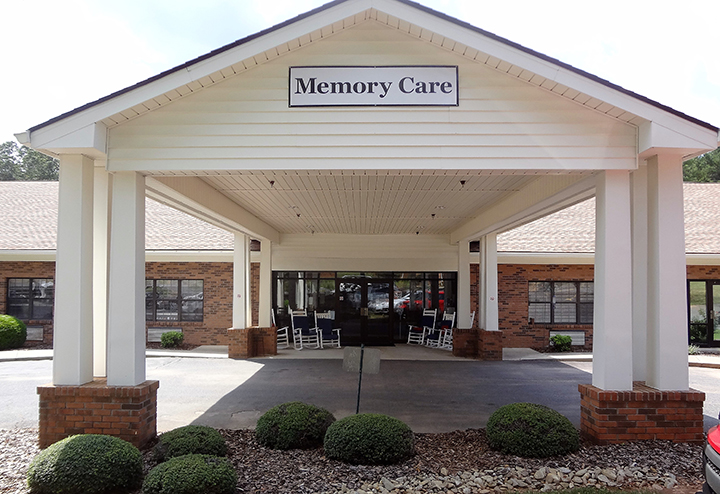
Image: https://c2.staticflickr.com/6/5527/10893068965_1d328e8f71_b.jpg

Sunday, March 21, 2021

GUY’S GOTTA TALK ABOUT BREAST CANCER: Three Thousand, Six Hundred and Fifty Days Later…

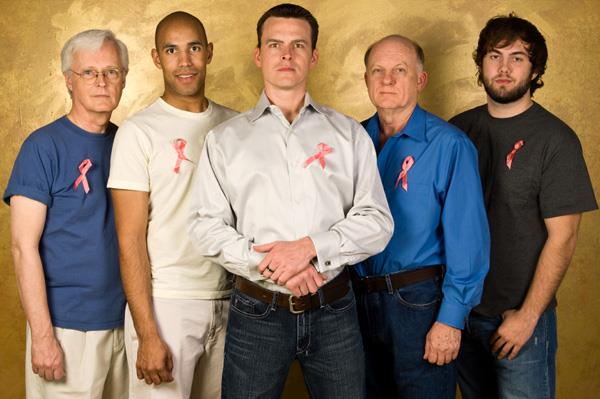
From the first moment my wife discovered she had breast cancer, there was a deafening silence from the men I know. Even ones whose wives, mothers or girlfriends had breast cancer seemed to have received a gag order from some Central Cancer Command and did little more than mumble about the experience. Not one to shut up for any known reason, I started this blog…


1) Observations of A Breast Cancer Husband

I wanted to us a blog title that was simple and would pop up on a normal GOOGLE search, but “Breast Cancer Husband” was already taken (http://www.breastcancerhusband.com/). So was “Stand By Her” (http://standbyher.org/). I went to those sites, but one has been corrupted by endless spam and the other has been inactive for nearly a year. Another I tried seems full of advertising and another still was a long advertisement for an exercise program developed by a breast cancer husbands’ wife.

So here I am, because I need someone to talk to RIGHT NOW and I want to talk to other husbands, fiancés, and lovers of women with breast cancer.

Our journey is only two weeks old. While my wife Liz knew something was seriously wrong inside of her body, I was clueless. Until two weeks ago, a biopsy at the Breast Care Center at Regions Hospital in Minnesota ( ) confirmed that she had infiltrative ductal carcinoma. It was the most common form of breast cancer. Treatments had been worked out. Research had been done. It is survivable…

A week later, Liz had a bilateral mastectomy.

I’m writing this six days after the surgery.

I’ve searched the internet and I haven’t been able to find an active husband-whose-wife-has-breast-cancer blog that I could chat on. Maybe it’s because their wives have been survivors for years and they can relax, or they can take a step back, or they’re exhausted, or the danger is no longer clear and present.

Not so for me. Based on everything I’ve read so far, this job is only just beginning.

Ah, the name of the blog: I couldn’t call it Breast Cancer Husband, so I went to the thesaurus to look for synonyms and the etymological dictionary for word roots. It all comes down to a “husband” having something to do with farming. Words like cultivate, garden, graze, grow, harvest, landscape, seed, sow, tend and till the soil are all related to “husband”. The word “reap” was in there, too.

At first that didn’t do anything for me, but when I came across “reap”, of course the first thing I thought of was the Grim Reaper. Then my mind went to work, the Reaper’s robe turned pink and I had the image in my head of the Breast Cancer Reaper: cutting down breast cancer, growing hope, harvesting love, creating a new landscape (in more ways than one!), cultivating peace, sowing joy, tending the field, the Garden of Eden, good and healthy eating…

At any rate, this will be a personal blog with medical LINKS – I’m no doctor, though I have been a science teacher for three decades. This blog may wax and wane humorous as well. Humor is how I deal with grief and tragedy (actually, humor is how I deal with just about everything and everyone…)

We’ll see. All I know right now is that my wife has breast cancer, she, my daughter (whose blog links are below), my son & daughter-in-law & grandson and the rest of both of our families and friends, are dealing with this in different ways.

I should be here once a week, probably Saturdays, and my goal will be to provide something that’s short, personal and helpful.

That is all…

But, that was NOT all.

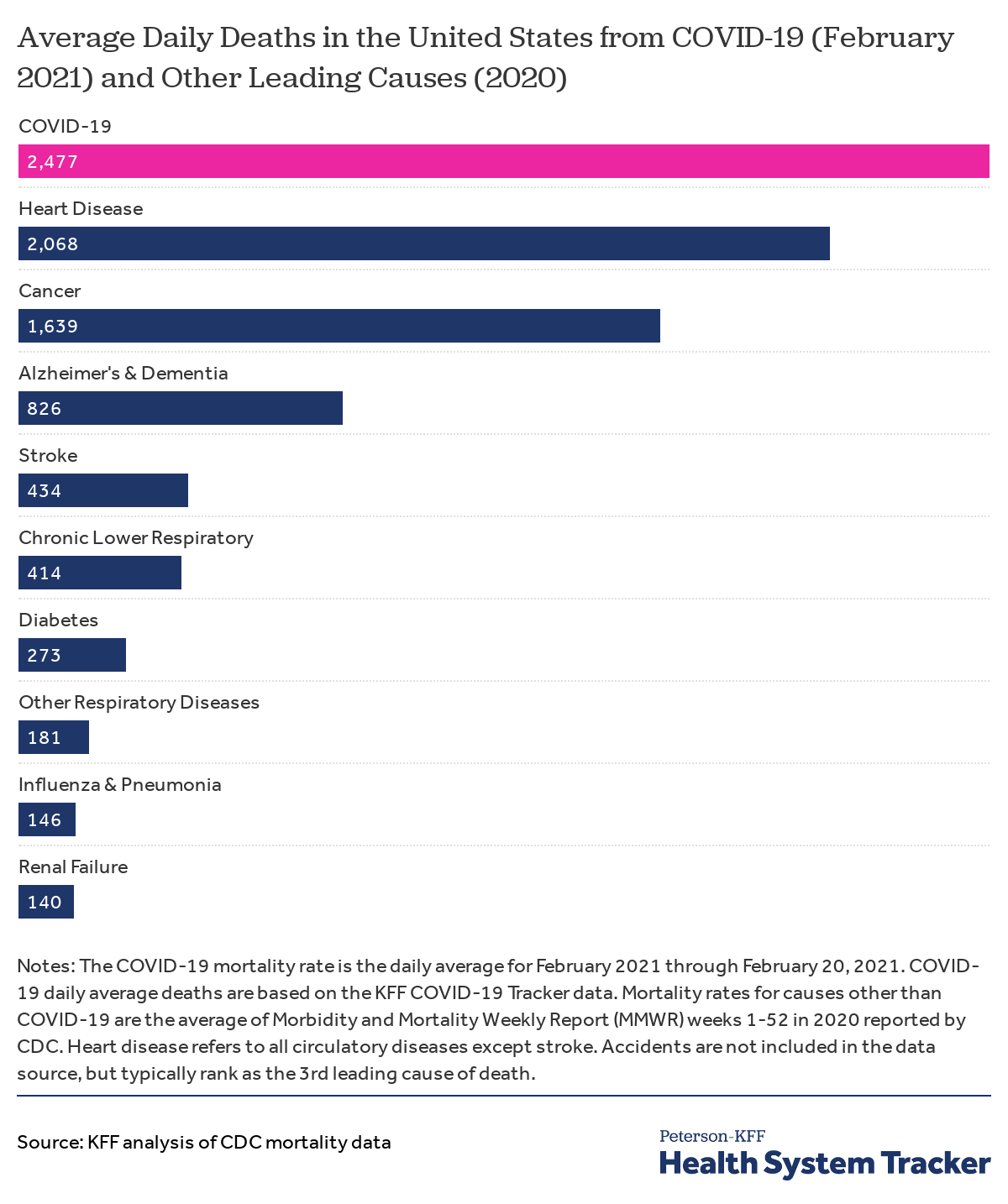
A decade later, everything still remains…not the same. We have three grandchildren now; the kids have been married for some time. Our foster daughter is getting married this summer. We had the COVID19 Pandemic with nearly three million dead from it (by comparison the chart below shows the daily number of deaths from COVID as compared to the daily number of deaths from other causes. I repeatedly ran across COVID19 deaths referred to as “excess deaths”. Apparently the census takers count on a certain number of people dying every day…:

Heart disease, cancer, and Alzheimer’s STILL claim way too many lives.
At any rate, all that to say that things have changed since my wife’s cancer diagnosis a decade ago. There are moments I’ll never forget. There are moments I’d LIKE to forget. There are events I can’t recall at all.

However, the ripples in the time line since that diagnosis are still active; not as huge, certainly, but they are still there. Lifestyle changes – for me for the worse (I spent too much of the past ten years eating too much…), some for the better – like we’ve both retired. As well, since that time, we’ve met MANY people whose lives withered under the impact of breast cancer. Many, many recovered, thank God and the doctors He’s had working on the breast cancer front (and the Alzheimer’s front!).

I’ll keep blogging, especially about medical development of tools to fight against both diseases. So, keep reading and if you have questions or need a virtual shoulder to cry on, let me know.

Resource: https://www.healthsystemtracker.org/brief/covid-19-is-the-number-one-cause-of-death-in-the-u-s-in-early-2021/, https://img.datawrapper.de/jw0qD/full.png

Sunday, March 14, 2021

ENCORE #154! – Marijuana and Alzheimer's In Minnesota

From the first moment my wife discovered she had breast cancer in March of 2011, there was a deafening silence from the men I knew. Even ones whose wives, mothers or girlfriends had breast cancer seemed to have received a gag order from some Central Cancer Command and did little more than mumble about the experience. Not one to shut up for any known reason, I started this blog…That was four years ago – as time passed, people searching for answers stumbled across my blog and checked out what I had to say. The following entry first appeared in December 2018.


Odd this…referencing the article below, published in July of 2017, over a year ago, has this to say: “The currently available examined evidence is weak and limited. It would be premature to say that the cannabis and related compounds have any effect on dementia symptoms or progression. Robust study designs with larger samples are needed to clarify the utility of Cannabis in AD.”

So why the rush (no pun intended)? Why the stampede to give cannabis to Alzheimer patients when this review of two (2) studies specifically targeted Alzheimer’s and “were predominantly used for the management of neuropsychiatric symptoms (NPS). Two studies on THC reported no change in NPS and no severe side effects. The other three studies reported variable and inconsistent improvements in NPS.”

Oh! I missed this from the Alpha News article: “State officials say there is some evidence the use of medical marijuana may improve the quality of life for people with Alzheimer’s by improving their mood, sleep and behavior.”

That sounds like a ringing endorsement, a reason to rush to dope seniors who have Alzheimer’s.

Surely there must be a more solid foundation, a larger study that exhibited startling or even clear results that cannabis resulted in improvement of moods, sleep, and behavior. How MUCH of an improvement? What were the parameters of the study that caused this bill to be passed?

Oh! I missed this definitive research in the StarTribune: “The Minnesota Department of Health announced Monday that it was adding the degenerative neurological disorder to the program, despite limited evidence on the effectiveness of treatment with cannabis.”

Honestly? I don’t understand this – patients who have been diagnosed with “hepatitis C, juvenile rheumatoid arthritis, opioid use disorders, panic disorder, psoriasis and traumatic brain injury” will get no relief from MaryJane.

Irritatingly, the state I live in seems to be the target of some exciting business growth opportunities: “Nic Easley, a national cannabis consultant and CEO of Denver-based 3C Consulting, said that based on market growth, the industry in Minnesota soon could prove lucrative for two to three players.”

Hmmm…I’m not convinced this is a good thing. But what do I know? I’m just a bofwhig and a Christian and not a terribly important demographic. While I understand it may alleviate some of the conditions of Dad’s Alzheimer’s, “Some studies have found that cannabis disrupts the tau proteins that are a hallmark of Alzheimer’s and inhibit brain function. But they were only in animal models, said Petersen, who directs the Mayo Clinic Alzheimer’s Disease Research Center and serves as a science adviser to the Alzheimer’s Association.”

In a coda that didn’t make it to the headlines, Peterson added, “‘We have cured Alzheimer’s disease time and time again’ — in lab and animal models, he said. ‘But that hasn’t translated to humans yet.’”

Resources: http://alphanewsmn.com/republicans-applaud-addition-of-alzheimers-to-medical-marijuana-list/, https://www.alzheimersanddementia.com/article/S1552-5260(17)30907-X/fulltext, http://www.startribune.com/alzheimer-s-added-to-minnesota-s-medical-marijuana-list/501803661/, https://mjbizdaily.com/what-are-the-medical-marijuana-business-hurdles-in-minnesota/
Image: https://c2.staticflickr.com/6/5527/10893068965_1d328e8f71_b.jpg
Sunday, March 7, 2021

RELATED MEDICAL ISSUES RIGHT NOW! #1: Cause Célèbre

 From the first moment my wife discovered she had breast cancer, there was a deafening silence from the men I know. Even ones whose wives, mothers or girlfriends had breast cancer seemed to have received a gag order from some Central Cancer Command and did little more than mumble about the experience. Not one to shut up for any known reason, I started this blog… 
From the first moment I discovered my dad had been diagnosed with Alzheimer’s, it seemed like I was alone in this ugly place. Even ones who had loved ones suffering in this way; even though people TALKED about the disease, it felt for me like they did little more than mumble about the experience. Not one to shut up for any known reason, I added a section to this blog…

The immediate crisis that was Breast Cancer and Alzheimer’s have passed. There are, however ancillary issues like testing and treatments that may not be directly related to BC or A but intersect with them. Harvested from different websites, journals and podcasts, I’ll translate them into understandable English and share them with you. Today: Cause Célèbre


https://variety.com/wp-content/uploads/2017/07/black-panther.jpg
https://nypost.com/wp-content/uploads/sites/2/2020/01/time-machine-inventor-01.jpg?quality=80&strip=all&w=618&h=410&crop=1

The "sudden" death of Chadwick Boseman, who played the blockbuster character of Black Panther in Marvel Universe movie of the same name as well as appearing in many of the rest of the Universe’ movies, sent shock waves through Hollywood and the rest of Marvel fandom. No one knew because Mr. Boseman had shared the knowledge of his cancer with the people who matter to him most – and that didn’t include the rest of the world.

When Michael J. Fox, beloved actor of American televisions shows Family Ties and Spin City, is perhaps best known for his recurring role as Marty McFly of “…the 13th-highest-grossing trilogy of all time…” was diagnosed with a neurodegenerative disorder, people were stunned.

Fox started displaying symptoms of early-onset Parkinson's disease “in 1991 while shooting the movie Doc Hollywood, and was diagnosed shortly thereafter…” Outside of his family, no one knew of the diagnosis, until, after a long period of denial, in “…1998, he went public about his Parkinson's disease, and has become a strong advocate of Parkinson's disease research. His foundation, The Michael J. Fox Foundation, was created to help advance every promising research path to curing Parkinson's disease…Michael J. Fox Foundation…became an advocate for people living with Parkinson's disease.” As well, Fox wielded his fame to “the US Senate Appropriations Subcommittee in 1999…”

“In 2016, Boseman was diagnosed with colon cancer. Boseman kept his condition private, continuing to act until his death from complications related to the illness in August 2020…[He] achieved international fame for playing superhero Black Panther in the Marvel Cinematic Universe (MCU) from 2016 to 2019”…becoming “the first black actor to headline an MCU film, he was also named in the 2018 Time 100.” Boseman “…extensively supported cancer charities publicly and privately...”

Colon cancer and breast cancer are both cancers...

Parkinson’s and Alzheimer’s are both neurodegenerative diseases…

My wife had BC, Dad was diagnosed with Alzheimer’s at 84.

Not the same, but my wife and Dad were not celebrities. Fox and Boseman were.

I have no beef with their struggles or their dedication to the cause of finding cures for colon cancer and Parkinson’s. I question the rest of their “fans”…They flocked to the cause because a pair of superstars they loved had the diseases and suddenly, their fans HAD to do SOMETHING to make a difference. “…absolutely devastating…” and “…an icon for the ages…” were only a couple of the comments describing Boseman.

How many normal people died because their plight was just that…”normal”? Their fates were unmarked except by a small circle of family and friends, and devoid of invitations to address Senate subcommittees…

I lament not the MEN, but the rest of us. I wonder sometimes about “us” as a country. As a people. We ignore what we don’t want to see until suddenly, our icons are stricken and something we had no interest in knowing anything about becomes a consuming passion and accolades, invitations, and imperative research, and the interest is not based on real needs, it’s based on the effect of a pervasive disease that has (for some reason we think is inexplicable) on people we have idolized because of characters they've played on towering movie screens…

At any rate, because of this, I offer the existential question:

Sunday, February 28, 2021

ENCORE #153! – After Alzheimer’s

Dad’s diagnosis of Alzheimer’s stayed hidden from everyone until I took over the medical administration of my parents in 2015. Once I found out, there was a deafening silence from most of the people I know even though virtually all of them would add, “My _____ had Alzheimer’s…” But there was little help, little beyond people sadly shaking heads. Or horror stories. Lots of those. Even the ones who knew about the disease seemed to have received a gag order from some Central Alzheimer’s Command and did little more than mumble about the experience. Not one to shut up for any known reason, I started this part of my blog…This first appeared in July of 2019.


While my wife and I were celebrating our 32nd anniversary, I chanced to start thinking about how this was the first summer in…hmmm

How many years has it been since Mom and Dad’s lives collided with mine? Not that it was an accident; not that it wasn’t necessary; but once I became the neighborhood contact and helper for my parents, my life changed drastically. Spontaneity vanished. We couldn’t just “drive up North and go camping without making plans and preparing and notifying people.

Learning an entirely new vocabulary, I became a lay-expert on the disease, its symptoms, and its non-treatment. I added it to my breast cancer blog because the advent of the disease in my father and also my mother (who had, most likely, age-related dementia at the end) abruptly dominated my life as much as breast cancer had.

How many years?

We interred Dad’s remains this summer six weeks and two days ago (June 27, 2019); he passed six months ago (February 4, 2019). Mom passed away three years ago (July 27, 2016). They moved into Assisted Living in September of 2015 (I think – but that doesn’t seem like that LONG ago! Could Mom and Dad have declined to a point of death in just four short years? It doesn’t seem possible!) Yet, it happened.

I was a regular visitor to Mom and Dad’s for a couple of years before that as Mom had stopped driving and I took over getting her to her appointments. Of course, that was about the time she began her serious decline. We’d discussed them moving out of their townhome because of her decreasing mobility and Dad’s increasing memory issues. They fought that one tooth-and-nail for a long time. Then Mom had her last knee replacement. She was certain she’d bounce back just like she had from the previous one. She was around my age – in her early sixties – when she started the process of becoming a “bionic woman” (https://en.wikipedia.org/wiki/The_Bionic_Woman) with both hips and both knees replaced, as well as wearing a pacemaker. It was our standing joke.

But when she was in her early 80s, she begged for and eventually got, her second knee replacement. But she wasn’t a kid anymore and afterward, she was in so much pain, she refused to do PT. She refused to walk. Edema set in. I started coming to their home to help; and discovered Dad’s “pill system”. I got permission to see Mom’s records (because I was going to all of her appointments and taking her to the hospital) and eventually Dad’s medical records as well, for the same reason…the rest, shall we say, is history.

So, a minimum of a year before they moved into assisted living: four years. So four years in which my grandchildren aged, my son and daughter aged, my daughter got married six months after my mom passed – and we were able to add a “taco bar” to the reception menu, which is what new son-in-law had wanted from the beginning.

Let’s say a half of a decade.

Wasted, some people would say. For me, it was a time of incredibly rough growth. I am not the man I was four or five years ago. What kind of man am I now? Hmmm. I’m not sure yet. If you follow the blog, maybe you’ll see me change or the better.

Image: https://c2.staticflickr.com/6/5527/10893068965_1d328e8f71_b.jpg

Sunday, February 21, 2021

GUY’S GOTTA TALK ABOUT…Alzheimer’s #35: Did Placing Mom and Dad in a Care Facility Hasten Their Deaths?

Dad’s diagnosis of Alzheimer’s stayed hidden from everyone until I took over the medical administration of my parents in 2015. Once I found out, there was a deafening silence from most of the people I know even though virtually all of them would add, “My _____ had Alzheimer’s…” But there was little help, little beyond people sadly shaking heads. Or horror stories. Lots of those. Even the ones who knew about the disease seemed to have received a gag order from some Central Alzheimer’s Command and did little more than mumble about the experience. Not one to shut up for any known reason, I started this part of my blog…

Did placing Mom and Dad in a care facility hasten their deaths?

The short answer is, for Mom, hmmm. They were living in the condominium they’d purchased seventeen years earlier when Mom started her precipitous slide after having a hip replacement in October of 2014 and refusing to do the prescribed exercises...and being just plain...older than she was the first time they'd replaced it. They moved into an Independent Living/Assisted Living/Memory Care facility (after long, arduous discussions, arguments, and confrontations…that was a horrible time I have no desire to recall let alone relive…) in September of 2015. Mom passed away in July of 2016. Dad moved in the same day as Mom, then passed in February of 2019 – 10 months for Mom; 3 years, seven months later…Short answer for Dad, is he probably lived LONGER going there…

First thing I’m going to note is that when I started searching Google for this essay, the FIRST thing that comes up (sometimes for two pages!) are ADVERTISEMENTS for nursing homes, assisted living facilities, and memory care facilities.

My parents were in a top tier facility, (then) half of the place was senior independent living. The other half was (then), two floors of assisted living and one of memory care. (Today, an entire wing of independent living has been added, and a second floor of memory care…)

There was underground parking, a spa and swimming pool, gourmet dining, barber/beauty shop, stunning appointments, a full activity program, a chapel with regular services, a medical clinic sent someone to the facility every other day, there’s nothing Mom and Dad DIDN’T have!

And yet they died eventually. Mom passed first and my brother and wife were “on watch” the moment she died. Dad? He was actually alone. I got the call from the facility while I was working (high school counselor), and I left to find him silent, in his room.

It was NOT a surprise; me and my siblings had been holding “death watches” for two weeks after he had a bad fall and reportedly’d had a small stroke. That was the beginning of his long slide. After a hospital stay, we’d allowed him to be placed on hospice care in order to get meds and frequent care (NOT 24/7) the facility wasn’t set up for that; but we wanted him to die in a familiar place. Mom died in her bed. We’d had to get a hospital bed for Dad for several reasons as well as rearrange his room to accommodate it and clear pathways for him to be able to see the TV and for us to sit – and to keep things as “normal” as we could.

Ya know…this has stirred a whole, Helluvalot of crap in me. I’m going to stop now and come back next week. Sorry…

Sunday, February 14, 2021

ENCORE #152! – Can a DOG Get Alzheimer’s????

From the first moment my wife discovered she had breast cancer in March of 2011, there was a deafening silence from the men I knew. Even ones whose wives, mothers or girlfriends had breast cancer seemed to have received a gag order from some Central Cancer Command and did little more than mumble about the experience. Not one to shut up for any known reason, I started this blog…That was four years ago – as time passed, people searching for answers stumbled across my blog and checked out what I had to say. The following entry first appeared in June of 2019...

Longer answer: “Not exactly, but pretty close…though it may be masked by other things or mask other things…”

We had to put our dog down this past week.

While this is hard ANY TIME it happens, this time, for me, it was doubly hard. What my seem like a non-sequitur: My dad passed away in February of this year.

He died (officially) from complications due to stroke.

As you know by this point, he was diagnosed with Alzheimer’s in 2014, five years ago. We eventually got him into a Memory Care facility not far from where I live (the closest of the siblings), where the staff took over the majority of his care and I supplemented and became the primary care contact with them.

All of the experiences with Dad came rushing back as we made the final decision to put our dog down. All of the similarities between our dog’s behavior and health and my dad’s behavior and health made me back away from her in horror.

Both had cancers, both skin.

Both had joint pain.

Both wandered aimlessly at times, sometimes forgetting where they were.

Both had dramatic changes in personality (though our dog’s changes were less pronounced.

Both had vision problems that led to bumping into objects and a decrease in mobility.

Both had times where they simply stared into space as if unaware of their surroundings.

Both had wildly changing sleep patterns – our dog had started waking at random times and asking to be let out, then coming in, expecting to be fed. Her pattern since we got her from a dog rescue organization had been to wake at a VERY specific time and follow through easily with a morning toileting and feeding routine, retiring until my wife got up and we prepared for work.

Where these symptoms add up to something in Humans called Alzheimer’s Disease (“…progressive mental deterioration that can occur in middle or old age, due to generalized degeneration of the brain. It is the most common cause of premature senility.” (https://www.alz.org/alzheimers-dementia/what-is-alzheimers), named in 1901 after “German psychiatrist Alois Alzheimer identified the first case…”.

In dogs it’s: “…known as canine cognitive dysfunction syndrome (CCD). Roughly defined, this cognitive disorder tends to affect the perception, memory, and general awareness of a dog.”

Alzheimer’s is diagnosed by particular cognitive behaviors, which I’ve detailed here: https://breastcancerreaper.blogspot.com/2019/01/guys-gotta-talk-aboutalzheimers-21.html

CCD is diagnosed by particular cognitive behaviors, which are detailed below: “[An] acronym used to diagnose dementia patients is DISHA. Where D denotes disorientation, I denotes to social interaction changes, S denotes to changes in the sleep cycle, H denotes to house soiling, and finally, A would stand for changes in activity.”

The similarities between the two were freaky at best. Even theoretical causes for both are alike enough to give me pause. Similar enough to make my heart flip flop a bit considering that as of yesterday, both are gone from this world – and I recall both of them fondly, and loved both in unique ways…

Resources: https://www.alz.org/
Image: https://c2.staticflickr.com/6/5527/10893068965_1d328e8f71_b.jpg