Saturday, April 4, 2015

Easter Saturday Reflections Four Years Since I Started This


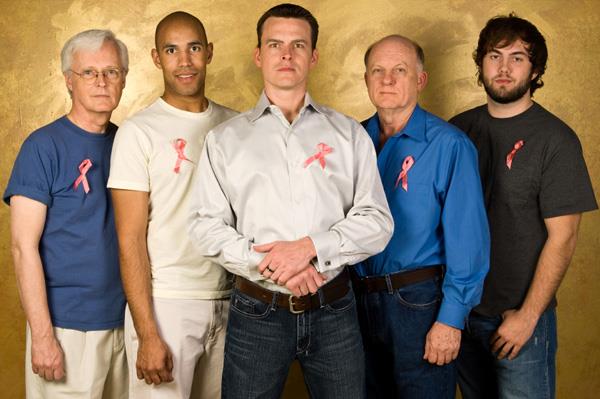
From the first moment my wife discovered she had breast cancer, there was a deafening silence from the men I know. Even ones whose wives, mothers or girlfriends had breast cancer seemed to have received a gag order from some Central Cancer Command and did little more than mumble about the experience. Not one to shut up for any known reason, I started this blog…

Two hundred and four posts, two hundred and eight weeks.

Good Friday was last night.

Why do they call it good? Strangely enough, the best explanation I have ever heard or seen popped up on Friday on my niece’s Face Book post in the form of a comic strip drawn by legendary artist, Johnny Hart, creator of the strip “B.C.” and co-creator of the strip, “The Wizard of Id”:


This is the only reason such a day, such a celebration could be called “good”.

Four years ago, my daughter and I were talking about Good Friday on the way to the service and back. She observed that this the only specifically Christian Holy Day that the secular world has been unable to coopt. We decided that there’s no way that such an event could be made cute or represented by cuddly animals, people in costumes or from which candy companies might not spin adorable commercials or bunnies laying chocolate eggs. Any attempt to “cute-i-fy” Good Friday is doomed to failure by the nature of the day.

It’s grim. Gruesome. Dark. It’s all about torture and execution.

Outsiders – those who don’t know of, believe or otherwise acknowledge Christianity – find it offensive and inexplicable; perhaps even insane. “Why would you possible want to remember the horrific execution of your rabbi and teacher?”

Last night I was reminded again that the events leading up to the execution of the Christ are NOT about the failure of God to accomplish His mission on Earth. The crucifixion was NOT a backup plan and a bad one at that.

The events prior to Good Friday were an exhibit  of everything that is rotten in Humanity and a display of ample proportions of exactly why it needed forgiveness and saving.

The infant Jesus was born a slave to an empire both global and cruel. His birth sparked the slaughter of hundreds of other innocent newborns by decree. His life exposed the tedious, unremarkableness of thirty years of growing old in an ancient world and the loss of his father during adolescence; his three years of ministry exposed him to corrupt government, avarice and greed, ridicule by the intelligentsia, betrayal and abandonment by friends, public adulation turned mockery, lies, a corrupted justice system that did not represent slaves, gambling and drug abuse.

What does this have to do with my wife’s breast cancer? Last night, I was shamed by His suffering because I have for some time now begged and challenged Him to explain, “Why have you made me suffer so?”

He hadn’t answered my plea until that night four years ago when He said, “I can’t explain that, Guy. But I can say that I have been with you in that suffering because I understand suffering. I understand despair. I get you. That’s why I haven’t cast a lightning bolt in your direction for your impertinence. I understand, as few others can, your suffering, and I’ll stand by you and answer what questions I can. Look at your blog – lots of answers there. Not ‘the answer’, that won’t come until we can talk face-to-face; but you got a lot of them. See you later, bud.”

I know this isn’t about breast cancer exactly; I suppose I pulled a Johnny Hart on you all. Be that as it may, my prayer is that you might find some answers to your suffering. If you can’t find answers, then I’d be happy to talk with you. Just leave me a comment and I’ll reply…

Saturday, March 28, 2015

BREAST CANCER RESEARCH RIGHT NOW! #31: Breast Cancer, Stress, and INCREASING Quality of Life


http://assets.dnainfo.com/generated/video/2011/10/1318952291.mp4/larger.jpg
From the first moment my wife discovered she had breast cancer, there was a deafening silence from the men I know. Even ones whose wives, mothers or girlfriends had breast cancer seemed to have received a gag order from some Central Cancer Command and did little more than mumble about the experience. Not one to shut up for any known reason, I started this blog…

Every month, I’ll be highlighting breast cancer research that is going on RIGHT NOW! Harvested from different websites, journals and podcasts, I’ll translate them into understandable English and share them with you. Today: http://www.sciencedaily.com/releases/2015/03/150323075936.htm

As you can imagine – or know from personal experience – a diagnosis of breast cancer and stress are practically twin diagnoses.

But how many women – or couples – get help in dealing with the stress? While I can’t speak for everyone, I CAN say that no one mentioned “stress reduction” when my wife got the news four years ago. No one said, “You should take up meditation.” No one suggested going on retreat. No one gave my wife a list of stress-reducing exercises. It wasn’t even a THOUGHT...

“Women with breast cancer who participated in the study initially used stress management techniques to cope with the challenges of primary treatment to lower distress. Because these stress management techniques also give women tools to cope with fears of recurrence and disease progression, the present results [fifteen YEARS later] indicate that these skills can be used to reduce distress and depressed mood and optimize quality of life across the survivorship period as women get on with their lives.”

While this article offers hope for those who get a breast cancer diagnosis, I had to go elsewhere to get the “skinny”. Below you’ll find suggestions and directions for some practical ways to reduce stress. I can’t say as a doctor that starting a year or four years or even ten years later will have the same effect on quality of life in people who have a breast cancer diagnosis, BUT I think I can say with confidence that it won’t hurt anyone – patient or partner.

Two-minute relaxation: Switch your thoughts to yourself and your breathing. Take a few deep breaths, exhaling slowly. Mentally scan your body. Notice areas that feel tense or cramped. Quickly loosen up these areas. Let go of as much tension as you can. Rotate your head in a smooth, circular motion once or twice. (Stop any movements that cause pain.) Roll your shoulders forward and backward several times. Let all of your muscles completely relax. Recall a pleasant thought for a few seconds. Take another deep breath and exhale slowly.

Mind relaxation. Close your eyes. Breathe normally through your nose. As you exhale, silently say to yourself the word "one," a short word such as "peaceful" or a short phrase such as "I feel quiet." Continue for 10 minutes. If your mind wanders, gently remind yourself to think about your breathing and your chosen word or phrase. Let your breathing become slow and steady.

Deep breathing relaxation. Imagine a spot just below your navel. Breath into that spot and fill your abdomen with air. Let the air fill you from the abdomen up, then let it out, like deflating a balloon.

And in general:

Keep a positive attitude.

Accept that there are events you cannot control.

Be assertive instead of aggressive. "Assert" your feelings, opinions or beliefs instead of becoming angry, combative or passive.

Exercise regularly. Your body can fight stress better when you are physically fit.

Eat well-balanced meals.

Rest and sleep. Your body needs time to recover from stressful events.

Don't rely on alcohol or drugs to reduce stress.

While all of this sounds perfectly reasonable standing four years after those first days of horror; and understanding that the LAST thing you want to hear is “relax”; it might have been helpful if the doctor or nursing staff had done this for us – BOTH of us.

There is nothing though, to stop us from starting this now!


Saturday, March 21, 2015

ENCORE #9 ! – “Why are so many people dying of cancer?”


http://voluume.fr/wp-content/uploads/2012/05/Encore-Sessions.jpg
From the first moment my wife discovered she had breast cancer, there was a deafening silence from the men I know. Even ones whose wives, mothers or girlfriends had breast cancer seemed to have received a gag order from some Central Cancer Command and did little more than mumble about the experience. Not one to shut up for any known reason, I started this blog…That was four years ago – as time passed, people searching for answers stumbled across my blog and checked out what I had to say. The following entry appeared in a September 2012 post…

Not the first person who ever asked this; not the first time we’ve ever asked it – http://breastcancerreaper.blogspot.com/2011/06/why-do-so-many-women-have-breast-cancer.html is there an ANSWER?

Anecdotally, I’ve heard that the reason so many people are dying of cancer is because we simply live longer. The average life expectancy of all Humans on Earth is 67.2 years.

So? That seems like a really short time! How can that be? What did it USED to be? Hmmm…according to Wikipedia (always my initial go-to source), the average lifespan in Greece, Rome, and Inca/Mayan times was 28; in the Caliphates of northern Africa and the Middle East it was 35. That was what, like 2500 years ago? Right.

So it’s pretty much doubled.

I’ve heard that the reason we get cancer now is that even though cancer was PRESENT then, it didn’t have enough time to kill the person it was growing in. People died of old age before symptoms of various cancers like unintentional weight loss, fever, being excessively tired, and changes to the skin appeared. As well, coughing, difficult or painful swallowing, changes in bowel habits, easily felt masses, coughing up blood, or blood in the bowels, the bladder, or the uterus, localized pain or even painless swelling, and possibly a buildup of fluid in the chest or abdomen could be attributed to lots of things in the ancient world, up to and including the Black Death!

While Hippocrates observed tumors of various types (including breast cancer) in ancient times when life expectancy was only 28 years; and the Egyptians were actually removing tumors 2000 years before the birth of Christ, no one had a real handle on cancer until scientists and doctors started to pool their knowledge in the 1700s and 1800s. By then, life expectancy had increased to about 36 years.

“….cancer…[has] always been with us. People have been getting cancer from the earliest days of their existence (whenever that might be). Heck, most animals get cancer. Even some plants get cancer-like growths...the potential for cancer is in each and every living creature…we also know quite convincingly, and all nonsensical prehistoric arguments aside, that the incidence of cancer has increased dramatically over the last century.” (Written by a man who has no credentials except that he likes to write disparagingly…)

“Incidence: In 2000-2004, across Australia, there were 3,083 cancers diagnosed among Aboriginal and Torres Strait Islander people. The most common cancers diagnosed among Indigenous males in this period were of the lung, bronchus and trachea (19% of all male cancer reported), prostate cancer (10%), colorectal cancer (10%), cancer of unknown primary site (6%), and lymphomas (5%). The most common cancers diagnosed among Indigenous females were breast cancer (25% of all female cancer cases reported), cancer of the lung, bronchus and trachea (12%), colorectal cancer (9%), cancer of the cervix (7%) and cancer of unknown primary site (6%). In the same period, more new cases of cancer were reported among Indigenous females (1,598) than Indigenous males (1,485) compared with the non-Indigenous population.” (http://www.healthinfonet.ecu.edu.au/chronic-conditions/cancer/reviews/our-review)

So, what about cancer among non-aboriginal Australians? Go to the site above and scroll down to the chart. If Aboriginal Australians, who eat pretty much the way they always have (this isn’t just “city aboriginals” – this is ALL of them), have cancer – some types being more common among THEM than non-indigenous Australians. Statistics speak more loudly than someone who uses the phrase “nonsensical prehistoric arguments”.

Conclusions? None really except to say that cancer has been with us for a long, long time. There are some cancers that were more common then, some are more common now. “Why are so many people dying of cancer?” So many is a relative term. And the fact is that it’s not important, really. Even mister “nonsensical” and the Australian government will agree that cancers of ALL TYPES needs to be destroyed.


Saturday, March 14, 2015

GUY’S GOTTA TALK ABOUT…#13: Lumps. Bumps. Divots. Scars.


From the first moment my wife discovered she had breast cancer, there was a deafening silence from the men I know. Even ones whose wives, mothers or girlfriends had breast cancer seemed to have received a gag order from some Central Cancer Command and did little more than mumble about the experience. Not one to shut up for any known reason, I started this blog…

I have a divot in my forehead.

My wife has a divot in her side. Both sides, actually.

Breast cancer – skin cancer in my own experience – is all about divots.

Define divot (plural divots)

1.A torn up piece of turf (e.g. by a golf club in making a stroke or by a horse's hoof).

2.A disruption in an otherwise smooth contour.

It’s the second definition that concerns me here.

After discovery and confirmation four years ago this week, the breast cancer specialists we were working with looked at several options. One of them, used in cases where the cancer was discovered early and was small, is called a “lumpectomy”. In this procedure (I was just struck this MOMENT by the sterility of this word. It sounds so clean and simple. Like when I did “cookbook labs” as a science teacher. It involved steps students would follow to achieve a very specific result. For lots of kids, it involved reading and rereading the procedure, their finger under the step they were following so they could get it “right”. Lumpectomies are nowhere NEAR this simple and involve invasive methods that deform the breast...) “Lumpectomy is the removal of the breast tumor (the "lump") and some of the normal tissue that surrounds it.

Lumpectomy is a form of “breast-conserving” or "breast preservation" surgery. There are several names used for breast-conserving surgery: biopsy, lumpectomy, partial mastectomy, re-excision, quadrantectomy, or wedge resection. Technically, a lumpectomy is a partial mastectomy, because part of the breast tissue is removed. But the amount of tissue removed can vary greatly. Quadrantectomy, for example, means that roughly a quarter of your breast will be removed. Make sure you have a clear understanding from your surgeon about how much of your breast may be gone after surgery and what kind of scar you will have.”

While this makes an attempt at realism, nothing can quite convey the results but a person who experienced it.

My wife had a double mastectomy which is the most extreme form of breast cancer surgery possible.

I can NEVER know what that’s like. I can only imagine it.

Since my own skin cancer surgery, I’ve had a tiny, non-life-threatening taste of what it might possibly feel like to have a lumpectomy. One of the cancers on my face was on my forehead. Using the Mohs procedure (described here: http://breastcancerreaper.blogspot.com/2014/11/guys-gotta-talk-about-9face-and-breast.html) layers of tissue that have cancer cells are removed, tested, then the incision is either closed or another layer of cells are removed and tested. The end result, after healing and recovery, has been a “divot” in my forehead. Touching it right now, I can ASSURE you that it is gigantic and I’m positive everyone sees it but out of politeness, ignores it.

Right. I work in a high school. Politeness is something we work on in our kids every day because about half of them have never experienced it at home. If anyone noticed a divot in my forehead, they’d tell me. Ergo: it’s not noticeable.

My wife had me look at a small lump on her left side the other day, asking, “Is this one of the places that the drains went in?” A matched spot above it confirmed that it is, indeed, the place where one of the drains exited the surgical field four years ago. She also has a scar where the port was placed in order to do chemotherapy.

Lumps. Bumps. Divots. Scars.

These are clearly the legacy of breast cancer – of any kind of cancer. I’m sure plastic surgery could clear up many of them, yet I feel no compulsion at all to GET the surgery. I wonder why...

Sorry for the rambling commentary. But that’s where I’m at today...

Saturday, March 7, 2015

ENCORE # 8! – Take Tamoxifen for TEN Years Instead of Five!


http://voluume.fr/wp-content/uploads/2012/05/Encore-Sessions.jpg
From the first moment my wife discovered she had breast cancer, there was a deafening silence from the men I know. Even ones whose wives, mothers or girlfriends had breast cancer seemed to have received a gag order from some Central Cancer Command and did little more than mumble about the experience. Not one to shut up for any known reason, I started this blog…That was four years ago – as time passed, people searching for answers stumbled across my blog and checked out what I had to say. The following entry appeared in December, 2012...

One of my favorite movies is GALAXY QUEST.

In it, characters from a defunct STAR TREK-act-alike TV show are thrown into a real world alien conflict and expected to be the parts they acted…

At one point, Sigourney Weaver (who plays Gwen DeMarco who plays Lt. Tawny Madison) and Tim Allen (who plays Jason Nesmith who plays Captain Peter Quincy Taggart) have to cross through metal chompy crusher things and then run over a one-foot wide bridge that passes over an endlessly deep hole that is windy…all while aliens are trying to kill them with phasers.

Sigourney Weaver stops and utters an expletive that is VOCALIZED as “Screw this! The sucker who wrote this scene should die!” If you watch her lips, she utters quite a different expletive…

After hearing my wife’s reaction to the recommendation by the American Association of Cancer Research, I might have heard one expletive – but I’m pretty sure the one she was thinking was akin to the one in GALAXY QUEST.

Why?

First: What does tamoxifen do? Some breast cancer cells require estrogen to grow. Estrogen locks on to a cancer cell in certain places and helps it grow. When a person takes Tamoxifen, it’s broken up into parts that lock into the same places that estrogen does – but they STOP the cancer cell from growing. “…tamoxifen acts like a key broken off in the lock that prevents any other key from being inserted, preventing estrogen from binding to its receptor.”

There is also a second  methodology for treating breast cancer that is NOT being changed at this time and that is the use of aromatase inhibitors that work by stopping the production of estrogen. [This is the drug regimen my wife is following at present]: Anastrazole is called an aromatase inhibitor whose primary problem is that it weakens bone structure; though it CAN cause: “Constipation, diarrhea, nausea, vomiting, upset stomach, loss of appetite, body aches and pains, breast swelling/tenderness/pain, headache, dry mouth, scratchy throat, increased cough, dizziness, trouble sleeping, tiredness/weakness, hot flashes/hot flushes, vaginal bleeding, hair thinning, and weight change can occur…mental/mood changes, numbness/tingling/swelling of the hands or feet, persistent cough, unusual vaginal discharge/burning/itching/odor, unusually stiff muscles, pain/redness/swelling of the arms or legs, vision changes, bone pain, bone fracture, signs of infection…”; Letrozole can cause “hot flashes, hair loss, joint/bone/muscle pain, tiredness, unusual sweating, nausea, diarrhea, dizziness, sleeping trouble, (unlikely) bone fractures, mental/mood changes, swelling of arms/legs, blurred vision…(rarely) blood clots.”

Any time a drug is taken, its purpose is to change the body in some way – INTENTIONALLY for the better, but there are almost always side effects. With tamoxifen, the main ones are: hypercalcemia (A higher-than-normal level of calcium in the blood [causing] loss of appetite, nausea, thirst, fatigue, muscle weakness, restlessness, and confusion…constipation, form a heart block, lead to calcium stones in the urinary tract, impair kidney function, and interfere with the absorption of iron)…as well as causing “hot flashes, nausea, leg cramps, muscle aches, hair thinning, or headache…(unlikely) vision changes (e.g., blurred vision), eye pain, easy bruising/bleeding, mental/mood changes, swelling of ankles/feet, unusual tiredness.”

While it is TRUE that taking tamoxifen DOES lower the risk of breast cancer recurrence, it seems to me that researchers should CONTINUE to find new ways of dealing with this devastating disease!

UPDATE 2015: The research announced 2012 was confirmed recently in a general announcement/recommendation by the American Society of Clinical Oncology – though now with very clear guidelines. (http://www.asco.org/press-center/asco-guideline-update-recommends-tamoxifen-10-years-women-non-metastatic-hormone)

Saturday, February 28, 2015

BREAST CANCER RESEARCH RIGHT NOW! #30: Breast Implant “cold spots”?


http://www.medicalnewstoday.com/images/articles/279/279108/woman-checking-breast.jpg
From the first moment my wife discovered she had breast cancer, there was a deafening silence from the men I know. Even ones whose wives, mothers or girlfriends had breast cancer seemed to have received a gag order from some Central Cancer Command and did little more than mumble about the experience. Not one to shut up for any known reason, I started this blog…

Every month, I’ll be highlighting breast cancer research that is going on RIGHT NOW! Harvested from different websites, journals and podcasts, I’ll translate them into understandable English and share them with you. Today...

Another wrinkle in the changes brought by breast cancer, double mastectomy, chemotherapy, and breast reconstruction. Last night, my wife mentioned that there were cold spots on her skin over the saline implants she has. I checked them myself and they DID feel cooler than the surrounding skin.

Hence today’s subject.

There’s remarkably little written about the way external temperatures affect the saline or silicone gel in standard breast implants, though I did find this:

“Implants placed after mastectomy tend to be a little cooler than the rest of the body, and a complaint or feature that women do appreciate over time, especially in women in colder climates. This is because the implants are filled with saline or silicone and essentially sit outside the chest cavity and just beneath the skin. They probably are, in fact, a degree or a few degrees cooler than the true body temperature.” Kristin Brill, M.D., F.A.C.S.

We are, in fact, in the middle of a cold spell – actually our part of the country is in a cold spell from October through April – and while she hadn’t experienced this exactly before, there IS some evidence that while it’s unusual, it’s not unheard of:

“To answer your question--yes, there are reports of implants being affected by cold weather. This is more likely with saline implants, but also occurs with silicone. People report breast pain, and occasionally a change in feel during the cold months. There is no good data to say how often this occurs--however it is certainly not universal. This appears to lessen with time, however can last years. The likelihood depends on the procedure--where exactly the implant is placed.”

“Many drugs used to treat breast cancer…can damage nerves outside of the brain and spinal cord. This can sometimes lead to symptoms (mainly in the hands and feet) like numbness, pain, burning or tingling sensations, sensitivity to cold or heat, or weakness. In most cases this goes away once treatment is stopped, but it might last a long time in some women…”

Not sure how MUCH of an explanation it is, but without regular contact with the plastic surgeon and the breast cancer expert, there’s not much else we can do but check the internet (using RELIABLE sources) and wait until the next checkup…


Saturday, February 21, 2015

ENCORE #7! – Metastatic Breast Cancer: Liver Cancer


http://voluume.fr/wp-content/uploads/2012/05/Encore-Sessions.jpg
From the first moment my wife discovered she had breast cancer, there was a deafening silence from the men I know. Even ones whose wives, mothers or girlfriends had breast cancer seemed to have received a gag order from some Central Cancer Command and did little more than mumble about the experience. Not one to shut up for any known reason, I started this blog…That was four years ago – as time passed, people searching for answers stumbled across my blog and checked out what I had to say. The following entry appeared in December of 2011.

This is not a cancer you hear about frequently, though it is third worldwide after lung and stomach in the number of deaths each year. It is uncommon in the United States with three fourths of all cases diagnosed in Southeast Asia, Mozambique and South Africa.

It is one of the least common of the metastatic breast cancers with bone cancer being 70% of the metastases and brain cancer being 10%. The remaining 20% are distributed between liver, lung and non-specific systemic diseases.

Metastatic breast cancer-caused liver cancer can show up as a significant weight loss, jaundice (getting yellow skin – this condition is sometimes seen in newborns (our son was jaundiced at birth)), and elevated liver enzymes (Inflamed or injured liver cells leak higher than normal amounts of Alanine transaminase (ALT) [This enzyme causes certain reactions to happen in the body that provide for cell energy and brain signal transmission] and Aspartate transaminase (AST) [which helps in the formation of the amino acids used to make several different body proteins such as hemoglobin], into the bloodstream). Other symptoms of MBC are abdominal pain, loss of appetite, fevers, nausea, sweats and vomiting. In some cases, there are no symptoms.

Tests that may be done to diagnose liver metastases include a CT (Computer Assisted Tomography) scan of the abdomen, liver function tests (to check for the elevated enzymes mentioned above), MRI (Magnetic Resonance Imaging) of the abdomen, PET (Positron Emission Tomography) scans or ultrasound of the liver

Pain from this kind of liver cancer responds to chemotherapy and analgesia. Doctors can also try radiation therapy to relieve pain and shrink the cancers.

How well you do depends on the location of the original cancer and how much it has spread to the liver. As recently as January of 2011, doctors have added a new treatment to the arsenal: Resection (removing parts of the liver affected by the cancer) of breast cancer liver metastases paid off in a survival benefit in patients with chemotherapy-responsive, estrogen receptor (ER)-positive primary tumors, according to data from a retrospective chart review.

“Although the cases were small in number, they are relevant in the context of changing views about cancer that metastasizes to the liver…I think there has been a [dramatic change in thinking] over the past 10 years or so, where it has been realized that this surgery can lead to long-term survival…I don't think that was recognized previously…I think there has been something of a nihilistic attitude toward breast cancer metastasis to other organs in the past…Generally incurable, most liver metastases from breast cancer are treated with chemotherapy or hormonal therapy,” said Daniel E. Abbott, MD, of the University of Texas MD Anderson Cancer Center in Houston. “I think this information is most valuable when people are willing to counsel patients and make the tougher decisions about who should and should not have surgery and then let patients make informed decisions.”