Saturday, November 16, 2019

ENCORE # 121! – (It IS a) Big Hairy Deal!


From the first moment my wife discovered she had breast cancer, there was a deafening silence from the men I know. Even ones whose wives, mothers or girlfriends had breast cancer seemed to have received a gag order from some Central Cancer Command and did little more than mumble about the experience. Not one to shut up for any known reason, I started this blog…That was four years ago – as time passed, people searching for answers stumbled across my blog and checked out what I had to say. The following entry first appeared in November of 2011.

It’s been my experience that men don’t usually care that much about their hair. It’s also been my experience that hair is VERY important to women.

That’s why the most obvious result of chemotherapy – alopecia – has such a profound impact on women and the men who love them. Women who lose their hair are OBVIOUS to everyone who looks at them. They are noticed; they stand out in public in a way a bald man will never stand out. We admire the men even – Kojack, The King of Siam, Captain Jean-Luc Picard are all heroes and we don’t even notice their shiny heads. But bald female cops, Queens, and starship Captains would be so odd that most of us wouldn’t even remember the rest of the record, reign or voyage.

As men with wives, girlfriends and mothers who will or who have lost their hair because of breast cancer, we stand in an unusual place.

We have to be honest encouragers.

“Honey, how does this wig look on me?”

“Is the scarf the right color for my skin?”

“If I wear a baseball cap every day, will you still think I’m sexy?”

“If I don’t wear anything on my head in public, will you be embarrassed?”

The first response to each question is initially: “It looks fine, dear”, “It looks fine, dear”, “Of course I will”, “Nothing you could wear or not wear would embarrass me”.

The problem with the response is that our loved ones are our loved ones and a diagnosis of “stupid” does NOT go hand-in-hand with a diagnosis of breast cancer. They know when we are patronizing. I learned the hard way not to patronize my wife. When she asked one of the questions above, I had to take my time and think. I had to consider my answer not because I wanted to be right, but in order to battle the deep-seated desire to avoid inflicting any more pain on a person worn out from the constant fight against cancer.

So I studied her as she modeled the wig, scarf, hat or bald pate.

Honestly responding, I gave my opinion. When it was honest, it gave her FEEDBACK and while the ultimate choice was still hers, she most likely felt that my response – especially before her hair started to grow back – was honest and another data point in her effort to decide what to wear that day.

Ultimately, I could do nothing more important that to be consciously HONEST!


Saturday, November 9, 2019

ALZHEIMER’S RESEARCH RIGHT NOW! #4: Me, “A Pig Tale”, and My Father’s Alzheimer’s – An Unexpected Sygyzy


From the first moment I discovered my dad had been diagnosed with Alzheimer’s, it seemed like I was alone in this ugly place. Even ones who had loved ones suffering in this way; even though people TALKED about the disease, it felt for me like they did little more than mumble about the experience. Not one to shut up for any known reason, I added a section to this blog…

Every month, I’ll be highlighting Alzheimer’s research that is going on RIGHT NOW! Harvested from different websites, journals and podcasts, I’ll translate them into understandable English and share them with you. Today: “Study identifies gene variant as potential drug target…”

A study published by the National Institute on Aging, indicates that recent research identified a gene in a huge family that codes for early onset Alzheimer’s. A woman from a family whose “genetic data from a Colombian family with more than 6,000 living members”…found that those “who carry a rare gene mutation called Presenilin 1 (PSEN1) E280A, have a 99.9% risk of developing early-onset Alzheimer's disease.”

While this is one of those “sad-but-true” stories, the woman in question didn’t develop Alzheimer’s symptoms until she was in her seventies. Sad again, and true…BUT…the members of her family who had the odd gene combination without exception developed Alzheimer’s symptoms WHEN THEY WERE IN THEIR FORTIES.

It's a rare condition, and again, sad-but-true; but the research team didn’t let the story lie. They tested her and found that where you and I and all the rest of the humans in her family had a single gene called APOE3 Christchurch (APOE3ch) gene variant she also had two copies of it. She was the only one – and she was the only one who didn’t have early onset.

What does this “magical gene” do? According to the study (gibberish first, then I’ll translate the doctors) “…the APOE3ch variant may reduce the ability of APOE to bind to certain sugars called heparan sulphate proteoglycans (HSPG). APOE binding to HSPG has been implicated as one mechanism that may contribute to the amyloid and tau protein deposits that destroy the brain.”

First, APOE stands for APOlipoprotEin. The “lipo” part means “fat”. That’s the middle of this thing. It is a protein associating with lipid particles, that mainly helps with the transport of fat between organs blood plasma and liquids between cells called “interstitial” (just a fancy word for “the place in between”). It’s a very important component of blood plasma and it’s involved in fat production, conversion and clearance. All food things. The problem comes when APOE accidentally hooks up with sugars called heparan sulphate proteoglycans (HSPG). The research seems to point to this hook up as suddenly stopping the APOE from moving the fats around and instead helping to form plaques and tangle deposits you read about that eventually destroy the brain of an Alzheimer’s patient.

OK – all that is said and done. You maybe understand this line of research better.

At any rate, on to an eerie happening in my own life.

I had a science fiction story published in ANALOG about 20 years ago called, “A Pig Tale”. In it, my main character is experiencing a crisis – but she doesn’t realize that her father is as well.

In a really strange turn of events, I wrote this story long before my father was diagnosed with Alzheimer’s; even longer before I found out about it and became the secondary caregiver for both Mom and Dad (they were in an assisted living facility, then moved into Memory Care); I was the contact, transportation, and eventually the one who arranged Dad’s funeral when he died a few years later than Mom, and pretty much a different man than he was before Alzheimer’s began to whittle away the personality that defined him.

So, if you’d like to read the story, the link is below. If not, that’s fine. But I’ve been thinking about doing another story set at the same time; different character (maybe), but take a look at the issue from “the other side”, after making my way through the experience my parents had.

Who knew that the fictional drug in my story was going to be the object of a billion-dollar search.


Saturday, November 2, 2019

ENCORE #120! – COMING SOON – I, Robot Nanites Fight Breast Cancer!

From the first moment my wife discovered she had breast cancer, there was a deafening silence from the men I know. Even ones whose wives, mothers or girlfriends had breast cancer seemed to have received a gag order from some Central Cancer Command and did little more than mumble about the experience. Not one to shut up for any known reason, I started this blog…That was four years ago – as time passed, people searching for answers stumbled across my blog and checked out what I had to say. The following entry first appeared in March of 2018 and got  A LOT of hits!

Most of this article is behind a paywall, but reading the abstract (science term that sort of means the “summary” of what the paper’s about), I can see the application possibilities. I’d LOVE to read it in full, but NATURE makes its money selling the right to read the papers for absurd amounts…

In the online magazine, Science, an online science news magazine, they translate the abstract into reasonably understandable English (http://www.sciencemag.org/news/2017/08/nanomachines-drill-holes-cancer-cells)

Even so, it’s still pretty heavy stuff, so I’m going to take a stab at it here.

The basic idea is that by using chemicals, light, and even sound, scientists have created clusters of atoms that hang together and perform in particular ways. It sounds wild, but if you think of a all the parts it takes to run your car – or even more simply, your bicycle – it’s nothing radically different. It’s just the scale that’s amazing and the tools they use.

By the way, the things they create – they’re called nanomachines. They first four letters are Latin and means “one-millionth”. So, these nanomachines (if you've ever seen Will Smith’s movie, I, ROBOT, they used “nanites” (another word for namomachines and WAY easier to say), to destroy the crazy computer VIKI.) can be programmed to do certain things. Sort of like a set of screwdrivers. I can’t use one of those weird square-nosed ones to take out a Phillips screw. I can certainly try, but it strips the head and makes the job of taking out a zillion times more work.

What nanite scientists do is count on how atoms attach to each other and set them up so that they can attach together in the right way. In other words, that can set up a nanite so that it’s attracted to a breast cancer cell – in the nanoworld, a breast cancer cell will have certain chemicals around it and on its surface. The nanite looks for the “smell” of the cancer cell and then attaches to it.

They’ve also given their nanite a sort of “drill bit” on one end – a tail on one end to get around, a drill bit on the other to dig into a cancer cell. Wrapped inside of the nanite is a little surprise for the cancer cell – a molecule of chemo drug. Once it’s drilled through the wall of the cancer cell, it shoves the chemo in, then shuts down, its weapon delivered.

Zillions of these little machines seek out and destroy cancer cells, so instead of the chemo taking out hair cells along with the cancer cells, ONLY the cancer cells get zapped.

That’s the theory, and now these articles detail how scientists have made it work in the lab. The next step, of course, will be to see if it works in something alive – usually mice – and finally seeing if it will work in the complex universe (remember how small nanites are – 50,000 of them could line of end-to-end and just make it across the width of a Human HAIR! If you lined up 50,000 people, laying down, feet to head, that would stretch 52 miles) that would be a Human body.

So, we shall see!

Image: https://c2.staticflickr.com/6/5527/10893068965_1d328e8f71_b.jpg

Saturday, October 26, 2019

GUY’S GOTTA TALK ABOUT…Alzheimer’s #26: Halloween Horror Story – Will I Get Alzheimer’s?


Dad’s diagnosis of Alzheimer’s stayed hidden from everyone until I took over the medical administration of my parents in 2015. Once I found out, there was a deafening silence from most of the people I know even though virtually all of them would add, “My _____ had Alzheimer’s…” But there was little help, little beyond people sadly shaking heads. Or horror stories. Lots of those. Even the ones who knew about the disease seemed to have received a gag order from some Central Alzheimer’s Command and did little more than mumble about the experience. Not one to shut up for any known reason, I started this part of my blog…

“Dang! Where’d I leave my keys? Have you seen my keys, honey?”

“Right where you left them, dear!”

“Yeah, but where was THAT?”

When I forget ANYTHING; a name, a face, a thing, a story idea, where I parked the car…for a moment I feel a surge of horror as I think, “Am I getting Alzheimer’s?”

I’d like to say such thoughts are uncommon, but I’d be lying. I can say I don’t live in FEAR of Alzheimer’s; I can also say, though, that it’s a regular thought. Googling (Do you realize that we turned a corporate name into a  verb? Sort of eerie, don’t you think?) “fear of Alzheimer’s”, I found this:  “A Google search for the statistics related to the risk of developing Alzheimer’s in your lifetime returns over 3 million results. You could pore over them and feed your fear, or you could accept the reality that if you are 60 years old today, the odds of developing Alzheimer’s are 4.8%, or in other words, there is a 95.2% chance that you won’t develop the disease.”

My first thought, of course, was “is that a general chance or does it include people whose parents were diagnosed with Alzheimer’s?” Digging deeper: “If you have a first-degree relative with Alzheimer’s disease (e.g. mother, father, sibling), your risk of developing the illness is about two to three times higher than someone else your age who doesn’t have a family member with the illness.”

OK – that seems straightforward. That puts my chance of developing Alzheimer’s at (using 2.5 times as likely) at 12%. That’s three chances in twenty-five or about one in twelve; twelve and a half to be precise. So, if we put twelve and a half people in a room, I will have Alzheimer’s, eleven others will not, and there will be a grisly murder for someone like Hercule Poirot to solve. Which, being in a writing state of mind, puts an idea into my head…

Just so you know, this has had a salutary effect on me because I see clearly that the WORST thing that can happen to me is NOT Alzheimer’s. At any rate, as I was settling into bed last night, I found myself wondering WHY I would fear being diagnosed with Alzheimer’s. Remarkably quickly, it came down to the same fear I’ve had all my life.

That fear was also based on watching my dad, sometimes my mom, and a gigantic number of people around me both family and not, drinking alcohol. I am a teetotaler, ie “pledged to total abstinence from drink”. My biggest fear is losing control. I think that fear also has to do with me avoiding using drugs, playing games and organized sports (if I lose, I get angry and lose control of my emotions); and in general avoiding competitions. I DO like biking, swimming, hiking, and camping and I initially started all of them alone and they remain entirely NON-competitive, so I won’t lose control.

But Alzheimer’s? My dad would tell Air Force sex stories to my sister, and me about the first date he had with mom when she passed out drunk and he had to carry her home where she threw up. And I remember a night my dad came home so wasted, he fell off the three steps up to our house and I stayed up with him while my mom went bowling. He begged God to kill him most of that time…

Loss of control is a driving force in my life, and I DO have a temper. My grandfather never made it past private after four years in the Army – because he’d get in a fight whenever he DID get promoted and get busted back to private. Me and the rest of my family have an interesting history of violence as well. I absolutely don’t want to go spilling my guts to family and strangers in an Alzheimer’s driven bout of reliving the past as if it was that moment. Do I have more dirt in my life than the average person? No, but I’d rather the dirt that IS buried REMAINED buried and not come spooging out of my mouth from an addled brain.

Advice for preventing Alzheimer’s rides on observation that doing certain things can reduce the chance of developing it, but none of that has the numerical veracity of the chances of developing AD. “Better educational attainment; lifelong participation in mentally stimulating work and leisure activities; exercise; Mediterranean-type diet (low in saturated fats and red meats, more fish, vegetables and nuts, legumes and olive oil); improved sleep can help prevent Alzheimer's and is linked to greater amyloid clearance from the brain; greater social contact; make as many healthy lifestyle choices as you can; while smoking, obesity, high blood pressure, high cholesterol and blood sugar, all increase the risk of developing Alzheimer’s disease and other forms of dementia.”

So, last of all, the Harvard article referenced below has this to say, BE AWARE OF THE SYMPTOMS OF ALZHEIMER’S: “Forgetting where you parked your car can be annoying. If it happens all the time, it can be disturbing, and you may worry that it's a sign of a more serious condition. But don't panic. There's a difference between normal age-related memory slips, such as forgetting where the car keys are, and more serious signs of memory loss, such as forgetting what car keys are used for.

As strange as it sounds, that is a comfort as well. I remember calls from Dad, frantic because he couldn’t find his car keys – and then discovering them in the check replacement box. Forgetting where and forgetting what for are quantum differences, but for me, they are still scarier than being in a party of twelve and finding half a body in the drawing room with Colonel Mustard and a pipe wrench…


Saturday, October 19, 2019

ENCORE #119! – Adjusting My Focus On Breast Cancer, But Losing Focus On My Wife…


From the first moment my wife discovered she had breast cancer, there was a deafening silence from the men I know. Even ones whose wives, mothers or girlfriends had breast cancer seemed to have received a gag order from some Central Cancer Command and did little more than mumble about the experience. Not one to shut up for any known reason, I started this blog…That was four years ago – as time passed, people searching for answers stumbled across my blog and checked out what I had to say. The following entry first appeared in August of 2014.

When I started this blog, my wife’s breast cancer diagnosis was at the forefront of both mind and effort. Every waking moment was a slog through pre and post op appointments, chemotherapy, recovery, worry, and such a bewildering and blinding flood of light, that likening it to being struck by lightning is an apt metaphor.

Everything we had and did was focused solely on treating the cancer and recovery, but on recovering our “old life”; we found it had morphed into learning to live with a new normal; which became coping with the aftermath, which has finally segued into “life”.

My wife will NEVER be the person she was “before” she was diagnosed with breast cancer in March of 2011. That was nearly nine years – and 436 blog entries – ago.

My intent broadened from the week-to-week challenges she faced following the diagnosis. I’ve learned more than I ever imagined I could about breast cancer, and along the ways watched as various people I love and care for – including myself – felt the cold touch of cancer on their lives.

It’s funny, when I first started the blog, I wanted to call it Breast Cancer Reaper, and had chosen this picture for it:  http://img0.etsystatic.com/il_170x135.112225675.jpg

As cute and expressive as it was, and while that remains the name of my URL, I backed off to my Guy’s Gotta Talk About title. As time went on, my wife moved from surgical recovery, to chemotherapy, to living with the end results of chemo, to the brutal discovery of lymphedema. That struggle still haunts us. Cancer still haunts us, though I don’t know anyone who is currently struggling with the initial stages. We’ve joined Relay For Life in the school district in which I work, and I spoke during one of those events.

But life continues to move forward and new challenges rear up from unexpected places. Alzheimer’s in my dad is one of my deepest concerns now.

My problem is that I have too many foci at this time and I’ve LOST focus on what’s most important: my wife.

That’s something I’ve only discovered in the past week, much to my terror and shame. So…what do I do?

Shift the focus back to where it should be: the love of my life. My wife.

Sorry, love. Please accept my heart again, which you’ve never once relinquished. I will take yours back and put it back to where it belongs – next to mine.

I WILL.


Saturday, October 12, 2019

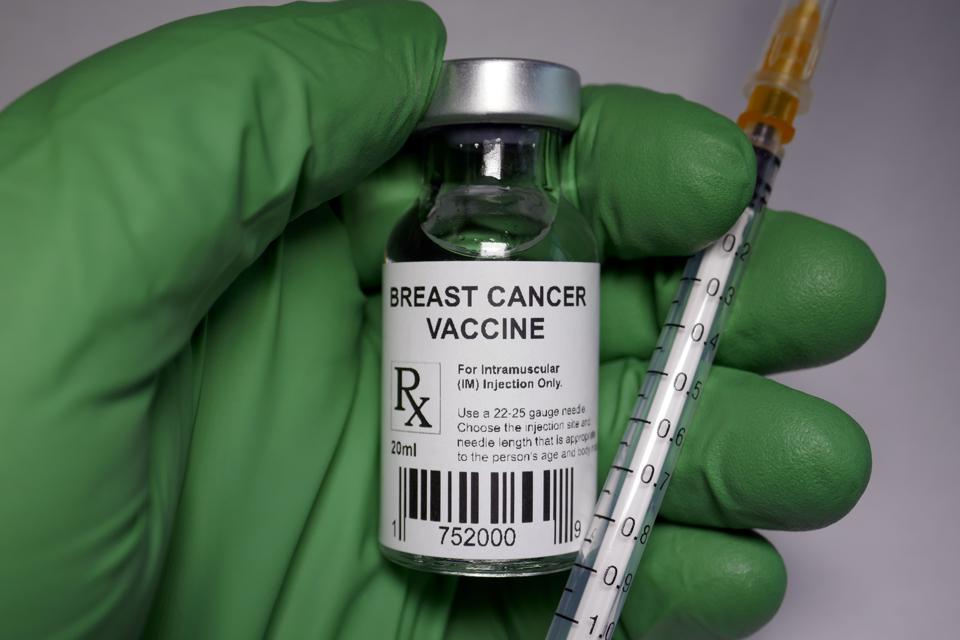
BREAST CANCER RESEARCH RIGHT NOW! #69: A Breast Cancer Vaccine?!?!?! (but…don’t break out the champagne yet!)

From the first moment my wife discovered she had breast cancer, there was a deafening silence from the men I know. Even ones whose wives, mothers or girlfriends had breast cancer seemed to have received a gag order from some Central Cancer Command and did little more than mumble about the experience. Not one to shut up for any known reason, I started this blog…

Every month, I’ll be highlighting breast cancer research that is going on RIGHT NOW! Harvested from different websites, journals and podcasts, I’ll translate them into understandable English and share them with you. Today: https://advancingthescience.mayo.edu/2019/03/26/alumni-buh-bye-breast-cancer/

If you don’t know already, there are several TYPES of breast cancer.

The type of tissue where your breast cancer arises determines how the cancer behaves and what treatments are most effective. Parts of the breast where cancer begins include:

Ductal carcinoma in situ: starts in the milk ducts; the most common type of breast cancer.

Invasive ductal carcinoma: happens when the cancer has broken out of the ducts and spread, initially to the lymph nodes.

Lobular (connects the milk ducts to the nipple) carcinoma and invasive lobular carcinoma: starts in the lobules of the breast, where breast milk is produced.

Connective tissue cancer: a sarcoma that rarely begins in the connective tissue that's made up of muscles, fat and blood vessels.

How the breast cancers appear on microscopic examination are graded on a 1 to 3 scale, with grade 3 cancers being the most different looking and considered the most aggressive.

Some breast cancers are sensitive to your body's naturally occurring female hormones — estrogen and progesterone. The breast cancer cells have receptors on the outside of their walls that can catch specific hormones that circulate through your body. These include:

Estrogen receptor (ER) positive: have receptors that allow them to use the hormone estrogen to grow.

Progesterone receptor (PR) positive: have receptors that allow them to use the hormone progesterone to grow.

Hormone receptor (HR) negative: doesn't have hormone receptors, so it won't be affected by endocrine treatments aimed at blocking hormones in the body.

Discovering the genetic makeup of your breast cancer cells help doctors to understand how the individual DNA changes within cancer cells. A sample of your tumor tissue from a biopsy procedure may be tested in a laboratory to look for:

HER2 gene. Cancer cells that have too many copies of the HER2 gene. Targeted therapy drugs are available to shut down the HER2 protein, thus slowing the growth and killing these cancer cells.

Doctors are using genetic markers more and more often to identify breast cancer groups include:

Group 1 (luminal A): ER positive and PR positive, but negative for HER2.

Group 2 (luminal B): ER positive, PR negative and HER2 positive.

Group 3 (HER2 positive): ER negative and PR negative, but HER2 positive.

Group 4 (basal-like): Triple-negative breast cancer, ER negative, PR negative and HER2 negative.

OK – basic outline is this. The new vaccine is NOT a miracle cure. According to the article at the Mayo site: “Keith Knutson, Ph.D., Department of Immunology and director of the Discovery and Translation Labs Cancer Program at Mayo Clinic in Florida…has developed a vaccine that could prevent all three subtypes of the disease — estrogen receptor (ER)-positive, HER2-positive and triple-negative.”

I’ve underlined the breast cancers above that the vaccine MIGHT take care of.

But don’t break out the champagne yet – a Phase One trial is a year-long and only involves with women who have been treated for advanced metastatic breast cancer that is likely to recur

Phase Two (if Phase One proves out) – it would likely focus on patients who are at high risk for breast cancer. Dr. Knutson estimates it will take five to 10 years to complete.

Phase Three (if Phases One and Two prove out) – would involve 100,000 women across multiple centers.

The timeline, while it wouldn’t have helped my wife, MIGHT help my daughter: “‘Look around you for a women who is about 25 today,’ says Dr. Knutson. ‘By the time she completes her child-bearing years — around age 40 — we could conceivably have this vaccine ready to prevent her from developing breast cancer.’” 

Image: https://specials-images.forbesimg.com/imageserve/960686504/960x0.jpg?fit=scale

Saturday, October 5, 2019

ENCORE #118! – Bone Density Scan!

From the first moment my wife discovered she had breast cancer, there was a deafening silence from the men I know. Even ones whose wives, mothers or girlfriends had breast cancer seemed to have received a gag order from some Central Cancer Command and did little more than mumble about the experience. Not one to shut up for any known reason, I started this blog…That was four years ago – as time passed, people searching for answers stumbled across my blog and checked out what I had to say. The following entry first appeared in August of 2014.

The word today is “osteoporosis”.

My wife just had a “bone density scan” done and the doctor said that the indications are that she has the beginning stages of this disease.

So I thought I’d take a step back and do a “translating the doctors” column.

First of all – why does the bone density of a breast cancer patient matter. (I won’t be using the last letter of the alphabet, a question mark or the mathematical symbol for nothing – they have stopped working.) At any rate, bone density matters: “Osteoporosis is a condition in which the bones become less dense and more likely to fracture.

Sounds simple enough. Factors that figure into the disease are on this site, too. The problem is that: “Women who have had breast cancer treatment may be at increased risk for osteoporosis and fracture for several reasons. First, estrogen has a protective effect on bone, and reduced levels of the hormone trigger bone loss…Studies suggest that chemotherapy also may have a direct negative effect on bone. In addition, the breast cancer itself may stimulate the production of osteoclasts, the cells that break down bone.”

In order to monitor patients during treatment and afterwards, doctors do something called a “bone scan”. What’s THAT mean (question mark)

Here’s a simple explanation of what happens: “The DXA (= Dual-energy X-ray Absorptiometry) machine sends a thin, invisible beam of low-dose x-rays with two distinct energy peaks through the bones being examined. One peak is absorbed mainly by soft tissue and the other by bone. The soft tissue amount can be subtracted from the total and what remains is a patient's bone mineral density…it feature[s a] special software to compute and display the bone density measurements on a computer monitor.

The question now is does this mean you should panic – and the doctor’s advice is “NO!” While osteoporosis can’t be “cured”, you can take steps to lessen the effects. “Getting enough calcium and vitamin D is essential to building strong, dense bones when you're young and to keeping them strong and healthy as you age.”

And you do that by eating well “…food is the best source of calcium. Dairy products, such as low-fat and non-fat milk, yogurt and cheese are high in calcium. Certain green vegetables and other foods contain calcium in smaller amounts. Some juices, breakfast foods, soymilk, cereals, snacks, breads and bottled water have calcium that has been added. If you drink soymilk or another liquid that is fortified with calcium, be sure to shake the container well as calcium can settle to the bottom.”

In our case, my wife is planning to increase her calcium intake – while she uses the chocolate “calcium chews”, she’ll add in the foods.

So if SHE’S not panicking, no reason for anyone else to panic! Be smart and eat well and take the drugs prescribed. If we end up going that route, I’ll do another post. But for now, this is what we know!

Image: https://c2.staticflickr.com/6/5527/10893068965_1d328e8f71_b.jpg