A NEWLY DIAGNOSED T2 DIABETIC, breast cancer husband's observations mixed up with an Alzheimer's son's musings
Saturday, December 31, 2011
Metastatic Breast Cancer: Liver Cancer
Saturday, December 24, 2011
Metastatic Breast Cancer: Lung Cancer
Saturday, December 17, 2011
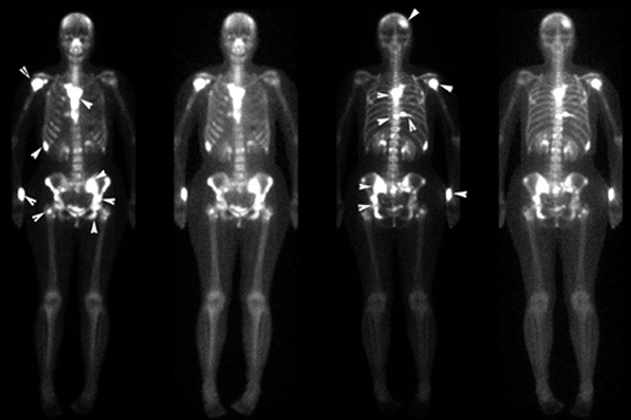
Metastatic Breast Cancer: Bone Cancer
From the first moment my wife discovered she had breast cancer, there was a deafening silence from the men I know. Even ones whose wives, mothers or girlfriends had breast cancer seemed to have received a gag order from some Central Cancer Command and did little more than mumble about the experience. Not one to shut up for any known reason, I started this blog…
We just got news this week that a “cancer friend” of ours had a bone scan, and after an extended time of treatment, she is cancer free!
But just what IS bone cancer and why did she get it?
The cancer, while it can certainly occur by itself, is what is called metastatic breast cancer. It happens when cancer cells from the breast escape into the blood stream or the lymph system and invade MORE new flesh.
While bone cancer is the most common – 70% of metastatic breast cancers are of this ilk – the other 30% is made up of brain cancer (10%) and lymph, lung and liver cancer. Let me emphasize here that these cancers are NOT the peculiar type of cancer cells that initiate these diseases in people who have never had breast cancer. These cancers are BREAST CANCER cells that have invaded other organs and therefore are called metastatic breast cancer. The word “metastatic” was used in the 1570s and comes from the Greek metastasis which means "transference, removal, change.” The roots are meta which means "over, across" plus the word histanai which means "to place, cause to stand.” The medical use for "shift of disease from one part of the body to another" dates from 1660s in English.
Bone cancer caused by the invasion of breast cancer cells into the bones can first show up as back, bone, or joint pain lasting more than two to three weeks that seems to be getting worse; numbness or weakness in a particular part of the body; a change in bowel or bladder activity, such as problems with incontinence or not being able to urinate or have a bowel movement. This may be a sign that the nerves in your backbone are getting pinched by the cancer.
As well, blood tests can reveal a buildup of calcium or tumor markers (special proteins in the blood) like CEA (carcino-embryonic antigen), CA (cancer antigen) 15-3 or CA 27-29 that suggest the cancer might be in the bones. Calcium build up might also show up in a routine bone scan. These tests are NOT usual and are typically ordered only if the symptoms appear.
Metastatic bone disease (MBD) caused by invading breast cancer often behaves in a “mixed osteolytic (destroys bone cells) and osteoblastic (causes abnormal growth of bone cells) manner”. Bone destroying or bone growing MBD occurs because the different cancer cells give off chemicals that interfere with the naturally occurring cells in the bone and cause bone destruction, new bone formation, or both. MBD weakens the affected bones, people with the disease are prone to fractures. Broken bones caused by MBD are termed "pathological fractures."
The most common treatment options for MBD include radiation and medications to control pain and prevent further spread of the disease, and surgery to stabilize bone that is weak or broken. By killing the cancer cells, radiation relieves pain, stops the tumor from growing and can prevent the bone from breaking. Radiation can also be used to control the cancer after surgery to fix a broken bone.
MBD is a systemic (body-wide) problem and radiation therapy may be use just to lessen symptoms and pain in more advanced cases, or to completely destroy disease in the affected bone.
Different cancers respond differently to radiation. Several types of radiation therapy are available. Local field radiation is the most common type of radiation used to treat MBD in which radiation is directed at the metastatic tumor and the immediate adjacent tissue. Entire bone segments or multiple bones can be targeted by local field radiation, depending upon how many areas are affected by the disease. This usually results in complete pain relief in 50% to 60% of cases and partial relief in more than 80% of cases. How well MBD responds to radiation depends on many things, including cancer type (for example, breast cancer typically responds very well to radiation, while kidney cancer does not), and where the tumor is located.
Pain usually begins to subside in the first 1 to 2 weeks, but maximum relief may take several months. Therefore, pain medication is prescribed throughout the radiation treatment course.
For our “cancer friend”, the treatment has been effective and with the pain greatly reduced, we are planning to actually meet for the very first time for dinner over the holiday season!
References: http://www.breastcancer.org/symptoms/types/recur_metast/where_recur/local.jsp , http://orthoinfo.aaos.org/topic.cfm?topic=A00093
Image: http://www.meddean.luc.edu/lumen/meded/Radio/curriculum/Harrisons/Oncology/mets5b.jpg
Saturday, December 10, 2011
Man Cancer and the Orchiectomy
From the first moment my wife discovered she had breast cancer, there was a deafening silence from the men I know. Even ones whose wives, mothers or girlfriends had breast cancer seemed to have received a gag order from some Central Cancer Command and did little more than mumble about the experience. Not one to shut up for any known reason, I started this blog…
So this week I got the news that two good friends of mine have cancer. One has colon cancer and will be undergoing a colECTOMY (ecto = Greek for “to cut out”) during the Christmas season.
The other is twenty-some years younger than me. He was diagnosed with testicular cancer and had a radical orchiectomy after which…well, we don’t know because they are in the specific diagnosis part of his New Normal. He said he’d let me know because I pray well for biological specifics – I can see the parts of the body that are affected – cancer, breaks, dislocations, flu. I am a great prayer for healing of body parts as well as for restoring the heart and mind.
At any rate, some time ago, my wife asked “Why do so many people have breast cancer?” I marshaled statistics in this post: http://breastcancerreaper.blogspot.com/2011/06/why-do-so-many-women-have-breast-cancer.html
The research led me to the statistics for other kinds of cancer – lung cancer, Liz’s mom died from this; blood cancer (leukemia), the son of close family friends; brain cancer, an old friend of mine died from this at 30; skin cancer, my sister, brother and sister-in-law have this; there are others with other cancers that I don’t care to enumerate at this time.
Testicular cancer has increased by 60% in the past 25 years. Why? Right now no one knows the answer, it just…has.
A student of mine, after we talked about why my wife’s hair all fell out during chemo. I talked about how the chemicals target fast-growing cancer cells – and kill the fast-growing hair cells “accidentally”. She then went on a rave about how we should make drugs that ONLY target cancer cells…and that got me to thinking.
Are all cancer cells created equal? Or are they egalitarian? Is testicular cancer the same as breast cancer? Brain cancer? Lung cancer? Skin cancer?
Questions – and today…no answers. Just more questions that I’m going to try to answer in the future…
Saturday, December 3, 2011
The NEXT Five Years – Anastrazole!!! What’s It DO???
Saturday, November 26, 2011
A Big Hairy Deal
From the first moment my wife discovered she had breast cancer, there was a deafening silence from the men I know. Even ones whose wives, mothers or girlfriends had breast cancer seemed to have received a gag order from some Central Cancer Command and did little more than mumble about the experience. Not one to shut up for any known reason, I started this blog…
It’s been my experience that men don’t usually care that much about their hair. It’s also been my experience that hair is VERY important to women.
That’s why the most obvious result of chemotherapy – alopecia – has such a profound impact on women and the men who love them. Women who lose their hair are OBVIOUS to everyone who looks at them. They are noticed; they stand out in public in a way a bald man will never stand out. We admire it even – Kojack, The King of Siam, Captain Jean-Luc Picard are all heroes and we don’t even notice their shiny heads. But bald cops, Queens and starship Captains would be so odd that most of us wouldn’t even remember the rest of the record, reign or voyage.
As men with wives, girlfriends and mothers who will or who have lost their hair because of breast cancer, we stand in an unusual place.
We have to be honest encouragers.
“Honey, how does this wig look on me?”
“Is the scarf the right color for my skin?”
“If I wear a baseball cap every day, will you still think I’m sexy?”
“If I don’t wear anything on my head in public, will you be embarrassed?”
The first response to each question is initially: “It looks fine, dear”, “It looks fine, dear”, “Of course I will”, “Nothing you could wear or not wear would embarrass me”.
The problem with the response is that our loved ones are our loved ones and a diagnosis of “stupid” does NOT go hand-in-hand with a diagnosis of breast cancer. They know when we are patronizing. I learned the hard way not to patronize my wife. When she asked one of the questions above, I had to take my time and think. I had to consider my answer not because I wanted to be right, but in order to battle the deep-seated desire to avoid inflicting any more pain on a person worn out from the constant fight against cancer.
So I studied her as she modeled the wig, scarf, hat or bald pate.
Honestly responding, I gave my opinion. When it was honest, it gave her FEEDBACK and while the ultimate choice was still hers, she most likely felt that my response – especially before her hair started to grow back – was honest and another data point in her effort to decide what to wear that day.
Ultimately, I could do nothing more important that to be consciously HONEST!
Images: http://i536.photobucket.com/albums/ff323/MSBrady78/charpics/picard.jpg
Saturday, November 19, 2011
Neulasta!!! What’s It DO???
From the first moment my wife discovered she had breast cancer, there was a deafening silence from the men I know. Even ones whose wives, mothers or girlfriends had breast cancer seemed to have received a gag order from some Central Cancer Command and did little more than mumble about the experience. Not one to shut up for any known reason, I started this blog…
Hey! I'm back! And yes, I WAS in Portland, Oregon during Occupy Portland! I DID see the marchers and took pictures of them and watched them...occupy Portland for several days...and now, back to our regularly scheduled blog:
Though I talked very briefly some time ago about what the various chemotherapy drugs that my wife was treated with were “for”, I never really went into any kind of detail.
Now that chemo is “over”, I wanted to explore what some of the long-term and lasting effects of the treatment are. Because she reached that time – what with the odd numbing of her upper lip, the incision pains, swollen ankles and dry skin, I’d like to know which of those things is chemo-derived and which ones are not.
So we’ll g0 here next:
What’s “neulasta” and what does it do?
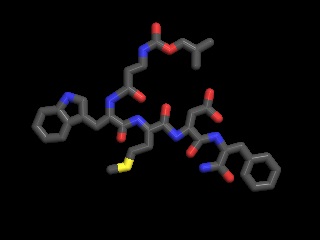
Chemically, “neulasta” is N-(3-hydroxypropyl)methionyl, 1-ether-alpha-methyl-omega-hydroxypoly(oxyethylene).
Looks like the picture up top. Complex. Lots of chemicals.
But what’s it DO?
“Neulasta”, is a special protein that’s based on sugar (an oligo-saccharide, meaning that the molecule has only a few small units, in this case a sugar ) that’s attached to a protein to form a glycoprotein.
The glycoprotein is a very important part of a cell wall – the cells that are being targeted are white blood cells. The white blood cells are also called neutrophils, granulocytes and stem cells and are the main part of the blood that destroys microscopic body invaders like bacterial infections, viruses or other germs. The glycoproteins help the white blood cells recognize the germs.
Neulasta makes the marrow in bones produce more white blood cells to replace the ones killed by Cytoxan, Adriamycin and Taxotere (which I talked about above) while they are busy killing cancer cells that are growing out of control.
The “colony” in the “colony stimulating factor” is the white blood cells in the bone marrow.
So – “neulasta” is injected just under the skin and gets into the bloodstream. It goes along until it reaches the bone marrow where it forces (also known as “stimulating”) the growth of new white blood cells to take the place of the older ones killed off by the chemicals in chemotherapy.
Side-effects? Sure. Any one of us who’s seen the Red Devil injected in his wife, mother or girlfriend knows what I’m talkin’ about here. With stuff like THAT going into a human body, to expect NO side-effects would be the crazy thing! There are “minor effects” – did any of the researchers experience any of these symptoms? If they had, would they have called the effects “minor”? – of the injection, things like hives; difficulty breathing; swelling (face, lips, tongue, or throat) as well as bone pain; pain in your arms or legs; or bruising, swelling, pain, redness, or a hard lump where the injection was given.
More serious side-effects (though according to the test trials, these rarely happened: sudden or severe pain in your left upper stomach spreading up to your shoulder; severe dizziness, skin rash, or flushing; rapid breathing or feeling short of breath; signs of infection such as fever, chills, sore throat, flu symptoms, easy bruising or bleeding (nosebleeds, bleeding gums), loss of appetite, nausea and vomiting, mouth sores, or unusual weakness.
My wife didn’t seem to experience any of the side-effects. In fact, though we expected WORSE, the chemotherapy (while horrible in its own right) only threw us a few curves. Because of the neulasta injections, she didn’t seem to catch any sort of germ at all and stayed (on the chemotherapy scale of things in our “new normal” world) pretty healthy.
References: http://en.wikipedia.org/wiki/Pegfilgrastim, http://www.drugs.com/neulasta.html,
Image: http://molecules.gnu-darwin.org/html/00150001_00175000/164419/164419.png