Saturday, November 25, 2017

GUY’S GOTTA TALK ABOUT…Alzheimer’s #12: A CONFIRMED Method to Help Prevent Dementia!

Dad’s diagnosis of Alzheimer’s stayed hidden from everyone until I took over the medical administration of my parents in 2015. Once I found out, there was a deafening silence from most of the people I know even though virtually all of them would add, “My _____ had Alzheimer’s…” But there was little help, little beyond people sadly shaking heads. Or horror stories. Lots of those. Even the ones who knew about the disease seemed to have received a gag order from some Central Alzheimer’s Command and did little more than mumble about the experience. Not one to shut up for any known reason, I started this part of my blog…

It's called “Speed of Processing”.

According to the site listed below: “Processing speed involves one or more of the following functions: the amount of time it takes to perceive information (this can be through any of the senses, but usually through the visual and auditory channels), process information and/or formulate or enact a response. Another way to define processing speed is to say that it’s the time required to perform an intellectual task or the amount of work that can be completed within a certain period of time. Even more simply, processing speed could be defined as how long it takes to get stuff done.”

Hmmm…this sounds like something people have to do in order to get into the civil service – specifically into the Post Office. https://www.test-guide.com/postal/free-postal-exam-questions/postal-exam-473-part-a.html

When I was a cashier in a grocery store, we had to do processing – before the advent of UPC stripes, we had to read the price on the top of the item, and type it in by touch. Today, cashiers don’t have to do anything except position the purchase and pass it over a glass screen. I suppose though, that it requires a certain amount of processing skill…

Of course, at the third site listed below, YOU TOO can purchase this BRAIN-SAVING program!!!!!! For only $100 a month (paid annually. If you choose the monthly payment plan, you pay $130 or so a year). I also have no idea how hard it would be to get out of your contract – there’s no “your money refunded if not absolutely satisfied!!!!!” mentioned on the page…

Do I sound sarcastic? Do I sound obnoxious? Do I sound bitter? My attitude springs from the thought that with the prevalence of Alzheimer’s and other dementias and the costs associated with the disease (https://www.alz.org/facts/?gclid=EAIaIQobChMI-KyetoPV1wIVA7XACh0sWgPbEAAYASAAEgJYoPD_BwE) (we pay $5000/month for my father to live in a Memory Care Unit of a very nice retirement apartment community), you’d think that the program would be offered free-of-charge, promoted by the Atheists of America and the TransHumanist Society of Earth and by the Pope, the Dali Lama and any of the other people listed here: https://globein.com/b/10-most-influential-spiritual-leaders-around-world-4.

But this is the first I’ve ever heard of it. How about you? If there is strong evidence that it will prevent dementia, why aren't the "pro-vaxxers" screaming for it to be provided to everyone on Earth whether they want it or not?

Hmmm...OH! It must not serve someone's narrow political agenda -- I mean all it would do is save people from spending their twilight years answering the television remote when the phone rings...

Sarcastic? Bitter? Obnoxious? You bet your ass!


Saturday, November 18, 2017

ENCORE #75! – Breast Cancer Wisdom 10

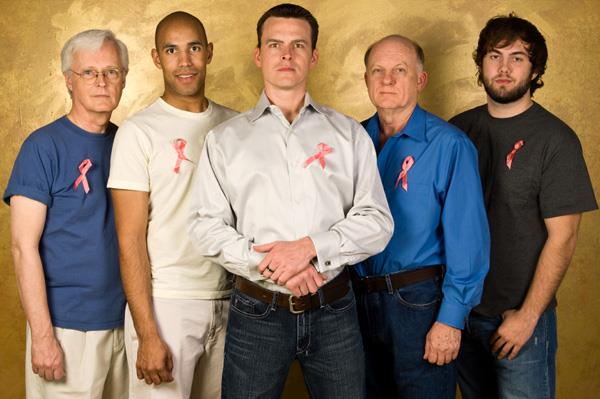
From the first moment my wife discovered she had breast cancer, there was a deafening silence from the men I know. Even ones whose wives, mothers or girlfriends had breast cancer seemed to have received a gag order from some Central Cancer Command and did little more than mumble about the experience. Not one to shut up for any known reason, I started this blog…That was four years ago – as time passed, people searching for answers stumbled across my blog and checked out what I had to say. The following entry appeared in April of 2014.

When I started this site, I was looking for a title for it and stumbled across STA ND BY HER. Excited, I began to skim through the site. When I discovered a forum, I was nearly ecstatic. I’d finally be able to talk with other men about how they felt about breast cancer in their wives, sisters, aunts, mothers, and friends!

Not.

The forum had been overrun by spambots. I tried it today – and it’s dead. As a doornail. Here’s the message:

General Error
SQL ERROR [ mysql4 ]

Unknown MySQL server host 'standbyherbbphp.db.5015781.hostedresource.com' (0) [2005]

An sql error occurred while fetching this page. Please contact an administrator if this problem persists.

Men continue to say nothing about breast cancer and their feelings. There is no international network. No national clearinghouse. There’s barely state and local fora for men to talk.

Is that because men generally DON’T talk? That was the premise of my website. Three years later, most of the men I know STILL don’t talk. There is a man at work whose wife went through breast cancer treatment around the same time my wife did. Do we talk? Commiserate? Share?

Nope.

Shortly before my wife was diagnosed, an old acquaintance of mine eventually came out to an online group he ran and I participated in that his wife had been diagnosed with breast cancer. I offered what comfort I could – but it was a cold comfort because we hadn’t seen each other in decades. Four months later, my wife got the diagnosis. This friend offered more than comfort – he was THERE for me. We still hadn’t seen each other, but through him, his wife offered support to my wife. Some time later, we met for lunch and while we STILL didn’t talk about breast cancer and how it affected us and our wives, we sat at the same table and simply “were” together.

The late Madeleine L’Engle once wrote, “When I am constantly running there is no time for being. When there is no time for being, there is no time for listening.” (Walking on Water: Reflections on Faith and Art)

I think I’m beginning to see that men are never going to talk to each other – they find it helpful instead just to “be” with each other. Knowing that there are others like them who struggle with their beloved women dealing with breast cancer is, maybe, enough for most men.

John W. Anderson and me – and others – though will talk with our computers. After all, since I started the blog, I’ve gotten nearly 16,000 hits. I figured out in my head last night as I was coming home with Chinese food, that that is roughly ten hits a day. Who hits the site? No idea; there have only been 16 comments. *shrug* I am not only resigned to that now, I’m actually OK with it. I may never know if I helped anyone by doing this site – but now I understand that just BEING here may help some.

And that’s OK with me.


Saturday, November 11, 2017

BREAST CANCER RESEARCH RIGHT NOW! #57: A Possible Bright New Tomorrow in Treating Certain Types of Breast Cancer!

From the first moment my wife discovered she had breast cancer, there was a deafening silence from the men I know. Even ones whose wives, mothers or girlfriends had breast cancer seemed to have received a gag order from some Central Cancer Command and did little more than mumble about the experience. Not one to shut up for any known reason, I started this blog…

Every month, I’ll be highlighting breast cancer research that is going on RIGHT NOW! Harvested from different websites, journals and podcasts, I’ll translate them into understandable English and share them with you. Today:

Effect of neoadjuvant chemotherapy on tumor-infiltrating lymphocytes and PD-L1 expression in breast cancer and its clinical significance

Whew!

In plain English?

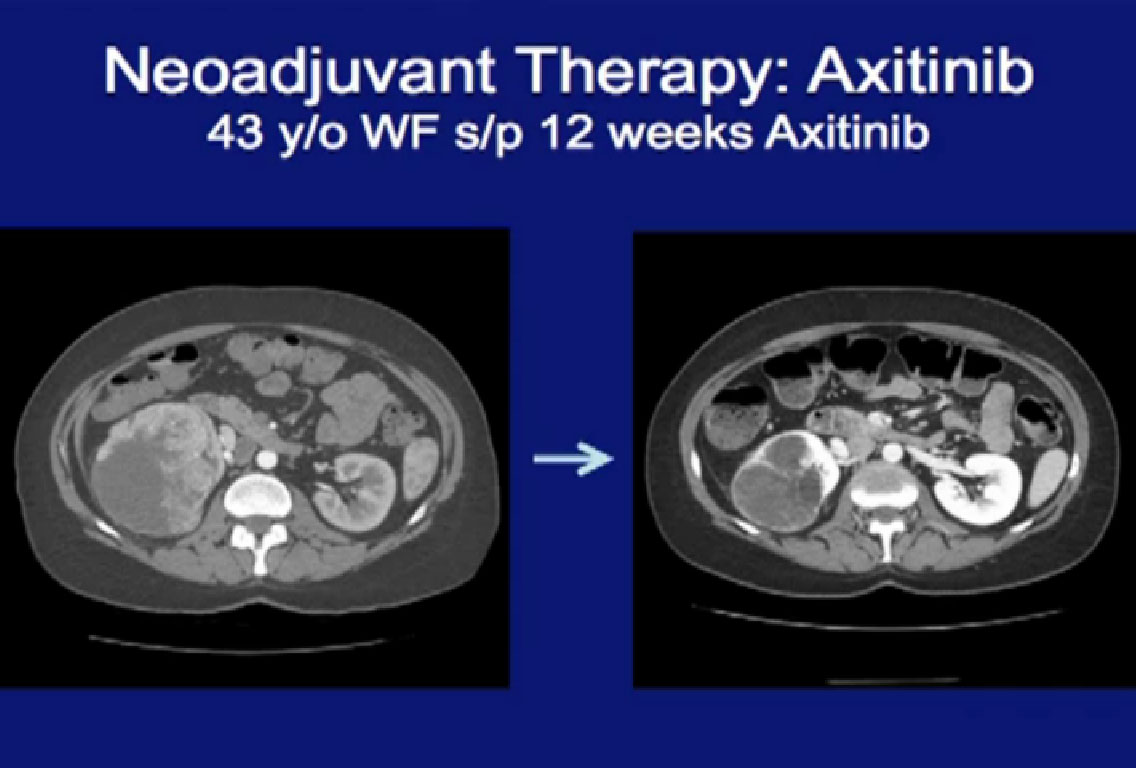
Neoadjuvant: sometimes doctors will use chemo to shrink tumors they’ve discovered BEFORE they do lumpectomies or even radical mastectomies. They’re discovering that not only does the chemo shrink the tumors, they also seem to boost the body’s own immunity response.

Some other terms I came across in reading the article I linked to below:

Immune markers: Cluster of Differentiation (abbreviated as CD) is a method used to identify and investigate the outside of certain molecules that are targets on cancer cells for chemotherapy. CD molecules can act in many ways, often acting as receptors or molecules that turn receptors on that are important to the cell. When a cell gets a certain set of signals, the behavior of the cell can change. Other CDs cause cells to stick together.

Tumor infiltrating lymphocytes: white blood cells (the ones that fight infections) that, when they increase makes it more likely that a breast cancer patient will STAY cancer free.

Programmed death ligand 1 – (the PD L1 in the title of the article) an increase in this protein ALLOWS cancer cells to grow by stifling the production of cancer-toxic cells in the area around a tumor.

The cells that fight cancer secrete cytotoxins – “cell poisons” – that exert anti-tumor activity by causing a response that destroys chemo-damaged cells. That may then lead to your own immune system kicking in to fight the cancer. The balancing act comes from the possibility that the chemo that damages the cancer cells MIGHT kill the lymphocytes that are supposed to kill the tumor cells…

So, all together: current research is studying the effect of shrinking tumors with chemotherapy making it so that there will be LESS surgery, and that when there IS surgery, it’s not as invasive. As well, the use of neoadjuvant therapy can also stimulate the body’s own immune system – but there is a fine line between initiating your own body to protect itself and destroying that same defense system.

We’ll see how far we can get in the future – there may conceivably come a time when at the first sign of certain types of breast cancer, doctors start the tumor-shrinking therapy, followed by the removal of what remains, and the “hyper-activation” of the body’s own defenses to complete the treatment.

Now THAT will be a brighter tomorrow!


Saturday, November 4, 2017

ENCORE #74! – Reconstruction Part 11 – Breast Reconstruction Challenges…

From the first moment my wife discovered she had breast cancer, there was a deafening silence from the men I know. Even ones whose wives, mothers or girlfriends had breast cancer seemed to have received a gag order from some Central Cancer Command and did little more than mumble about the experience. Not one to shut up for any known reason, I started this blog…That was four years ago – as time passed, people searching for answers stumbled across my blog and checked out what I had to say. The following entry appeared in April of 2014.

While it may seem an obvious choice to some who are outside of the breast cancer community (are there ANYONE who is?) breast reconstruction is not an easy choice.

After months that include radical mastectomy, chemotherapy, hair loss, and recovery, the decision to “go under the knife” again is not one that women take lightly.

Even so, new research shows that more and more women are undergoing the procedure to rebuild what was once there. “Researchers found that 46 percent of patients received reconstruction in 1998 but that figure rose to 63 percent by 2007.”

While this article was informative, from a layperson’s point of view, I find the authors somewhat narrow-minded – perhaps even “ignorant” – about certain things, and that bothers me.

For example, “The study also revealed dramatic variation in reconstruction based on geographic region, from a low of 18 percent in North Dakota, to a high of 80 percent in Washington, D.C. This was largely associated with the number of plastic surgeons working in each state…Any time we see geographic variations in practice patterns, we worry that care is not being appropriately individualized and that patients are not being offered all their options. It’s important to make sure women have all the information they need about breast reconstruction and are aware that it is an option...” (emphasis mine)

REALLY? REALLY? Have any of the authors even visited North Dakota? Clearly not! I actually have friends from ND – and some from DC. As a whole, ND is a very conservative state with a preponderance of farmers and has a frontier attitude. A “I can take it” sort of way of looking at the world. I would say THIS has a larger effect on the number of women getting reconstruction after mastectomies than “the number of plastic surgeons”. Did the authors consider that the attitude of your average NoDak would drive out plastic surgeons; they’d be seen as superfluous parasites. And DC’s plastic surgeons? REALLY? REALLY? In a city where the highest rollers are broadcast nationally and internationally with close-ups and in press conferences on a minute-by-minute basis, plastic surgeons would FLOCK there to make sure our politicians look pretty on TV and in webcasts!

That seems such a no-brainer, it makes me wonder about the rest of the study.

This seeming blindness brings into question another statement: “The researchers also note that more women are receiving implants rather than recreating breasts using tissue from other parts of their body, called autologous reconstruction. Autologous techniques tend to deliver better cosmetic results and higher satisfaction, but it’s a time-consuming, demanding operation that requires a longer hospital stay and recovery time. The researchers raise concern that current medical reimbursement discourages surgeons from offering autologous reconstruction.”

REALLY? Choosing a long, difficult surgery with a lengthy recovery time after…a long difficult surgery with a lengthy recovery time doesn’t seem a natural aversion-reaction by breast cancer survivors and can be more sensibly ascribed to INSURANCE COMPANY PRESSURE????

Hmmm. My further comment here would be that perhaps the authors – maybe even more breast reconstruction plastic surgeons – should cast more widely when interpreting their research data. Even so, the update on the subject was reasonable and even though the interpretation was narrow-minded, the DATA was sound.


Saturday, October 28, 2017

GUY’S GOTTA TALK ABOUT…Alzheimer’s #11: Time Traveling With My Dad, part 2

Dad’s diagnosis of Alzheimer’s stayed hidden from everyone until I took over the medical administration of my parents in 2015. Once I found out, there was a deafening silence from most of the people I know even though virtually all of them would add, “My _____ had Alzheimer’s…” But there was little help, little beyond people sadly shaking heads. Or horror stories. Lots of those. Even the ones who knew about the disease seemed to have received a gag order from some Central Alzheimer’s Command and did little more than mumble about the experience. Not one to shut up for any known reason, I started this part of my blog…

I’m a STAR TREK nerd and I have been since my dad introduced me to the TV series in 1968 or 1969. I was pre-adolescent, and desperate to have something in common with his. I’d failed miserably in “sports” and long ceded that domain to my brothers and sister. I’d pretty much given up ever having any connection with Dad. Until Gene Roddenberry and Lucille Ball conspired to bring my dad and me together. The fact is that for me, STAR TREK is inextricably linked to my relationship with my father, and I am a writer today because of that connection.

STAR TREK has also dealt with time travel since what is called The Original  Series, beginning with “Tomorrow Is Yesterday” in 1967 and a time travel incident that was used to reboot the entire franchise in 2009, creating a skew from the timeline of all of the TV series as well as the first ten movies…as well as a temporal incident in this real world. During the premier of that movie, my father, myself, and my own son went to the movie along with an old, old friend of mine…

Anyways, in all, STAR TREK has dealt with time travel issues in 50 of the 741 television episodes and thirteen movies.

When I talk to dad these days, I’m dealing with time travel issues all the time.

I’m pretty sure Alzheimer’s messing with Dad’s memories would have been stranger for me if I hadn’t actually messed around with time travel and alternate futures in my own head.

Most of the people who’ve heard me deal with Dad’s wanderings through the past and present are amazed at how calm and soft-spoken I am. Truthfully, the leaps and bounds he makes don’t bother me. I just go with the flow of the conversation – oh, I forgot to mention that Dad ALSO deals with alternate timelines as well. Like the one where Mom is still alive and is divorcing him…

Alzheimer’s has given me a new appreciation for the philosophical concept of “being in the now”. Jesus said it, “Therefore do not worry about tomorrow, for tomorrow will worry about itself. Each day has enough trouble of its own.” (Matthew 6:34, NIV)

Buddha said it, ““The secret of health for both mind and body is not to mourn for the past, worry about the future, or anticipate troubles, but to live in the present moment wisely and earnestly.” (Motivating Thoughts of Gautama Buddha, Mahesh Dut Sharma)

Ekhart Tolle said it, “All negativity is caused by an accumulation of psychological time and denial of the present. Unease, anxiety, tension, stress, worry - all forms of fear - are caused by too much future, and not enough presence. Guilt, regret, resentment, grievances, sadness, bitterness, and all forms of non-forgiveness are caused by too much past, and not enough presence.” (The Power of Now: A Guide to Spiritual Enlightenment)

Must be right, eh? (I’d put a smiley emoticon here if I could…)

For Dad, “now” is a fluid concept. Lately he’s been vividly dreaming, calling me to whisper that because I won’t believe him, I HAVE to come to his apartment, because Mom’s there and they’re talking; or insisting that he has an entire wardrobe at “that place I was before” he has to get to; or declaring that “the guys I bum around with” had just dropped him off and he was wondering when he would get paid for doing the job they did. But when I press for details (no, I don’t grill him!), the illusion begins to fall apart and he’ll say, “I don’t know where I am or what I’m going to do next…”

That’s the default mode. Something in him senses that the timelines aren’t lining up. He called last night to ask if I had Mom’s phone number, followed saying in the next breath, “Oh, Mom’s dead.” He’ll breathe one more time, then ask, “But does she have a phone where she’s at?”

When I’m feeling strong and in a good mood, I can joke about it, “Dad, you know where Mom is, right?”

“Oh, that’s right, she’s dead.”

“And you know how creepy that would be for you to try and talk to her in her coffin, right?”

He laughs, and then we move on to whatever the next point of conversation is, sometimes in the past, sometimes “I’m just bored here…”

I’ll talk about boredom some other time. For now, these are all my thoughts on time traveling with Dad. If you’re interested in my previous ruminations where I’ve done research into the medical “why” this is happening, you can go here: http://breastcancerreaper.blogspot.com/2017/09/guys-gotta-talk-aboutalzheimers-10-time.html

For now, that’s it.


Saturday, October 21, 2017

ENCORE #73! – Metastatic Breast Cancer: BRAIN CANCER

From the first moment my wife discovered she had breast cancer, there was a deafening silence from the men I know. Even ones whose wives, mothers or girlfriends had breast cancer seemed to have received a gag order from some Central Cancer Command and did little more than mumble about the experience. Not one to shut up for any known reason, I started this blog…That was four years ago – as time passed, people searching for answers stumbled across my blog and checked out what I had to say. The following entry first appeared in January of 2012.

The first question that comes to mind is, “Is a brain tumor the same as brain cancer?”

While I don’t usually go to Yahoo Ask for my medical information, I decided today to START there because the answerer is both an MD and clear:

“Interesting that you bring this up. Primary brain malignancies have always been called brain ‘tumors’ rather than ‘cancer of the brain’. Yet many are clearly cancerous, locally invasive, progressing malignancies. Strange the way people perceive words. If you tell patients they have a ‘tumor, it does not seem as ominous to them as saying they have ‘cancer’…there is confusion that many people have in regard to this topic. A person with lung carcinoma that has spread to the brain has lung cancer in the brain. It is not a brain cancer. It is still lung cancer that is growing in the brain area. A person with a glioblastoma multiforme has a brain tumor - but these are usually aggressive cancers. As for cures - that depends on the primary brain cancer/tumor type and the stage.
Interesting question regarding the semantics of this.”

Source(s): MD medical oncologist - cancer specialist doctor Spreedog, 2010 http://answers.yahoo.com/question/index?qid=20091114024633AADSsIx

This is in concordance with what I’ve already found out about bone cancer and lung cancer – when you have had breast cancer and is spreads (which is what Metastatic Breast Cancer is), you have breast cancer cells growing wild in the bones, liver, lungs, brain and various  other places.

So what happens? This seems to me to be a truly horrible kind of MBC because the brain is the seat of Human consciousness.

The writer here expresses this terror: “It was because of a few unusual symptoms, that several months ago I requested a brain scan. By the time the date arrived for the scan, the symptoms, along with my fears, had disappeared. Imagine my surprise when the next day my oncologist called to say that they had found 2 tiny spots on my brain. The news was devastating. While breast cancer is every woman’s nightmare, and metastasis is the nightmare of everyone who has breast cancer, brain metastasis is the nightmare of everyone who has metastatic disease. It was so frightening that I couldn’t speak to anyone about it. I could barely allow myself to think about it. None of this is news to you. You wonder how many tears you can actually shed. You wonder if you will ever feel like your old self again and if your friends and family will ever think of you in the same way. You wonder if you will lose the person you are. It is the most terrifying diagnosis anyone can have, even those of us who are used to bad news.”

What are the symptoms? Please keep in mind that the symptoms are DIFFERENT depending on where the cancer attacks first. Also, OTHER things can cause these symptoms. My wife works as a classroom aide with kindergartners – she gets headaches sometimes, as anyone would who tries to work with a room full of five-year-olds!

Symptoms include: “changes in the ability to think, understand and use words correctly; emotional changes; weakness; dizziness; seeing lights, seeing double, or narrowing of vision; problems with balance; seizures; nausea and vomiting; changes in smelling, taste, hearing. If any of these symptoms persist (that is, stick around for a while) like a headache that is worse in the morning, lasts for days, or recurs every day, then you’ll want to talk to your health care authority.

Once you report to the cancer care center or your doctor and there appears to be reason to suspect MBC-brain cancer, an MRI (magnetic resonance imaging) is the most effective technology for diagnosing breast cancer brain metastases. It does a better job in distinguishing a single metastasis from multiple metastases, which is an important factor in determining what kind of treatment a patient needs.

Unfortunately, treatment for MBC-brain cancer is problematic still. In m0st cases, whole brain radiation (which is exactly what it sounds like) is the first line of offense. There is good evidence that this treatment is effective almost half of the time in completely reversing the effects of the cancer. In MOST cases, it reduces the symptoms significantly. It is also a shorter-term treatment than the original chemotherapy with radiation doses given daily for 5-10 days (though this is sometimes spread over a longer period to lessen the side-effects.

At other times, the radiation is aimed from multiple directions at specific metastases. This has the advantage of fewer side-effects, but there is no clear EVIDENCE yet that this is as effective as whole brain radiation treatment.

Other, less common treatments include brain surgery (physical removal of the cancer), chemotherapy (not effective usually because the chemo can’t break through the barrier into the brain through the blood (called the blood-brain barrier); and a combination of the above.

Finally: “‘So much depends on the aggressiveness of your individual cancer, the time to recurrence from original diagnosis, any other metastases, and overall health—and, the number, location and size of the brain mets (metastases), and whether they are symptomatic or not,’  Patty observed. ‘I was so sure that I would die within 18 months of my first diagnosis with brain mets.  I readied for the time of my death. Now, I’ve had to revise things a few times.  I wonder if I hold some kind of record for brain MRI’s, having had them on average every two months for five years—that would be around thirty, with bad veins! I’ve had brain mets for five years and have been living with eight lesions for two and a half years.’”


Saturday, October 14, 2017

GUY’S GOTTA TALK ABOUT …#38: When There’s Nothing To Talk About Is There Nothing To Talk About?

From the first moment my wife discovered she had breast cancer, there was a deafening silence from the men I know. Even ones whose wives, mothers or girlfriends had breast cancer seemed to have received a gag order from some Central Cancer Command and did little more than mumble about the experience. Not one to shut up for any known reason, I started this blog…

Like the title says…I don’t know what to say right now, so I’m going to direct you to a post by a very old friend of mine. I met Bruce Bethke before my wife and I married. I was looking for a science fiction writers group to join and stumbled across a notecard at UNCLE HUGO’S SCIENCE FICTION BOOKSTORE (http://www.unclehugo.com/prod/index.shtml).

Bruce, Phillip C. Jennings, and Geri Balter started meeting, then sort of drifted apart. Bruce and I didn’t talk much (it was at the advent of the Internet, so contact was via paper or face-t0-face). Several years later, at a MinniCon, I heard him speak, re-introduced myself, and as it was now the Age of the Internet, we renewed our friendship. Older and wiser, we found we had more things in common.

This his wife was diagnosed with breast cancer.

A few months later, my wife was diagnosed with breast cancer.

We became actual friends.

He’s a science fiction award-winning author; he’s a man who has survived some very difficult life experiences, and now he’s the executive editor of an on-line speculative fiction magazine.

A few days ago, he shared about their most recent experience with breast cancer.

I’ll leave you to ruminate with him as he looks at jackalopes and cancer…

http://stupefyingstories.com/

Scroll down to the Thursday, October 12, 2017 entry...