Saturday, February 14, 2015

GUY’S GOTTA TALK ABOUT...#12 – What The Heck Does “Metastasize” MEAN?


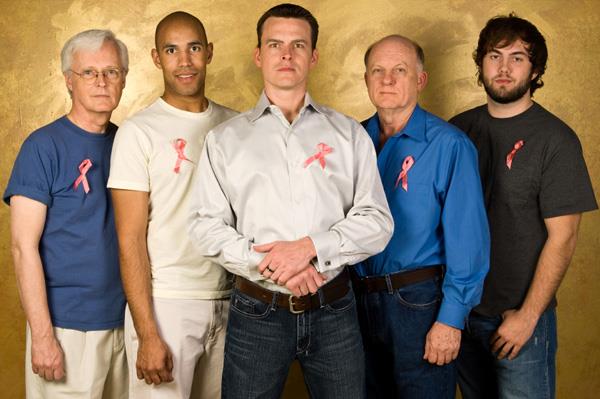
From the first moment my wife discovered she had breast cancer, there was a deafening silence from the men I know. Even ones whose wives, mothers or girlfriends had breast cancer seemed to have received a gag order from some Central Cancer Command and did little more than mumble about the experience. Not one to shut up for any known reason, I started this blog…

We got news a few days ago that a friend of mine with skin cancer may have had a site that it had metastasized to.

With a swelling knee, he went to the doctor. Fearfully, he reported that the clinic was afraid that his cancer had spread. He underwent a full day of blood tests, ultrasounds, and had fluid withdrawn from the area as well.

While the upshot is that his skin cancer HAD NOT SPREAD (hallelujah!), it got me to wondering.

I did a series of articles on metastatic breast cancer a few years ago – two of them are the most read on the blog. My own recent brush with skin cancer has made me very aware of the possibility of my own cancer spreading.

So I did some reading. The type of skin cancer that I had has a microscopically small chance of metastasizing. My friends type does in fact spread.

How EXACTLY does breast cancer, skin cancer, and other kinds of cancer spread? “By metastasizing, dummy!"

“Yeah, yeah, yeah,” I would reply. (I’d also make a smart aleck remark about the Beatles.) “But HOW does it spread? How do cancer cells get from the skin to the knee or from the breast to the bones? Do they just pack up their little twisted chromosomes, wave to their family of twisted cells, and head on our into the Wide World of the body they’ve coopted for their evil intent?”

So, I did my research, starting (and I ONLY start here, I use the primary sources shortly afterward!) with Wikipedia.

Wiki defines metastasis as “the spread of a cancer or disease from one organ or part to another not directly connected with it.”

Hmmm…while that’s simple to understand, it doesn’t bring me any closer to WHAT happens. I don’t understand! Turns out, neither does the medical community, exactly: “Metastasis is a complex series of steps in which cancer cells leave the original tumor site and migrate to other parts of the body via the bloodstream, the lymphatic system, or by direct extension.”

When DOCTORS say the steps to metastatic cancers spreading, it often means that they don’t know exactly what’s happening. Great – that should be the next Great Discovery, “How To Stop The Spread Of Cancer Cells”…

So, here goes.

“Cancer occurs after a one single cell in a tissue is progressively genetically damaged to produce cells with uncontrolled proliferation.” The question I have is WHAT is it that does the genetic damage? With over a hundred different cancers, the list is probably just as long. There ARE things we know of that can damage cells on a genetic level – the ultraviolet rays of sunlight can damage cell genes, switching on the cell to grow uncontrollably. This, naturally, leads to skin cancer.

The chemicals in cigarette smoke (which contains 7000 (!!!) DIFFERENT substances) are mostly harmless. But of those several thousand, seventy are known to damage the genetic components of cells – plus the RADIATION that tobacco plants pick up and concentrate in their leaves. The obvious end result here is lung cancer.

Other chemicals in the environment, as well as carrying a family history of different kinds of cancer also damage cells and create the “runaway effect” that characterizes ANY cancer.

So WHAT happens then?

Cells grow out of control resulting forming a tumor. In the case of my own skin cancer, simple removal of the offending (or affected) area stops the cancer. Monitoring over the rest of my life will be a part of every checkup from now until the day I die. In my wife’s case, chemicals specifically targeted to annihilate breast cancer cells were introduced to her body after the source of the cancer cells – breast tissue – was surgically removed in a double mastectomy. She is now cancer-free, as is the wife of a good friend of mine and one of my colleague teachers. Again, monitoring over the rest of my wife’s life will be a part of every checkup and physical.

The effort to first destroy the SOURCE of the cancer and then destroy those cells wherever they may have “landed” using chemicals, radiation, and physical excision of tissue is how doctors stop the spread of cancer.

But there's LOTS more. I've gone on enough. Next time around, I’ll be delving deeper into this whole concept of METASTASIS...


Saturday, February 7, 2015

ENCORE #6! – Metastatic Breast Cancer: Bone Cancer


http://voluume.fr/wp-content/uploads/2012/05/Encore-Sessions.jpg
From the first moment my wife discovered she had breast cancer, there was a deafening silence from the men I know. Even ones whose wives, mothers or girlfriends had breast cancer seemed to have received a gag order from some Central Cancer Command and did little more than mumble about the experience. Not one to shut up for any known reason, I started this blog…That was four years ago – as time passed, people searching for answers stumbled across my blog and checked out what I had to say. The following entry appeared in December of 2011…

We just got news this week that a “cancer friend” of ours had a bone scan, and after an extended time of treatment, she is cancer free!

But just what IS bone cancer and why did she get it?

The cancer, while it can certainly occur by itself, is what is called metastatic breast cancer. It happens when cancer cells from the breast escape into the blood stream or the lymph system and invade MORE new flesh.

While bone cancer is the most common – 70% of metastatic breast cancers are of this ilk – the other 30% is made up of brain cancer (10%) and lymph, lung and liver cancer. Let me emphasize here that these cancers are NOT the peculiar type of cancer cells that initiate these diseases in people who have never had breast cancer. These cancers are BREAST CANCER cells that have invaded other organs and therefore are called metastatic breast cancer. The word “metastatic” was used in the 1570s and comes from the Greek metastasis which means "transference, removal, change.” The roots are meta which means "over, across" plus the word histanai which means "to place, cause to stand.” The medical use for "shift of disease from one part of the body to another" dates from 1660s in English.

Bone cancer caused by the invasion of breast cancer cells into the bones can first show up as back, bone, or joint pain lasting more than two to three weeks that seems to be getting worse; numbness or weakness in a particular part of the body; a change in bowel or bladder activity, such as problems with incontinence or not being able to urinate or have a bowel movement. This may be a sign that the nerves in your backbone are getting pinched by the cancer.

As well, blood tests can reveal a buildup of calcium or tumor markers (special proteins in the blood) like CEA (carcino-embryonic antigen), CA (cancer antigen) 15-3 or CA 27-29 that suggest the cancer might be in the bones. Calcium build up might also show up in a routine bone scan. These tests are NOT usual and are typically ordered only if the symptoms appear.

Metastatic bone disease (MBD) caused by invading breast cancer often behaves in a “mixed osteolytic (destroys bone cells) and osteoblastic (causes abnormal growth of bone cells) manner”. Bone destroying or bone growing MBD occurs because the different cancer cells give off chemicals that interfere with the naturally occurring cells in the bone and cause bone destruction, new bone formation, or both. MBD weakens the affected bones, people with the disease are prone to fractures. Broken bones caused by MBD are termed "pathological fractures."

The most common treatment options for MBD include radiation and medications to control pain and prevent further spread of the disease, and surgery to stabilize bone that is weak or broken. By killing the cancer cells, radiation relieves pain, stops the tumor from growing and can prevent the bone from breaking. Radiation can also be used to control the cancer after surgery to fix a broken bone.
MBD is a systemic (body-wide) problem and radiation therapy may be use just to lessen symptoms and pain in more advanced cases, or to completely destroy disease in the affected bone.

Different cancers respond differently to radiation. Several types of radiation therapy are available. Local field radiation is the most common type of radiation used to treat MBD in which radiation is directed at the metastatic tumor and the immediate adjacent tissue. Entire bone segments or multiple bones can be targeted by local field radiation, depending upon how many areas are affected by the disease. This usually results in complete pain relief in 50% to 60% of cases and partial relief in more than 80% of cases. How well MBD responds to radiation depends on many things, including cancer type (for example, breast cancer typically responds very well to radiation, while kidney cancer does not), and where the tumor is located.
Pain usually begins to subside in the first 1 to 2 weeks, but maximum relief may take several months. Therefore, pain medication is prescribed throughout the radiation treatment course.

For our “cancer friend”, the treatment has been effective and with the pain greatly reduced, we are planning to actually meet for the very first time for dinner over the holiday season!

FEBRUARY 2014 UPDATE: Yesterday, this friend got a CLEAN BILL OF HEALTH!!!


Saturday, January 31, 2015

BREAST CANCER RESEARCH RIGHT NOW! #29: Dealing With Restless Limb Syndrome…


https://s-media-cache-ak0.pinimg.com/236x/81/e0/17/81e0174e6e01a46b48e0a5fc8ab7a2d9.jpg
From the first moment my wife discovered she had breast cancer, there was a deafening silence from the men I know. Even ones whose wives, mothers or girlfriends had breast cancer seemed to have received a gag order from some Central Cancer Command and did little more than mumble about the experience. Not one to shut up for any known reason, I started this blog…

Every month, I’ll be highlighting breast cancer research that is going on RIGHT NOW! Harvested from different websites, journals and podcasts, I’ll translate them into understandable English and share them with you. Today: http://en.wikipedia.org/wiki/Restless_legs_syndrome

First of course, the definition: “Restless legs syndrome (RLS) also known as Willis-Ekbom disease (WED)[1] or Wittmaack-Ekbom syndrome, is a neurological disorder characterized by an irresistible urge to move one's body to stop uncomfortable or odd sensations. It most commonly affects the legs, but can affect the arms, torso, head, and even phantom limbs. Moving the affected body part modulates the sensations, providing temporary relief.”

Once again, this is something my wife has struggled with. But instead of breast cancer causing it, it has exacerbated it. She’s had RLS her whole life (at least since she was six years old!) Breast cancer – double mastectomy, aggressive tri-weekly chemotherapy (Taxotere + Adriamycin + Cytoxan and the next day, neulasta), followed by five years of anastrazole – just made it...weirder.

I first experienced when we got married. At night, before falling asleep, she would move her legs in order to “short-circuit” the odd sensations. That seemed to work. Then the cancer diagnosis and treatment and as of right now, it has manifested itself by odd sensations in her LEFT arm. This is odd because the removal of sentinel nodes and the resulting lymphedema was in the RIGHT pit and arm (sounds like a medieval British pub, doesn’t it...).

Current research suggests “...exercise, avoiding RLS precipitants (caffeine, alcohol, antidepressants, antihistamines); exercise; counter stimulus to sensory symptoms (hot or cold baths, limb massage, compression stockings, counter-pulsation devices); herbal medicines and acupuncture; and cognitive behavioral therapy.”

Her first “go to” was to up her calcium intake: “Dehydration, prolonged sitting, or not getting enough potassium, calcium or magnesium in your diet can be associated with leg cramps. So can certain medications -- including diuretics, beta blockers and other blood pressure drugs. Sometimes, these cramps also may be related to an underlying metabolic condition, such as an underactive thyroid (hypothyroidism) or a parathyroid condition. Diabetes or other conditions that disrupt your metabolism can also cause muscle cramps.”

The calcium chews she’d been doing were originally to counter the bone debilitation caused by the chemotherapy, so she stopped for a while. The RLS increased and now she uses the calcium chews as well as a hot water bottle to lower the intensity of the sensations.

As I wrote earlier, we’ve also started a regimen of exercise together – alternating strength training (after a visit with the Planet Fitness trainer) and cardio – we usually do a half an hour of stationary biking. The hot water bottle was a “new development” and has been remarkably effective.

I’ll note here something we HAVE NOT tried, but is a recent development: “In 2014, the FDA approved a device that provides electrical stimulation to the legs as a non-medication treatment for restless legs syndrome. Studies suggest this treatment can be quite helpful. Although it is generally well tolerated, it occasionally causes a temporary worsening of symptoms, leg cramps, soreness and motion sickness.” My guess is that this is an outgrowth of the device developed for those who suffer from chronic pain, what’s called Microcurrent Electrical Therapy.

Taken all together, the “therapies” seem to be working for the time being. It’s also light years better than adding ANOTHER pill to her already abundant storehouse!


Saturday, January 24, 2015

ENCORE! #5 – Metastatic Breast Cancer: Brain Cancer


http://www.onlinecancerguide.com/blog/wp-content/uploads/2012/12/Types-of-Brain-Cancer-in-Kids.jpg

From the first moment my wife discovered she had breast cancer, there was a deafening silence from the men I know. Even ones whose wives, mothers or girlfriends had breast cancer seemed to have received a gag order from some Central Cancer Command and did little more than mumble about the experience. Not one to shut up for any known reason, I started this blog…

The first question that comes to mind is, “Is a brain tumor the same as brain cancer?”

While I don’t usually go to Yahoo Ask for my medical information, I decided today to START there because the answerer is both an MD and clear:

“Interesting that you bring this up. Primary brain malignancies have always been called brain ‘tumors’ rather than ‘cancer of the brain’. Yet many are clearly cancerous, locally invasive, progressing malignancies. Strange the way people perceive words. If you tell patients they have a ‘tumor, it does not seem as ominous to them as saying they have ‘cancer’…there is confusion that many people have in regard to this topic. A person with lung carcinoma that has spread to the brain has lung cancer in the brain. It is not a brain cancer. It is still lung cancer that is growing in the brain area. A person with a glioblastoma multiforme has a brain tumor - but these are usually aggressive cancers. As for cures - that depends on the primary brain cancer/tumor type and the stage.

Interesting question regarding the semantics of this.”

Source(s): MD medical oncologist - cancer specialist doctor Spreedog, 2010 http://answers.yahoo.com/question/index?qid=20091114024633AADSsIx

This is in concordance with what I’ve already found out about bone cancer and lung cancer – when you have had breast cancer and is spreads (which is what Metastatic Breast Cancer is), you have breast cancer cells growing wild in the bones, liver, lungs, brain and various  other places.

So what happens? This seems to me to be a truly horrible kind of MBC because the brain is the seat of Human consciousness.

The writer here expresses this terror: “It was because of a few unusual symptoms, that several months ago I requested a brain scan. By the time the date arrived for the scan, the symptoms, along with my fears, had disappeared. Imagine my surprise when the next day my oncologist called to say that they had found 2 tiny spots on my brain. The news was devastating. While breast cancer is every woman’s nightmare, and metastasis is the nightmare of everyone who has breast cancer, brain metastasis is the nightmare of everyone who has metastatic disease. It was so frightening that I couldn’t speak to anyone about it. I could barely allow myself to think about it. None of this is news to you. You wonder how many tears you can actually shed. You wonder if you will ever feel like your old self again and if your friends and family will ever think of you in the same way. You wonder if you will lose the person you are. It is the most terrifying diagnosis anyone can have, even those of us who are used to bad news.”

What are the symptoms? Please keep in mind that the symptoms are DIFFERENT depending on where the cancer attacks first. Also, OTHER things can cause these symptoms. My wife works as a classroom aide with kindergartners – she gets headaches sometimes, as anyone would who tries to work with a room full of five-year-olds!

Symptoms include: “changes in the ability to think, understand and use words correctly; emotional changes; weakness; dizziness; seeing lights, seeing double, or narrowing of vision; problems with balance; seizures; nausea and vomiting; changes in smelling, taste, hearing. If any of these symptoms persist (that is, stick around for a while) like a headache that is worse in the morning, lasts for days, or recurs every day, then you’ll want to talk to your health care authority.

Once you report to the cancer care center or your doctor and there appears to be reason to suspect MBC-brain cancer, an MRI (magnetic resonance imaging) is the most effective technology for diagnosing breast cancer brain metastases. It does a better job in distinguishing a single metastasis from multiple metastases, which is an important factor in determining what kind of treatment a patient needs.

Unfortunately, treatment for MBC-brain cancer is problematic still. In m0st cases, whole brain radiation (which is exactly what it sounds like) is the first line of offense. There is good evidence that this treatment is effective almost half of the time in completely reversing the effects of the cancer. In MOST cases, it reduces the symptoms significantly. It is also a shorter-term treatment than the original chemotherapy with radiation doses given daily for 5-10 days (though this is sometimes spread over a longer period to lessen the side-effects.

At other times, the radiation is aimed from multiple directions at specific metastases. This has the advantage of fewer side-effects, but there is no clear EVIDENCE yet that this is as effective as whole brain radiation treatment.

Other, less common treatments include brain surgery (physical removal of the cancer), chemotherapy (not effective usually because the chemo can’t break through the barrier into the brain through the blood (called the blood-brain barrier); and a combination of the above.

Finally: “‘So much depends on the aggressiveness of your individual cancer, the time to recurrence from original diagnosis, any other metastases, and overall health—and, the number, location and size of the brain mets (metastases), and whether they are symptomatic or not,’  Patty observed. ‘I was so sure that I would die within 18 months of my first diagnosis with brain mets.  I readied for the time of my death. Now, I’ve had to revise things a few times.  I wonder if I hold some kind of record for brain MRI’s, having had them on average every two months for five years—that would be around thirty, with bad veins! I’ve had brain mets for five years and have been living with eight lesions for two and a half years.’”


Saturday, January 17, 2015

GUY’S GOTTA TALK ABOUT #11…Life TOGETHER!


From the first moment my wife discovered she had breast cancer, there was a deafening silence from the men I know. Even ones whose wives, mothers or girlfriends had breast cancer seemed to have received a gag order from some Central Cancer Command and did little more than mumble about the experience. Not one to shut up for any known reason, I started this blog…

We joined Planet Fitness during the Christmas holidays!

I know, I know...EVERYONE joins The Club after the holidays because they’ve got their New Year’s Resolutions to fulfill. And The Clubs offer Special Deals!!!! Like PF offers a “No Commitment” Deal of $10 a month and no commitment!

My observation is that not only are they being...sarcastic, they’re being realistic. Sarcastic because how can you commit to a new lifestyle if you don’t have to commit to it? They’re being realistic because I’m sure that every New Year ushers in a rush of people who are Going To Get Fit This Year.

 My wife and I have BEEN those people more than once in our lives, but This Time It’s Different! (I’m sure you’ve all heard that before...) The thing is, is that this time it is different. Why?

First of all, my wife is now an almost-four-year breast cancer survivor. The initial surgeries are healed, the IV chemo is done, the breast reconstruction is done, and she’s as healed on the outside as she’s going to get.

Second: I had treatment for skin cancer in November and December. This brought the concept of invasive disease more close to home than it has ever been. It made me think. It made me shudder. It finally made me act with an attitude SO cavalier that I doubt anyone knows how horrified I was.

Third: We have grandchildren. It has been my avowed intent to be there for the weddings of my son and daughter-in-law's kids; and any that my daughter and whomever she pairs with has. My wife joins me in that.

Fourth: We are AGING (gasp!) Things are harder to do because the joints and muscles ain’t what they used to be. The benefits of even a MILD exercise regimen are documented (http://www.livescience.com/42820-light-exercise-benefits.html) and now that the nest is basically empty, two futures present themselves: we can watch whatever TV we want to, go to whatever restaurants we want to, stay at home and not have to interact with the world as much as we want to; or we can start going to a non-threatening, and moderately inexpensive gym, learn muscle-building and cardio workouts TAILORED to us and our age and condition (with the Trainer who comes with The Club’s standard package and who actually knows what she’s doing in general if not specifically when dealing with breast cancer survivors). One will end in a matched set of couch potatoes. The other will end in a matched set of sore, tired AFTER mild exercise, couch sweet potatoes (which are better for you than regular potatoes, but not by much.)

Fifth and final: As long as we’re going to grow old together, we might as well make sure that we’re doing things...together. Exercise is new for us and instead of joining different exercise groups and clubs and exclusive organizations, we’re going to do this...together. I love my wife and we’ve raised two kids, advanced our careers with education and experience, traveled together, worked together, and done everything else together. Now we’re going to get as healthy as we can be together. I’m certainly not going to win the Mr. Universe Pageant (http://www.thatslife.com.au/Article/Real-Life/Real-Life-Stories/Im-Mr-Universe-and-Im-60), but together, me and my wife CAN be healthier. Exercise. Better diet. Lots of talk. Classes. It all goes together.

And it’s what we’re going to do – TOGETHER!

Saturday, January 10, 2015

ENCORE! # 4 -- "The Doctor Gave Me A Pill And I Grew A New Kidney!"


I haven’t talked about STAR TREK yet, which isn’t like me at all!

ST was my favorite TV show growing up, as an adult and now as an “old guy”. During the opening week of the STAR TREK 2009 reboot, my dad (who introduced me to STAR TREK), me (a total ST fan) and my son (who grew up with ST and at whom the new movie was targeted) – went to see it. None of the wonder was gone and I love the NEW as much as all of the old.

At any rate, it got me to thinking about a scene from STAR TREK IV: The Voyage Home in which an elderly woman is laying on a hospital cot waiting to go in for dialysis:

McCoy: [McCoy, masked and in surgical garb, passes an elderly woman groaning on a gurney in the hallway] What's the matter with you?
Elderly patient: [weakly] Kidney [pause] dialysis.

McCoy: [geniunely surprised] Dialysis?[musing to himself] What is this, the Dark Ages? [He turns back to the patient and hands her a large white pill] Here, [pause] you swallow that, and if you have any more problems, just call me! [He pats her cheek and leaves]

…a few moments later…

 Elderly patient: [the dialysis patient is being wheeled down the hall after being given the pill by McCoy] [joyfully] The doctor gave me a pill, and I grew a new kidney!


It made me wonder for two reasons. The first was that while today breast cancer survival rates are as high as 98% (for early detection and treatment), at one time tumors could only be detected when they could actually be felt – and then the ONLY treatment was radical mastectomy which, in the late 19th Century removed not only breast tissue but muscles and all lymph nodes as well. If a woman survived that, she was profoundly weakened and handicapped for the rest of her life.

The introduction of modified mastectomies (1950s), mammogram advances (starting in 1967), ultrasound (late 1970s), followed by MRIs, digital mammography, 3D mammography and increasingly refined chemotherapy (introduced in the 1940s), radiation (early 20th Century) and lumpectomies combined with radiation therapy (1970s) and most recently, hormonal treatment and genetic testing improved treatment – and subsequently survival rates.

I’m going to delve into the history of breast cancer later, but for now, let me just say that while it still terrifies me even now; I do have a daughter and hold VERY high hopes that either her or her daughter will someday be able to pop a pill and cry out, “The doctor gave me a pill and I’m cured of breast cancer!”
Image: http://content6.flixster.com/photo/11/05/69/11056948_gal.jpg

Saturday, January 3, 2015

BREAST CANCER RESEARCH RIGHT NOW! #28: Implant Pressure…


From the first moment my wife discovered she had breast cancer, there was a deafening silence from the men I know. Even ones whose wives, mothers or girlfriends had breast cancer seemed to have received a gag order from some Central Cancer Command and did little more than mumble about the experience. Not one to shut up for any known reason, I started this blog…

Every month, I’ll be highlighting breast cancer research that is going on RIGHT NOW! Harvested from different websites, journals and podcasts, I’ll translate them into understandable English and share them with you.

My wife wanted  me to find out the answer to this question: “Why do the implants make it feel like I’m in a C-clamp all the time?”

I found out that she’s not alone. In addition to covering other issues with breast reconstruction, the BREASTCANCER.ORG website has this to say: “Some women feel pain or discomfort from the tissue expander, the implant, or scar tissue putting pressure on a nerve or other sensitive area.”; also “A breast reconstructed with an implant may move in unnatural ways as you flex your chest muscle (pectoralis muscle).”

In both cases, the solutions while not “simple”, suggest that exercise and massage may help alleviate the discomfort. Some suggested exercises are: shoulder “shrugs”; should rolls; shoulder raise; arm swings; body turns; lifting your arms above your head (while laying down!); “walking your fingers up the wall”; same as the previous one, but “sideways”; “beach pose”; and finally, the chest stretch.

The Breast Cancer UK site article “Exercises after breast reconstruction surgery using implants” will give you specific details and directions of how to do each one I mentioned as well as a time frame. They start with immediately after the surgery and proceed to weeks and months later.

This doesn’t completely answer however, the concerns of Roseanne Valletti (54) “...she is uncomfortable. All the time. ‘It feels like I’m wrapped up in duct tape,’ [she] said of the persistent tightness in her chest that many women describe after breast reconstruction.”

It appears that this kind of feeling is both common and unavoidable: “...it is major surgery. Even with the best plastic surgeon, breast reconstruction carries the risks of infection, bleeding, anesthesia complications, scarring and persistent pain in the back and shoulder.”
“A syndrome called upper quarter dysfunction — its symptoms include pain, restricted immobility and impaired sensation and strength — has been reported in over half of breast cancer survivors and may be more frequent in those who undergo breast reconstruction, according to a 2012 study in the journal Cancer.” As usual, when you’re talking about pain, there are a million voices all clamoring for your attention. This site written by a chiropractor makes the startling claim that everything from butt pain to deafness can be cured by breaking up something he calls “fascial adhesions” with some sort of bruising method...he does, of course, rail against the medical establishment because they don’t acknowledge his methodology as effective. (http://www.doctorschierling.com/fascia.html)There are claims that shots work (usual hydrocortisone) as well as surgical removal of scar tissue all the way up to and including the removal of the implants altogether.

What works will likely be what you decide works. All of these methods are available and you will find a physician somewhere who will agree to treat you with whatever method you find online or through conversing with doctors.
I myself don’t know WHAT to think.
Resources: http://www.breastcancer.org/treatment/surgery/reconstruction/types/implants/risks, http://www.cancerresearchuk.org/about-cancer/type/breast-cancer/treatment/surgery/reconstruction/exercises-after-breast-reconstruction-using-simple-implant, http://well.blogs.nytimes.com/2013/05/20/no-easy-choices-on-breast-reconstruction/?_r=0