Saturday, August 20, 2016

ENCORE #43! – Exercise Reduces Estrogen In the Blood and Strengthens Insulin In the Blood!

From the first moment my wife discovered she had breast cancer, there was a deafening silence from the men I know. Even ones whose wives, mothers or girlfriends had breast cancer seemed to have received a gag order from some Central Cancer Command and did little more than mumble about the experience. Not one to shut up for any known reason, I started this blog…That was four years ago – as time passed, people searching for answers stumbled across my blog and checked out what I had to say. The following entry appeared in March of 2012.

Doctors harp on exercise.

Despite the harping – or in my case, perversely because of it – I avoid exercise like the plague.

Even so, as I read more and more sites promoting the “exercise makes you better if you have breast cancer” meme, I found that almost none of them give any kind of evidence as to WHY exercise fights cancer and promotes healing.

So I dug into the sites and finally found some evidence supporting this wild, “Do this one weird thing…” kind of meme.

1) Exercise may prevent tumor development by lowering hormone levels, (particularly in premenopausal women), as well as lowering levels of insulin and insulin-like growth factor

“Tumor development” – tumors are the things that create the ghastly dark shadows on the mammogram. Characterized by being a lump, the tumor is “abnormal breast tissue cells, growing in an uncontrolled way.”

Hormone levels in a human body mean lots of things. When we thing of hormones, we think of estrogen and testosterone, what most people call “sex hormones”. Essentially, hormones are chemicals made by cells and organs that send messages to other parts of the body. Chemicals we are familiar with but don’t usually call hormones are things like calcitonin, glucagon, human chorionic gonadotropin, serotonin, prostaglandin and of course, insulin. Early pregnancy detection kits are made to show the level of human chorionic gonadotropin. If it’s there, there is a 99% chance you are pregnant. It doesn’t EXIST in a woman’s bloodstream unless she is pregnant.

What hormone levels does exercise reduce? Primarily estrogen. Estrogen does things besides produce secondary sexual characteristics and feed breast cancer tumors. It also increases fat stores in the body (important for energy), increases bone formation, increases triglycerides in blood, promotes fluid balances and decreases fat deposition. Exercising to a point of fat loss causes a decrease in the number of cells in women that make estrogen in fat cells (this begins in menopause) , therefore the amount of estrogen in the blood goes down and the cancer cells grow more slowly.

Insulin and insulin-like growth factor from the pancreas and the liver respectively, regulate the uptake of glucose and fats in the body as well as regulating cell growth. With exercise, insulin absorption and effectiveness increases which shows up as less insulin in the bloodstream and doing its job in the body – which is to cause cells in the liver, muscle, and fat tissue to take up glucose from the blood and store it as glycogen rather than allowing it to float around the bloodstream – which is toxic.

To make a long story short: exercise lowers estrogen and makes insulin more effective.

OK – now I’m starting to see it!


Saturday, August 13, 2016

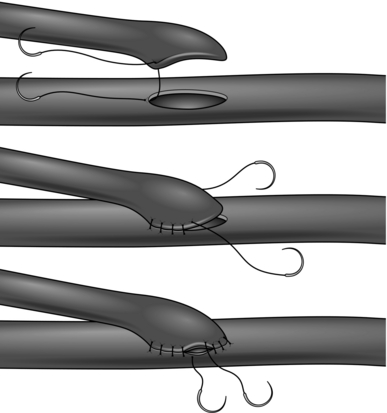
BREAST CANCER RESEARCH RIGHT NOW! #48: Vascularized Lymph Node Transfer (VLNTx) and Lymphaticovenous Anastomosis (LVA)!

From the first moment my wife discovered she had breast cancer, there was a deafening silence from the men I know. Even ones whose wives, mothers or girlfriends had breast cancer seemed to have received a gag order from some Central Cancer Command and did little more than mumble about the experience. Not one to shut up for any known reason, I started this blog…

Every month, I’ll be highlighting breast cancer research that is going on RIGHT NOW! Harvested from different websites, journals and podcasts, I’ll translate them into understandable English and share them with you. Today: http://newsnetwork.mayoclinic.org/discussion/november-health-letter-highlights-from-the-november-2014-issue/

“One procedure is a lymph-to-vein bypass surgery that involves connecting tiny lymph channels in the affected limbs to tiny veins, so blocked up lymph fluids have an outlet to flow into the circulatory system. These connections may be made in multiple locations on the affected limbs during outpatient procedure.

“Another option is lymph node transfer. It involves cutting a wedge of skin tissue containing lymph nodes from one area of the body, often the groin, and transplanting into the affected arm or leg. The transplanted lymph nodes are often able to clear lymph fluid from the affected arm or leg, resulting in partial or full reduction in limb swelling. The procedure requires several days in the hospital.”

“A new approach to treating lymphedema involves transplanting lymph nodes from elsewhere in the body to replace those removed as part of treatment…pioneer a method for selecting lymph nodes for transplant that could minimize this risk…Removing lymph nodes that drain the trunk does not generally cause lymphedema.”

In our area both VLNTx and LVA are being performed by at least one plastic surgeon. He notes however, “Surgery is a treatment option for a very small, selected percentage of the patients who have lymphedema…”

The next question is then, would my wife be one of that small, selected percentage? How is it paid for (ie: does health insurance recognize it as something important or as something cosmetic, that is, “unimportant”)?

To clarify, I should mention that there are TWO systems of fluid transfer in the Human body. The first one we are intimately familiar with called the cardiovascular system – that’s the one that’s connected to our heart and we see every time we cut a finger or scrape a knee. It transfers blood from one part of the body to the other, connects up with the lungs, and general keeps us from dropping dead in sixty seconds!

The lymphatic system is both hidden and for most of us, virtually undetectable. Our Medieval ancestors however, became acutely aware of the lymph system during the Black Death – the plague virus infects the lymphatic system and causes an horrific swelling of the lymph nodes. The nodes were also called “buboes” and the other name for the disease is the Bubonic Plague. Since then, we haven’t paid much attention to it.

It is the nodes, found at the joints – neck, armpits, hips, abdomen, and a few other places – that are removed when there is a suspicion of breast cancer. The nodes, when compressed by our movements, push the lymph from one place to another in the body.

Damage to the lymphatic system does NOT cause death in moments, rather the death from diseases of the lymph nodes and system cause death in terms of months, years, or even decades. The most significant disease to affect the lymphatic system – which also carries white blood cells to injured or infected parts of the body – was the Human Immunodeficiency Virus, more commonly known as HIV. This of course led to the scourge of the 20th Century, Acquired Immune Deficiency Syndrome or AIDS.

It is this parallel system that, when the nodes are removed, causes the buildup of lymph in the extremities. It causes lymphedema.

So there you have it. There is now SOME hope for treating lymphedema; there is now hope for patients whose doctors said, “Oh, don’t worry about injuring the arm we took the lymph nodes from. It’ll be fine…”

It wasn’t fine, and if I could, I would mention to that doctor exactly where he could PUT such saccharine, ineffective, unintelligent, gobbledygook…


Saturday, August 6, 2016

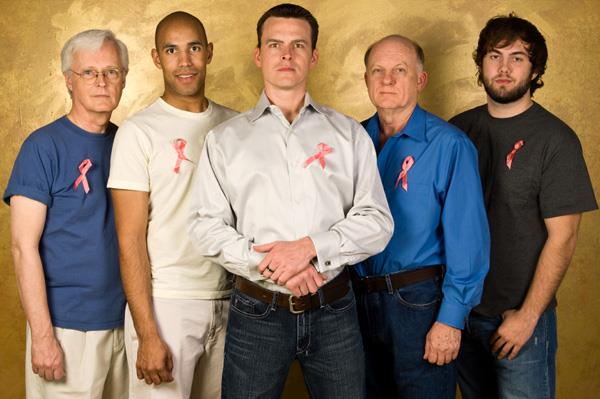
ENCORE #42! – HOOTERS® Is Not The Name Of An All Women Brass Band…

From the first moment my wife discovered she had breast cancer, there was a deafening silence from the men I know. Even ones whose wives, mothers or girlfriends had breast cancer seemed to have received a gag order from some Central Cancer Command and did little more than mumble about the experience. Not one to shut up for any known reason, I started this blog…That was four years ago – as time passed, people searching for answers stumbled across my blog and checked out what I had to say. The following entry appeared in April of 2011.

There are people who feel that breast cancer gets too much attention.

Intellectually, I suppose I can just barely understand their whine…sorry…concern. (http://www.thefword.org.uk/blog/2011/04/are_all_cancers) While the comments on this blog are almost exclusively from women and the one male works in a hospital with cancer patients, it sounds almost…trivial in its arguments. And it may in fact either ignore or not understand how profoundly breast cancer attacks not only women, but the men who adore them. At least in the US.

In the land of HOOTERS® “family restaurants”, the annual over-a-million-issue sale of SPORTS ILLUSTRATED’s Swimsuit Issue, the worship of the Empire of Hefner as a gateway drug for virtually every male porn addiction on the planet – you wonder why an attack on the breast by a nearly invisible disease provokes a powerful response?

I confess that while I knew about breast cancer and cheered on various and sundry survivors, the disease was a distant concern. Years ago, Liz’ diagnosis with Type 2 Diabetes launched me on first the Diabetes Walk and then the Tour de Cure against Diabetes – my son, Josh and his wife will continue the tradition this year as a team of at LEAST two! But now, of course, my focus shifts. Why?

Because breast cancer has become personal to me, and horrible, and disfiguring in a way that diabetes never was. It strikes not only at the very heart of femininity, but at the very heart of the masculine response to femininity as well. But these people with their “breast cancer gets too much attention” concerns miss the point – as I did at first.

Breast cancer is a sort of gateway condition through which much more horrible forms of cancer can enter the human body. Lung cancer. Brain cancer. Bone cancer. Blood cancer. A good friend of mine and his wife just received a monstrous fright – they thought she might have a brain tumor. She didn’t, but bone cancer has been confirmed. Another friend died from a brain tumor many years ago. Still others fear lung cancer (which killed my mother-in-law), leukemia (the young son of some dear friends recently beat this curse). Of COURSE not all of them are a result of breast cancer; they represent a dark spectre that hangs over the 21st Century. But a breast cancer cure might easily lead to a cure for other kinds of cancer – it’s called “NASA spin off”. In the old days, NASA would invent something for one purpose and then someone would find another use for it: working with NASA to prevent vibration in rocket launches and aircraft, Bill Kauman left NASA and started his own helicopter company...that hit hard times and eventually birthed the Ovation Guitar Company. Weird, but true.

Who knows what we’ll find as we seek a cure for breast cancer? Will a colorectal cancer cure be far behind? We don’t know WHAT will happen once we strike up a real band to march against breast cancer!

Image: https://c2.staticflickr.com/6/5527/10893068965_1d328e8f71_b.jpg

Saturday, July 30, 2016

GUY’S GOTTA TALK ABOUT #27…Biking and Walking and Haircuts for Causes

From the first moment my wife discovered she had breast cancer, there was a deafening silence from the men I know. Even ones whose wives, mothers or girlfriends had breast cancer seemed to have received a gag order from some Central Cancer Command and did little more than mumble about the experience. Not one to shut up for any known reason, I started this blog…

I have been “funding” for causes ever since I rode in my very first March of Dimes Bike-a-thon in 1972. It was late spring, but the day we started it was snowing. Not blizzarding; not blinding…but snowing.

I finished the twenty-five-mile ride that had taken me around the Minneapolis lakes and out to Anoka. As weary as I was, I realized that I was hooked.

I did a few more of those, a couple of other “-a-thons” and then nothing really for several years.

A dozen years ago, my wife was diagnosed with Type-2 diabetes. I joined several bikes and walks, and one summer, my son and I did the 45-mile bike for diabetes. We did that twice, and one summer I did it alone. The next summer, my son invited me to ride with him on a fund raiser against MS, as a friend of my wife’s passed away because of it.

Then came breast cancer five years ago. There were no “doable” biking events for me then – I was in no shape to do the Susan G. Komen bike-a-thons at the time, so for a while I did nothing.

Three years ago, my school district sponsored the Relay for Life and we finally “came out of the closet”. We’d avoided it before then, though I’d been asked and we’d discussed it. For whatever deep-seated reason, we didn’t feel ready to join the even. We took the big step two years ago (http://breastcancerreaper.blogspot.com/2014/05/guys-gotta-talk-about-2the-relay-for.html) and then again last summer (http://breastcancerreaper.blogspot.com/2016/05/relay-for-life-2016-today.html). The group of young people with whom we walked was vital and dedicated. It was delightful!

I have yet another cause now – Alzheimer’s. My father was diagnosed a few years ago, and now the disease rears its hideous head on a near-daily basis. He lives in a memory care unit, but the sad fact is that there is absolutely nothing that can be done for him. Though undiagnosed, I think my mother suffered from it as well; though with her other issues, I’m not sure if it was a cause or effect. I only that know she’s been in a major fog for months.

I realized that after she passed a week ago, there were far too many “causes” in my life; far too many medical problems with events to raise money to fight for a cure.

While I’ve recently started to feel a pressure of “can this go on?”, I also realize that while we do in fact, live in the 21st Century and there are many things we CAN do; there are still so many things we CAN’T do that it can seem overwhelming…

The wife of a pastor of mine once said, “It’s better to light a candle than to curse the darkness.”

I pondered this for many years, not really understanding it. Now approaching my 60th birthday, I think I may have a handle on it: I will keep this blog rather than start another. I only have so many candles and I’ve tended this one for the past five years. While it’s not comfortable, it’s a candle I now know well – and it’s a candle that has truly pierced the darkness. I will keep lighting this one for a long time to come. (What about the haircuts? That was part of a fundraiser for the high school theater department and covering the event earned me my first piece of PAID writing!)


Saturday, July 23, 2016

BREAST CANCER RESEARCH RIGHT NOW! #47: Fasting and Chemotherapy Together May be MORE Effective Than Chemo ALONE!

From the first moment my wife discovered she had breast cancer, there was a deafening silence from the men I know. Even ones whose wives, mothers or girlfriends had breast cancer seemed to have received a gag order from some Central Cancer Command and did little more than mumble about the experience. Not one to shut up for any known reason, I started this blog…

Every month, I’ll be highlighting breast cancer research that is going on RIGHT NOW! Harvested from different websites, journals and podcasts, I’ll translate them into understandable English and share them with you. Today: https://www.sciencedaily.com/releases/2016/07/160711150926.htm

The idea that chemotherapy and fasting together enhance the “power” of the chemo has been around for some time:

“Gene expression assays and molecular analyses suggested that, in cancer cells but not healthy cells, fasting and chemo together induce a 20-fold increase in DNA damage, an increase in oxidative stress, and higher incidence of cleaved caspase 3, a protein that induces cell death.

“Longo hypothesizes that, while normal cells are well-equipped to deal with starvation by slowing their metabolism to just essential activities, cancer cells ‘became better at growing and growing and worse at adapting to new conditions.’ When cancerous cells are faced with a hostile environment, such as starvation, they become weak and shut down. ‘And, when they become weak, chemotherapy has an easier time,” he added. However, he emphasized, this is still a hypothesis.’” (2012)

There has been clear evidence of the positive effects of fasting during chemotherapy at least since 2009 (see second link below). Though we never heard a peep about this when my wife was undergoing chemo, it makes perfectly good sense.

In fact, fasting for health and spiritual development has an extremely long and documented history. In the Old Testament of the Bible, it appears as early as the book of Exodus, and specific to an individual in Second Samuel. A commentary on fasting notes, “…the OT uses fasting and abstinence from food to point to something even more necessary for life—communion with and dependence on God.”

Outside of religion: “Herbert Shelton…wrote ‘Fasting must be recognized as a fundamental and radical process that is older than any other mode of caring for the sick organism, for it is employed on the plane of instinct...’”

So, where was fasting when my wife went through chemo? The same place as everything else: in the literature but applied entirely according to the whims and knowledge of the doctor.

So, where is fasting today? It’s finally entered the realm of SPECIFICS: “Fasting is known to increase positive outcomes during cancer treatment, and now two independent studies in mice show that fasting, either through diet or drugs, during chemotherapy helps increase the presence of cancer-killing T cells.”

While the study doesn’t prove it, the lead doctor speculates: “…fasting, which would have been very common for our ancestors, was a tool to reboot the immune system and prevent the circulation of cancer cells. ‘This coordinated multifaceted effect seems too good to be true," he says. "It may not be a coincidence, but a very precisely evolved process that is meant to get rid of bad cells.’”

While I hesitate to draw any conclusions this early in the appearance of the research, I might also speculate that as Westerners, we have made an art of satisfying every whim and fancy, from having a never-ending supply of food available to us either to go get or, increasingly, to have delivered to us with no more effort on our part than the exercise of our finger muscles to pretty much having anything else we want. Obesity is now public enemy number one and it is obvious that one of the causes is our constant eating. Whether we were created to fast or evolved to fast, is it any surprise that cancers are eating us up? Denying ourselves MAY just be a survival imperative, and if you link to and read this article, you might also notice that doctors are QUICKLY finding ways around the actual “denial of whims” by creating something they call, “caloric restriction mimetics--drugs that selectively trigger some of the biochemical cascades that result from starvation but without the weight loss--”. All of this so we can trick our bodies into thinking they’re fasting while we continue to eat whatever and whenever we want.

What if doctors actually promoted, you know, fasting? I would add a snarky comment here, but I won’t. You can imagine it yourselves.


Saturday, July 16, 2016

ENCORE #41 ! – David Breasterfield…

From the first moment my wife discovered she had breast cancer, there was a deafening silence from the men I know. Even ones whose wives, mothers or girlfriends had breast cancer seemed to have received a gag order from some Central Cancer Command and did little more than mumble about the experience. Not one to shut up for any known reason, I started this blog…That was four years ago – as time passed, people searching for answers stumbled across my blog and checked out what I had to say. The following entry appeared in June of 2011.

I don’t know what it’s like, exactly for my wife, but there are long times now where the idea of breast cancer (and the accompanying metastasis possibility) disappears from my life as if by magic.

Between treatments, which she undergoes every three weeks, life returns to normal. Well, not “old normal”, rather the new normal (see “The World Didn’t Fall Off Its Axis”)…
But during this time, nothing seems to be “different” – we still chat, watch TV, go for walks with the dog, pay bills, see the grandchild, talk to people. Nothing seems to have changed. It’s almost like that magician – David Copperfield – worked his magic on breast cancer and made the whole thing disappear.

And maybe there’s something to be said for that – we’re NOT pretending. I don’t think I could ever do that. But we’re living in the promises of the doctors and the profound hopes of our friends and other women we know who are breast cancer survivors.

David Copperfield isn’t really a magician, he’s an illusionist, and while we harbor no mistaken belief that the cancer has “disappeared”, it’s sometimes helpful to live in the illusion that the cure is NOW. It’s something that allows us to go on day-by-day. I cannot imagine how terrifying these days just before a chemo session are. But I can help my wife entertain the illusion that she is done with chemo and she has been declared cancer-free.

Besides – that’s only going to be an illusion for a few more months. By Christmas, Liz will be a breast cancer survivor and THAT will be the real magic!

Saturday, July 9, 2016

ENCORE #40! – Metastatic Breast Cancer: Lung Cancer


https://c2.staticflickr.com/6/5527/10893068965_1d328e8f71_b.jpgFrom the first moment my wife discovered she had breast cancer, there was a deafening silence from the men I know. Even ones whose wives, mothers or girlfriends had breast cancer seemed to have received a gag order from some Central Cancer Command and did little more than mumble about the experience. Not one to shut up for any known reason, I started this blog…That was four years ago – as time passed, people searching for answers stumbled across my blog and checked out what I had to say. The following entry appeared in December of 2011.

Some [twenty] years ago, my wife’s mother passed away from lung cancer.

A child of her times, she smoked often and heavily for a number of years while raising four children, then quit – long before I met her.

Diagnose with lung cancer in 1994, she took chemotherapy, went into remission and finally succumbed to the disease in (I think – and my wife will correct me!) 1997.

Her disease was DIFFERENT than the type of lung cancer that can flare up after a woman (or rarely a man) is treated initially for breast cancer. Lung cancer after breast cancer is most often caused by BREAST CANCER cells that have invaded other organs and therefore are called metastatic breast cancer. The word “metastatic” was used in the 1570s and comes from the Greek metastasis which means "transference, removal, change.” The roots are meta which means "over, across" plus the word histanai which means "to place, cause to stand.” The medical use for "shift of disease from one part of the body to another" dates from 1660s in English.

“Metastatic cancer to the lungs is the spread of cancer from another region of the body to the lungs. The place where cancer begins is called the primary cancer. For example, if breast cancer spreads to the lungs, it would be called breast cancer with metastasis (spread) to the lungs. In this case, breast cancer would be considered the ‘primary’ cancer.”

Symptoms that would lead doctors to believe that the breast cancer had metastasized to the lungs are similar to those of “regular” lung cancer and would be warning signs that a person would need to see their doctor as soon as possible. They include: a cough that persists over time, or does not go away with treatment; coughing up blood, difficulty breathing (due to decreased airflow by a tumor obstructing the large airways or spread through the lungs); wheezing (caused by the interference of airflow through an airway obstructed by a tumor); pain in the chest, back, shoulder, or arm (when a lung tumor presses on nerves around the lungs); repeated lung infections such as pneumonia or bronchitis; hoarseness; and lastly, lung cancer CAN have no apparent symptoms and only appear  when a chest x-ray is done for another reason.

As well, “general symptoms” of lung cancer can sometimes present with vague concerns such as fatigue, weight loss, loss of appetite, and even depression can be a symptom of lung cancer as well as many other conditions.

Treatment for cancer metastatic to the lungs is usually determined by the primary cancer, or origin of the cancer. Systemic therapy (chemotherapy, biological therapy, targeted therapy, hormonal therapy), local therapy – which might include surgery or radiation therapy), or a combination of these treatments. The choice of treatment generally depends on the size, location, and number of metastatic tumors; the patient’s age and general health; and the types of treatment the patient has had in the past.